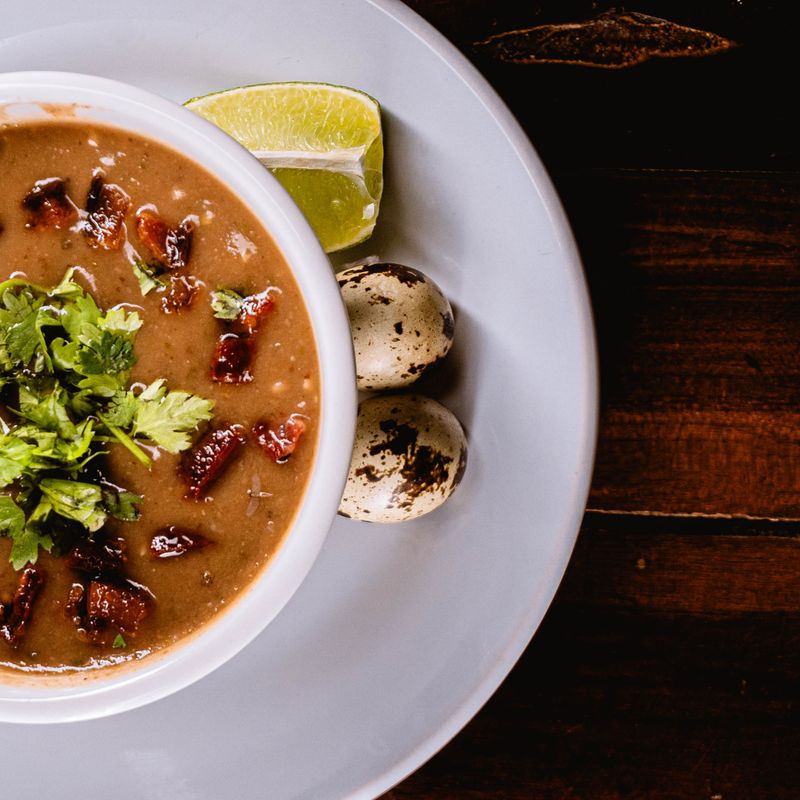
Sourdough Costa Rican Pinto Bean and Cilantro Savory Cakes
These golden, crispy-edged savory cakes combine the tangy depth of active sourdough starter with creamy Costa Rican-style pinto beans, fresh cilantro, and caramelized red onion. The sourdough adds subtle fermented flavor and helps create a tender crumb with a satisfying crust. Perfect as a side dish, light lunch, or appetizer.
- Prep
- 20 min
- Cook
- 25 min
- Wait
- 10 min
- Total
- 55 min
- Makes
- 6 savory cakes (about 3 inches/8 cm across)
Steps
Before you start
- Ensure your sourdough starter is active and bubbly (fed 4–8 hours prior)
- Have all ingredients at room temperature
- Preheat oven to 400°F (200°C)
Caramelize the onion
- Heat 1 tablespoon (15 ml) of olive oil in an 8–10-inch (20–25 cm) skillet over medium-low heat.
- Add the thinly sliced red onion and cook for 12–15 minutes, stirring occasionally, until deep golden, very soft, and slightly caramelized.
- Season lightly with a pinch of salt.
- Transfer to a small plate to cool for about 5 minutes.
+ Show details− Hide details
Ready when: Onion is deep golden brown and very soft, almost melting
Tip: Resist the urge to raise the heat; low heat prevents burning and draws out the natural sugars.
Mash the beans
- In a medium mixing bowl, combine the drained pinto beans with the cooled caramelized onion and minced garlic.
- Using a slotted spoon or mashing fork, break down the beans until about three-quarters are crushed and some whole pieces remain.
- The mixture should be chunky and rustic, not completely smooth.
+ Show details− Hide details
Ready when: Mixture is mostly crushed with some whole beans still visible
Tip: Leave some beans whole for texture; overmashing creates a dense, gluey cake.
Mix the batter
- Add the sourdough starter, egg, all-purpose flour, cornmeal, fresh cilantro, salt, black pepper, and cumin to the bean mixture.
- Stir gently with a fork or soft spatula until just combined.
- The batter should be thick and slightly wet, holding together but not stiff.
- It will resemble a loose bean purée.
+ Show details− Hide details
Ready when: All ingredients are evenly distributed; no dry flour streaks remain
Tip: Mix gently—overmixing develops gluten and makes the cakes tough rather than tender.
Prepare the baking vesselOven 400°F / 205°C
- Preheat the oven to 400°F (200°C).
- Lightly oil a 10–12-inch (25–30 cm) baking sheet or cast-iron skillet with the remaining 1 tablespoon (15 ml) of cooking olive oil, or line it with parchment paper and spray lightly with cooking spray.
+ Show details− Hide details
Tip: If using cast iron, oil it well so the cakes develop a crispy, golden bottom.
Form and place the cakes
- Using a ¼-cup (60 ml) ice cream scoop or spoon, portion the batter onto the prepared baking sheet, spacing them about 2 inches (5 cm) apart.
- You should have 6 portions.
- Gently flatten each to about ¾ inch (2 cm) thick with the back of an oiled spoon or your fingertips, creating roughly 3-inch (8 cm) round cakes.
- They will have a slightly uneven, rustic surface.
+ Show details− Hide details
Ready when: Cakes are formed and flattened to an even thickness
Tip: Keep the cakes ¾ inch thick so they stay tender inside while the edges crisp; thicker ones may dry out before browning.
Bake until goldenOven 400°F / 205°C
- Transfer the baking sheet to the preheated 400°F (200°C) oven and bake for 20–25 minutes, until the edges and bottom are deep golden brown and the tops are set and lightly golden.
- If using cast iron, the bottom should be notably crispy and darker.
- The cakes should feel firm when gently pressed and not jiggle.
+ Show details− Hide details
Ready when: Edges are deep golden to brown; top is set and light golden; bottom is crispy
Tip: Start checking at 20 minutes; oven temperatures vary, and you want the edges caramelized but the inside still moist.
Rest and finish
- Remove the cakes from the oven and let them rest on the baking sheet for 5 minutes.
- This allows the structure to firm up without the cakes hardening.
- If desired, brush the warm cakes lightly with the optional 1 tablespoon (15 ml) of olive oil for extra richness and shine.
- Serve warm or at room temperature.
+ Show details− Hide details
Ready when: Cakes are set but still warm and tender
Tip: Don't skip the rest; it prevents the cakes from falling apart when you move them.
Good to know
Tips
- Active sourdough starter is essential for flavor and lift; use starter that is bubbly and recently fed. If your starter is sluggish, let the batter rest at room temperature for 15–20 minutes before baking to allow gentle rising.
- For extra crispness, use a preheated cast-iron skillet instead of a baking sheet and brush the bottom of each cake lightly with oil.
- Serve with a simple lime crema (sour cream or crema mixed with lime juice and salt), avocado slices, or a squeeze of lime juice.
- These cakes are excellent alongside rice and beans, in a grain bowl, or as a handheld snack for meals or gatherings.
Make ahead
Batter can be mixed up to 4 hours ahead, covered, and refrigerated. Bring to room temperature (about 15 minutes) before forming and baking. Unbaked cakes can also be formed and refrigerated on a parchment-lined baking sheet for up to 2 hours; add 3–4 minutes to baking time if baking from cold.
Storage & reheating
Store at room temperature on a wire rack for up to 2 days, covered loosely with paper towels (not plastic, which traps steam and softens them). Refrigerate in an airtight container for up to 5 days. Freeze unbaked cakes on a baking sheet, then transfer to a freezer bag for up to 3 months; bake directly from frozen, adding 5–7 minutes to baking time. Reheat room-temperature cakes in a 350°F (175°C) oven for 8–10 minutes until warmed through and edges re-crispen. Do not microwave, as it will make them soft and rubbery.
Substitutions
- fresh cilantro → fresh parsley, fresh epazote, or a combination of both. Parsley is milder; epazote adds more earthiness and is traditional in Central American bean dishes. Use the same amount.
- cooked pinto beans → black beans or red kidney beans. Black beans create a darker cake with slightly deeper flavor; kidney beans are firmer and less creamy. Use the same volume.
- cornmeal (polenta) → polenta or finely ground corn flour, or substitute up to ¼ cup of the all-purpose flour for extra cornmeal. This adds more corn flavor and crispness. Reduce if you prefer a softer crumb.
- ground cumin → ground coriander or a mix of cumin and smoked paprika (½ teaspoon each). Coriander is more floral; paprika adds smokiness. Adjust to taste.
More party snacks
See all →




Find more like this
- Meal
- Lunch
- Cuisine
- Caribbean
- Main ingredient
- Black Beans