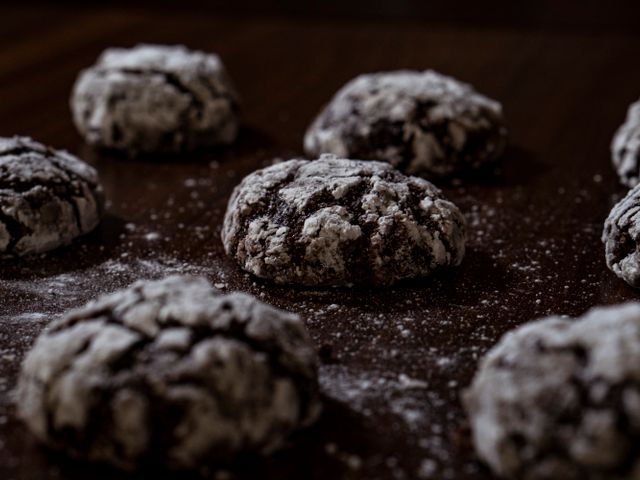
Snickerdoodles with Cinnamon Sugar
Chewy-centered snickerdoodles with crisp, cinnamon-sugar-coated edges. These classic American cookies deliver warm spice and a touch of tangy cream of tartar in every bite. Perfect for lunchboxes, cookie platters, or a simple afternoon treat.
Steps
Before you start
- Preheat oven to 375°F (190°C) about 15 minutes before baking
- Use room-temperature unsalted butter and eggs for best mixing
- Line 2 baking sheets with parchment paper
- Have cream of tartar on hand—it's essential for the tangy flavor
Cream butter and sugar
- In a stand mixer fitted with the paddle attachment (or using a hand mixer), beat the room-temperature butter and 0.75 cup (150 g) granulated sugar on medium-high speed for 3–4 minutes.
- The mixture should pale, lighten, and become fluffy.
- Scrape down the bowl halfway through.
+ Show details− Hide details
Ready when: Mixture is pale, fluffy, and increased in volume by about one-third
Tip: Room-temperature butter mixes more evenly than cold butter, ensuring a tender crumb.
Add egg and vanilla
- Add the room-temperature egg and vanilla extract to the butter mixture.
- Beat on medium speed for 1–2 minutes until fully incorporated and no streaks of egg remain.
+ Show details− Hide details
Ready when: Mixture is uniform, light, and smooth
Tip: A room-temperature egg blends in more easily and prevents a curdled-looking batter.
Combine dry ingredients
- In a small bowl, whisk together the 1.5 cups (190 g) all-purpose flour, 0.5 tsp (2.5 g) cream of tartar, 0.25 tsp (1 g) baking soda, and 0.25 tsp (1.5 g) salt.
- Whisk well to distribute the leavening agents and cream of tartar evenly.
+ Show details− Hide details
Ready when: Dry ingredients are well blended with no lumps visible
Tip: Whisking ensures the cream of tartar is evenly dispersed so every cookie has that tangy note.
Add dry to wet
- Reduce the mixer speed to low and add the dry ingredients to the butter mixture in one addition.
- Mix for 1–2 minutes until just combined.
- Do not overmix; a few streaks of flour are fine at first and will disappear with gentle mixing.
+ Show details− Hide details
Ready when: Dough is uniform with no visible flour streaks
Tip: Overmixing develops gluten and creates tough, dense cookies. Mix until just combined.
Prepare cinnamon-sugar coating
- In a small bowl, whisk together the 2.5 tbsp (20 g) ground cinnamon and 2 tbsp (25 g) granulated sugar.
- Set aside in a shallow dish for rolling.
+ Show details− Hide details
Ready when: Cinnamon and sugar are evenly mixed
Tip: Use a shallow, wide dish so you can easily roll the cookie dough balls.
Shape and coat dough
- Using a 1-tablespoon (15 ml) cookie scoop or the size of a walnut, form dough into 24 balls.
- Working one at a time, roll each ball in the cinnamon-sugar mixture until fully coated.
- Place 2 inches (5 cm) apart on the prepared baking sheets, about 12 cookies per sheet.
+ Show details− Hide details
Ready when: All 24 balls are rolled and coated, spaced evenly on sheets
Tip: Space cookies at least 2 inches apart; they spread during baking and will merge if too close.
Rest dough (optional but recommended)
- Let the shaped cookies rest at room temperature for 15–30 minutes.
- This allows the dough to firm up slightly, which helps them spread evenly and prevents over-spreading in the oven.
+ Show details− Hide details
Tip: This step is optional but improves the final texture and crackle.
Bake first batchOven 375°F / 190°C
- Preheat your oven to 375°F (190°C) if you haven't already.
- Place one baking sheet in the center of the oven and bake for 11–13 minutes.
- The cookies should look just barely set at the edges, lightly golden, and have visible cracks on top.
- The centers should still look slightly underdone.
+ Show details− Hide details
Ready when: Edges are lightly golden and set; center is slightly underdone with visible cracks on top
Tip: Underbaking by 1–2 minutes keeps the center chewy. Cookies continue to cook from residual heat after they leave the oven.
Cool on sheet then transfer
- Remove the baking sheet from the oven and let the cookies rest on the sheet for 2–3 minutes.
- This allows them to firm up enough to transfer without breaking.
- Using a thin spatula, transfer cookies to a wire cooling rack and cool completely before serving or storing, about 15 minutes.
+ Show details− Hide details
Ready when: Cookies are completely cool and firm to the touch
Tip: Moving cookies too early causes them to break apart; waiting 2–3 minutes on the sheet prevents this.
Bake second batchOven 375°F / 190°C
- While the first batch cools, prepare the second baking sheet with the remaining 12 cookies and bake using the same temperature and time, 11–13 minutes at 375°F (190°C).
+ Show details− Hide details
Ready when: Edges are lightly golden; center slightly underdone with visible cracks
Tip: If your oven has hot spots, rotate the second sheet halfway through baking for even browning.
Good to know
Tips
- Do not skip the cream of tartar—it's what makes snickerdoodles distinctive. Without it, you have just a sugar cookie.
- Underbake slightly: cookies should look barely set in the center when you remove them. They continue to bake from residual heat and will firm up as they cool, giving you a chewy center with crisp edges.
- Use a cookie scoop for uniform sizes so all cookies bake at the same rate. This prevents some burning while others are raw.
- For extra-crispy edges, bake an additional 1–2 minutes, but watch carefully to avoid overbaking the centers.
Make ahead
Dough can be prepared up to 24 hours ahead and refrigerated, covered. Chill for 1 hour, then roll, coat, and bake as directed. Baked cookies taste best eaten the same day but keep well for up to 5 days.
Storage & reheating
Room temperature: Store in an airtight container for up to 5 days. Cookies will firm up slightly but remain chewy. Refrigerator: Not recommended; cold temperatures dry them out. Freezer: Wrap baked cookies individually in plastic wrap and place in a freezer-safe container for up to 3 months. Thaw at room temperature for 1–2 hours before serving.
Substitutions
- cream of tartar → ¼ tsp (1 g) white vinegar mixed into the dry ingredients. Cream of tartar is traditional and provides a distinctive tangy flavor. Vinegar is a functional substitute but won't deliver the same depth of flavor.
- vanilla extract → ¼ tsp almond extract or ½ tsp maple extract. Either adds a subtle depth. Use half the amount for almond extract, as it's more potent.
- ground cinnamon → 1.5 tbsp (9 g) ground cinnamon + 1 tbsp (8 g) ground nutmeg or cardamom. Adds warm spice variation. Reduce cinnamon and use the second spice as needed to balance flavor.
- fine sea salt → ¼ tsp fine kosher salt (reduce to ⅛ tsp, as kosher salt is less dense). Use fine kosher salt if all-purpose table salt is not available, but measure carefully to avoid over-salting.