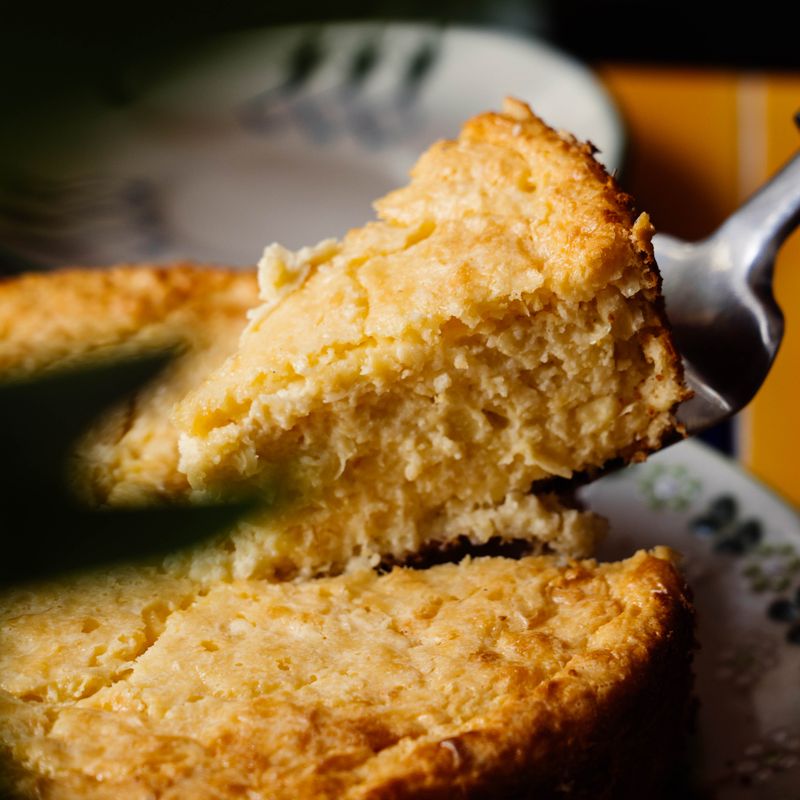
Slow Cooker Sticky Pineapple Upside-Down Cake
A moist, tender pineapple upside-down cake baked gently in a slow cooker, resulting in a deeply caramelized pineapple topping and a feather-light cake layer. The slow cooker's steady, even heat prevents overcooking the delicate crumb while creating a glossy, sticky caramel sauce that pools around the fruit.
- Prep
- 25 min
- Cook
- 1 hr 30 min
- Wait
- 30 min
- Total
- 2 hr 25 min
- Makes
- 1 cake (8 slices)
Steps
Before you start
- Line the slow cooker with parchment paper for easy removal
- Let eggs and buttermilk come to room temperature (about 1 hour)
- Drain pineapple thoroughly and pat dry with paper towels
- Preheat slow cooker on low while preparing ingredients
Prepare the slow cooker
- Line the inside of your 5- to 6-quart slow cooker with parchment paper, allowing edges to extend up the sides—this will help you lift the finished cake out.
- Alternatively, if using a 9-inch cake pan or baking dish that fits loosely in the slow cooker, line that instead.
- Set the slow cooker to low heat.
+ Show details− Hide details
Tip: Parchment paper prevents sticking and makes removal much easier; if your slow cooker is very narrow, a 7-inch round cake pan works too.
Make the pineapple topping
- Spread the 4 tablespoons (57 g) room-temperature butter evenly over the bottom of the parchment-lined slow cooker (or cake pan inside it).
- Sprinkle the 0.75 cup (165 g) brown sugar evenly over the butter.
- Arrange the drained pineapple rings in a single layer on top of the sugar—place one ring in the center and arrange the others around it, overlapping slightly.
- If using maraschino cherries, place one in the center hole of each pineapple ring.
- The topping is complete; set aside.
+ Show details− Hide details
Ready when: Pineapple rings are evenly arranged with no gaps
Tip: Make sure the pineapple is completely dry—excess moisture will make the topping watery. Pat the rings thoroughly with paper towels.
Cream butter and sugar
- In a large mixing bowl, beat together the 0.5 cup (113 g) softened butter and 1 cup (200 g) granulated sugar until light and fluffy, about 2 to 3 minutes.
- The mixture should be pale and noticeably increased in volume.
+ Show details− Hide details
Ready when: Mixture is pale, fluffy, and doubled in volume
Tip: Cold butter won't cream properly, so ensure it has sat at room temperature for at least 1 hour before starting.
Add eggs and vanilla
- Add the 2 room-temperature eggs one at a time, beating well after each addition (about 30 seconds each).
- The mixture should be smooth and light.
- Stir in the 1 teaspoon (5 ml) vanilla extract.
+ Show details− Hide details
Ready when: Mixture is smooth and light, no streaks of egg white visible
Tip: Room-temperature eggs emulsify better and create a lighter crumb. If you forget to warm them, set the mixing bowl over a bowl of warm water for 2 minutes.
Combine dry ingredients
- In a medium mixing bowl, whisk together the 1.75 cups (210 g) cake flour, 1.5 teaspoons (7 g) baking powder, and 0.5 teaspoon (3 g) salt until evenly combined.
+ Show details− Hide details
Ready when: Dry ingredients are evenly distributed with no lumps
Tip: Whisking the dry ingredients aerates the flour and distributes the leavening evenly, which is especially important for a tender crumb in slow-cooker baking.
Alternate wet and dry
- Add half of the dry flour mixture to the butter mixture and stir gently with a spatula until just combined.
- Pour in the 0.5 cup (120 ml) buttermilk and the 0.25 cup (60 ml) reserved pineapple juice, stirring until just combined.
- Add the remaining dry mixture and stir gently until no dry flour streaks remain.
- Do not overmix.
+ Show details− Hide details
Ready when: Batter is smooth and homogeneous with no flour streaks
Tip: Overmixing develops gluten and produces a tough, dense cake. Stir just until the ingredients are combined; a few lumps are fine and will smooth out during cooking.
Pour batter over topping
- Carefully pour the cake batter over the pineapple topping layer in the slow cooker, spreading it evenly with a spatula.
- The batter should cover the fruit completely.
- Do not stir or mix the batter with the fruit.
+ Show details− Hide details
Ready when: Batter is spread in an even layer over the pineapple
Tip: Pour slowly and spread gently to avoid disturbing the pineapple arrangement underneath. If the fruit shifts slightly, use a thin spatula to nudge it back into place before pouring.
Cook on lowOven 200°F / 95°C
- Cover the slow cooker and cook on low for 1 hour 30 minutes (90 minutes).
- The cake is ready when a toothpick or skewer inserted into the cake portion (not the fruit layer) comes out with just a few moist crumbs.
- The edges will appear set and slightly darker, and the cake should feel springy when gently pressed.
- An instant-read thermometer inserted into the thickest part of the cake should read 200°F (93°C).
+ Show details− Hide details
Ready when: Toothpick comes out with a few moist crumbs, cake is springy to the touch, internal temperature reaches 200°F (93°C)
Tip: Slow cookers vary in heat; check the cake at 80 minutes if cooking for the first time. The longer, gentler cooking prevents overcooking the delicate crumb and allows the sugar to caramelize deeply.
Cool in the slow cooker
- Turn off the slow cooker and leave the cake inside, uncovered, for 15 minutes.
- This allows the caramel topping to set slightly and makes unmolding easier.
+ Show details− Hide details
Tip: Do not cool completely in the slow cooker or the caramel will harden too much and stick irreversibly to the liner.
Unmold and invert
- Place a serving platter or cake plate over the top of the slow cooker.
- Holding the platter and slow cooker rim firmly, invert quickly and carefully in one smooth motion.
- Lift the slow cooker away.
- If any pineapple or caramel sticks to the parchment, gently peel away the paper and replace any fruit on the cake surface.
- Let the cake cool for at least 15 minutes more before serving.
+ Show details− Hide details
Ready when: Cake is inverted onto the platter with caramel topping visible and pineapple in place
Tip: The key to successful unmolding is speed and confidence—a hesitant flip can cause the cake to slide or break. Have your platter ready and make the motion swift and decisive.
Good to know
Tips
- Ensure all ingredients, especially eggs and buttermilk, are at room temperature before mixing—this creates a more emulsified, lighter batter that bakes more evenly in the slow cooker's gentle heat.
- Pat the canned pineapple completely dry with paper towels; excess juice will prevent the caramel from setting and will make the cake soggy around the edges.
- If your slow cooker runs hot, check the cake at 75 minutes; if it runs cool, it may take up to 100 minutes. Knowing your slow cooker's tendency prevents over- or underbaking.
- The pineapple juice in the batter (not just water) adds subtle tropical flavor and keeps the cake moist without making it dense—do not omit it.
Make ahead
You can prepare the pineapple topping (step 2) in the slow cooker up to 4 hours ahead, then cover and refrigerate. Let it come to room temperature (about 30 minutes) before proceeding with the batter. You may also assemble the batter (through step 6) up to 2 hours ahead, cover, and refrigerate; let it come to room temperature (20 minutes) before pouring and cooking.
Storage & reheating
Store the cooled cake covered with plastic wrap at room temperature for up to 2 days. For longer storage, wrap tightly and refrigerate for up to 5 days (reheat gently in a 300°F/150°C oven for 10 minutes). The cake does not freeze well due to the moist caramel layer, which can become grainy when thawed.
Substitutions
- canned pineapple rings in juice (about 1 can) → Fresh pineapple rings (about 8 rings from 1 medium pineapple), patted very dry. Fresh pineapple will give a brighter flavor but may cook slightly faster; check doneness at 75 minutes. Make sure the rings are completely dry to prevent excess moisture.
- buttermilk, at room temperature → Plain whole milk mixed with 1 tablespoon (15 ml) fresh lemon juice or white vinegar, let sit 5 minutes. This creates a buttermilk substitute with similar acidity and flavor. Avoid using milk alone, as it lacks the acidity needed for tender crumb.
- cake flour → All-purpose flour minus 2 tablespoons (14 g) replaced with cornstarch per cup of flour. This reduces protein content and mimics cake flour's properties, resulting in a similarly tender crumb. Do not use all-purpose flour alone; it will make the cake tougher.
- maraschino cherries → Candied pineapple pieces or dried cranberries, placed in the center of each pineapple ring. These add visual interest and a slightly different flavor note. Soak dried fruit in warm water for 5 minutes first to soften, then pat dry.
More cakes
See all →

Find more like this
- Meal
- Dessert
- Diet
- VegetarianHalal
- Method
- Slow Cooker
- Quick & Easy
- Make Ahead