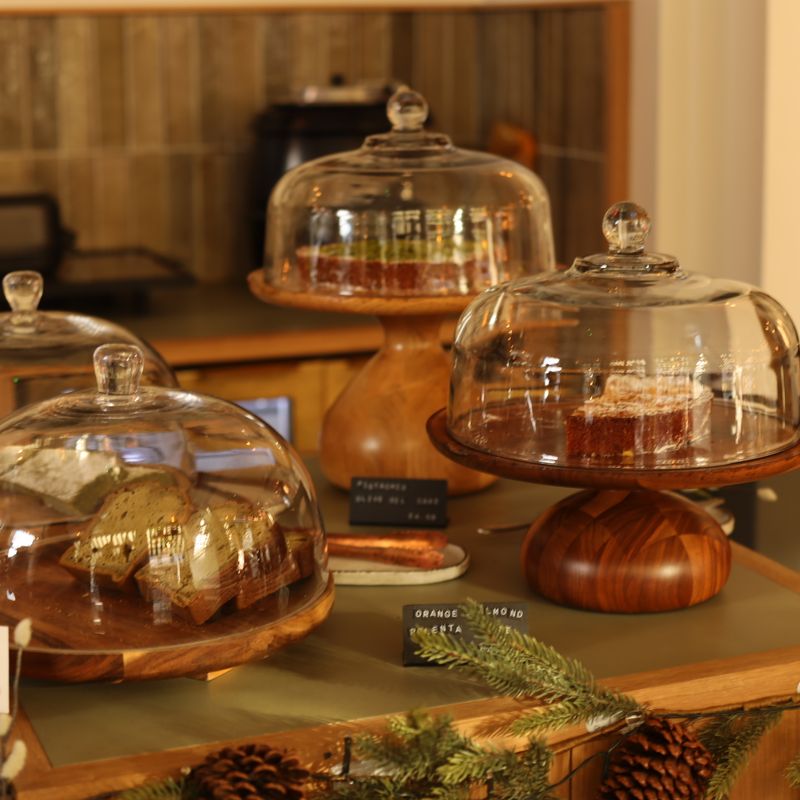
Skillet Plum and Brown Butter Upside-Down Cake
A buttery, tender cake topped with caramelized plums in a crispy brown-butter-and-sugar coating. The brown butter adds a deep, toasty flavor that pairs beautifully with the tart-sweet plums. Baked in a cast-iron skillet and inverted onto a serving plate for an impressive presentation.
- Prep
- 20 min
- Cook
- 50 min
- Wait
- 15 min
- Total
- 1 hr 25 min
- Makes
- 1 cake (8 slices)
Steps
Before you start
- Preheat your oven to 350°F (175°C)
- Have all ingredients at room temperature
- Choose ripe but firm plums that won't fall apart when cooked
- Use a 10-inch (25 cm) cast-iron skillet or ovenproof baking dish
Brown the topping butter
- In a small saucepan over medium heat, melt 6 tablespoons (85 g) of cold butter, stirring frequently.
- Once melted, continue cooking for 5–7 minutes, swirling the pan occasionally, until the butter turns golden brown with a nutty aroma and brown flecks settle at the bottom.
- Watch carefully to prevent burning.
- Pour the brown butter into your cast-iron skillet, tilting to coat the bottom and sides evenly.
+ Show details− Hide details
Ready when: Butter is golden brown with a nutty aroma; brown solids are visible at the bottom
Tip: Keep the heat at medium and watch constantly to avoid burning—burnt butter tastes acrid and will ruin the dish.
Arrange plums and sugar
- Sprinkle the 0.75 cup (150 g) of granulated sugar evenly over the brown butter in the skillet.
- Arrange the 6 halved plums, cut-side down, in a circular pattern in the skillet, pressing them gently into the sugar.
- The plums will caramelize as the cake bakes.
- Set the skillet aside while you prepare the cake batter.
+ Show details− Hide details
Ready when: Plums are arranged cut-side down in an even layer
Tip: Press the plums gently but firmly so they sit flat and make good contact with the sugar for caramelization.
Cream butter and sugar
- In a large bowl, beat 0.5 cup (115 g) of softened butter and 1 cup (200 g) of granulated sugar together with a whisk or electric mixer for 2–3 minutes until the mixture is light, fluffy, and pale yellow.
- Scrape down the sides of the bowl as needed.
+ Show details− Hide details
Ready when: Mixture is pale, fluffy, and increased in volume by about 50%
Tip: Using softened butter (not cold or melted) ensures you can incorporate air for a lighter crumb.
Add eggs and vanilla
- Add the 2 room-temperature eggs one at a time to the butter-sugar mixture, beating well after each addition for about 30 seconds.
- Scrape down the bowl.
- Add the 1 teaspoon (5 ml) vanilla extract and beat to combine.
+ Show details− Hide details
Ready when: Mixture is smooth, pale, and fully incorporated
Tip: Add eggs one at a time to emulsify properly; if you add them all at once, the batter may look curdled briefly.
Combine dry ingredients
- In a medium bowl, whisk together 1.75 cups (220 g) all-purpose flour, 1.5 teaspoons (7.5 g) baking powder, and 0.5 teaspoon (3 g) kosher salt until well combined and no lumps of baking powder remain.
+ Show details− Hide details
Ready when: Dry ingredients are evenly combined with no visible lumps
Tip: Whisking the dry ingredients helps distribute the leavening agent evenly throughout the batter.
Alternate dry and wet ingredients
- Add one-third of the dry flour mixture to the egg-butter mixture and fold together gently with a spatula until almost no flour streaks remain.
- Add half of the 0.5 cup (120 ml) buttermilk and fold until combined.
- Repeat: add the remaining flour in two batches, alternating with the remaining buttermilk, folding gently after each addition until the batter is smooth and no flour streaks are visible.
- Do not overmix.
+ Show details− Hide details
Ready when: Batter is smooth with no flour streaks; slightly thicker than pancake batter
Tip: Fold gently rather than stir to avoid developing too much gluten, which would make the cake tough. A few tiny streaks of flour are okay.
Pour batter over plums
- Pour the batter over the plums and caramelized sugar in the skillet, spreading it gently and evenly with a spatula.
- The plums should be mostly covered.
- The batter will rise around and over the plums as it bakes.
+ Show details− Hide details
Ready when: Batter is spread evenly; plums are mostly covered
Tip: Don't spread the batter too vigorously or you'll move the plums out of position.
Bake the cakeOven 350°F / 175°C
- Place the skillet in a preheated 350°F (175°C) oven on the middle rack.
- Bake for 40–50 minutes until the top is golden brown and a toothpick inserted into the center of the cake comes out with just a few moist crumbs (not wet batter).
- The edges should pull slightly away from the sides of the skillet.
+ Show details− Hide details
Ready when: Top is golden brown; toothpick inserted into the center comes out with just a few moist crumbs
Tip: Start checking at 40 minutes; ovens vary. If the top is browning too quickly, tent loosely with foil for the last 10 minutes.
Cool and invert
- Remove the skillet from the oven and let the cake cool in the pan for 5 minutes.
- Run a thin spatula or knife around the edges to loosen the cake from the sides.
- Place a serving plate (large enough to overhang the skillet slightly) over the top of the skillet.
- Carefully invert the skillet and plate together in one quick, confident motion, then slowly lift away the skillet.
- If any plums stick to the pan, gently coax them onto the cake using a small spatula.
+ Show details− Hide details
Ready when: Cake is released from the pan; plums are adhered to the top
Tip: Don't wait too long to invert or the caramel will harden and the cake will stick; 5 minutes is the sweet spot. Be confident with the inversion—hesitation can cause the cake to break.
Cool and serve
- Allow the cake to cool on the serving plate for at least 10 minutes before slicing.
- The caramel will continue to set.
- Serve warm or at room temperature with whipped cream or vanilla ice cream if desired.
+ Show details− Hide details
Ready when: Cake is set and cool enough to slice without breaking apart
Tip: This cake is best served the day it is made, while the caramel is still sticky and the cake is moist.
Good to know
Tips
- Choose plums that are ripe but still fairly firm—overripe plums will fall apart during baking. A plum should yield slightly to gentle pressure but not be mushy.
- Browning butter requires attention to avoid burning. Keep the heat at medium and stir constantly once the foaming slows down. The transition from golden brown to burnt happens quickly.
- Room-temperature eggs emulsify better with the butter-sugar mixture, resulting in a more tender cake. Remove eggs from the fridge 30 minutes ahead.
- The alternating method (dry-wet-dry-wet) helps keep the batter uniform and prevents overdevelopment of gluten. Fold gently and don't overmix; a few small flour streaks are fine.
Make ahead
The dry ingredients (flour, baking powder, salt) can be whisked together and stored in an airtight container up to 1 day ahead. The brown butter can be made up to 4 hours ahead, cooled to room temperature, and reheated gently over low heat just before assembling. The cake itself is best baked the day you plan to serve it.
Storage & reheating
Store the cooled cake covered loosely with foil at room temperature for up to 1 day. Do not refrigerate, as the cake will dry out. For longer storage, wrap in plastic wrap and foil and freeze for up to 2 weeks; thaw at room temperature for 2 hours before serving. Reheat gently in a 325°F (160°C) oven for 10 minutes if desired, but the cake is delicious at room temperature.
Substitutions
- ripe plums → Peaches, nectarines, or apricots. Use firm fruit of similar size; peaches and nectarines may need 1–2 minutes less browning to avoid over-softening.
- buttermilk → Plain Greek yogurt or sour cream thinned with 1–2 tablespoons whole milk. Provides similar tang and acidity; thin to a pourable consistency (about 0.5 cup / 120 ml total).
- unsalted butter → Coconut oil or neutral vegetable oil. Use the same amount by weight. The flavor will be slightly different, but the cake will still be tender and moist.
- unsalted butter → Clarified butter or ghee. Brown ghee adds an even richer, more nutty flavor. Use the same amount; ghee brown-butter mixture may be less frothy.
More cakes
See all →
Find more like this
- Meal
- Dessert
- Diet
- VegetarianHalal
- Method
- Oven