
Family-Friendly Olive Oil Cake with Orange
A tender, moist olive oil cake infused with fresh orange juice and zest, studded with sliced almonds and finished with a light orange glaze. This Mediterranean-style cake is naturally dairy-free, perfect for morning tea or dessert. The fruity olive oil and citrus create a sophisticated yet approachable flavor that appeals to all ages.
- Prep
- 20 min
- Cook
- 40 min
- Wait
- 45 min
- Total
- 1 hr 45 min
- Makes
- 1 cake (8 slices)
Steps
Before you start
- Preheat oven to 350°F (175°C) 15 minutes ahead
- Grease a 9-inch (23 cm) round or 8×4-inch (20×10 cm) loaf pan with olive oil and dust lightly with flour
- Bring eggs to room temperature if they are cold
- Zest 1 orange before juicing it—use fresh juice, not bottled
Mix dry ingredients
- In a medium bowl, whisk together 1¾ cups (220 g) flour, 1½ teaspoons (6 g) baking powder, and ½ teaspoon (3 g) salt.
- Set aside.
+ Show details− Hide details
Ready when: Dry ingredients are evenly combined with no lumps.
Tip: Whisk rather than stir to aerate the flour and distribute baking powder evenly—this ensures an even rise.
Cream sugar and oil
- In a large bowl, whisk together ¾ cup (180 ml) olive oil and 1¼ cups (250 g) sugar for about 2 minutes, until well combined and slightly pale.
- The mixture won't become fluffy like butter and sugar, but it should look smooth and emulsified.
+ Show details− Hide details
Ready when: Mixture is smooth, pale, and emulsified—no visible separation of oil.
Tip: Don't overwhisk; you're not trying to incorporate air as you would with butter. Stop when the sugar dissolves into the oil.
Add eggs one at a time
- Add 1 egg to the oil-sugar mixture and whisk vigorously for about 30 seconds until well combined.
- Repeat with the remaining 2 eggs, whisking for 30 seconds after each addition.
- The mixture should be smooth and slightly thickened after all eggs are added.
+ Show details− Hide details
Ready when: Batter is smooth, pale, and slightly thickened; no streaks of raw egg are visible.
Tip: Add eggs one at a time and whisk well after each—this ensures a stable emulsion and prevents the batter from breaking.
Add orange juice and zest
- Whisk in ¾ cup (180 ml) fresh orange juice and 2 tablespoons (12 g) orange zest until fully incorporated.
- The batter may look slightly separated at first, but keep whisking for about 30 seconds until it comes together.
+ Show details− Hide details
Ready when: Orange juice and zest are fully blended into the batter with no visible streaks.
Tip: If the batter looks grainy after adding juice, whisk gently for a few extra seconds—it will smooth out as the acid emulsifies the oil and eggs.
Fold in flour and almonds
- Add the dry ingredient mixture to the wet ingredients in 2 additions.
- Fold gently with a wooden spoon or rubber spatula until just combined—about 10–12 folds per addition.
- Don't overmix.
- Fold in ¾ cup (90 g) sliced almonds until evenly distributed.
- The batter should be smooth with no flour streaks.
+ Show details− Hide details
Ready when: Batter is smooth, no dry flour is visible, and almonds are evenly distributed throughout.
Tip: Fold gently to avoid overdeveloping gluten, which would make the cake tough. A few small flour streaks are fine—they'll disappear during baking.
Pour and bakeOven 350°F / 175°C
- Pour the batter into the prepared pan (9-inch round or 8×4-inch loaf), spreading it level.
- Bake at 350°F (175°C) for 35–40 minutes, until a cake tester inserted into the center comes out clean or with just a few moist crumbs.
- The top should be lightly golden and spring back when gently pressed.
+ Show details− Hide details
Ready when: Cake tester comes out clean or with a few moist crumbs; top is golden and springs back when pressed.
Tip: Check doneness starting at 35 minutes—oven temperatures vary. A few moist crumbs on the tester mean the cake is just done; overbaking will dry it out.
Cool in pan
- Allow the cake to cool in the pan on a wire rack for 15 minutes.
- Then turn it out onto the rack and cool to room temperature, about 30 minutes more.
+ Show details− Hide details
Ready when: Cake is cooled to room temperature and ready for glazing.
Tip: Cooling in the pan for 15 minutes firms up the crumb so it doesn't break when turned out. If you skip this step, the warm cake may crumble.
Make the glaze
- While the cake cools, whisk together 1 cup (120 g) powdered sugar, 2 tablespoons (30 ml) fresh orange juice, and 1 tablespoon (15 g) melted butter in a small bowl until smooth and pourable.
- If the glaze is too thick, add a few more drops of orange juice; if too thin, sift in a little more powdered sugar.
+ Show details− Hide details
Ready when: Glaze is smooth and pourable, with no lumps of powdered sugar.
Tip: Make the glaze just before using it so it stays pourable. If it hardens while waiting, gently warm it by setting the bowl over warm (not hot) water for 30 seconds.
Glaze the cake
- Once the cake is completely cool, drizzle the orange glaze over the top in a thin, even layer.
- It will run down the sides slightly, which is intentional.
- Let the glaze set for 10 minutes before slicing.
+ Show details− Hide details
Ready when: Glaze is opaque and no longer shiny or wet to the touch.
Tip: Pour the glaze slowly from a spoon or whisk for a rustic, drizzled effect. If you prefer a thicker coating, make another batch and apply it after the first sets.
Good to know
Tips
- Room-temperature eggs are essential: cold eggs won't emulsify properly with the oil and can cause the batter to break or become grainy. Let them sit out for 30 minutes before baking.
- Fresh-squeezed orange juice makes a real difference—bottled juice is too acidic and less flavorful. Squeeze the juice no more than 2 hours before baking for best results.
- Olive oil cakes are naturally moist and dense, not fluffy. If you prefer a lighter, airier cake, use 2 tablespoons of room-temperature butter whisked with the oil and sugar for structure.
- This cake is perfect served with Greek yogurt, whipped cream, or on its own with a cup of tea or coffee. A scatter of candied orange peel on top makes an elegant finish.
Make ahead
You can bake the cake up to 2 days ahead. Wrap it tightly in plastic wrap and store at room temperature (unglazed). Glaze it up to 4 hours before serving for the best appearance.
Storage & reheating
Room temperature: up to 3 days, loosely covered with foil or in an airtight container. Refrigerator: up to 5 days, well wrapped. Freezer: up to 2 months, wrapped in plastic wrap and foil (freeze unglazed for best results). To reheat: allow to come to room temperature, or warm individual slices for 15 seconds in the microwave.
Substitutions
- sliced almonds → sliced pistachios or toasted pine nuts. Use the same amount. Pistachios add a subtle green hue and slightly earthier flavor; pine nuts give a milder, buttery taste. Both work beautifully with orange.
- fresh orange juice → fresh lemon juice mixed with 2 tablespoons water, or blood orange juice. Lemon will be more tart and bracing; blood orange is sweeter and more floral. Adjust the glaze juice to match for a cohesive flavor.
- extra-virgin olive oil → mild extra-virgin olive oil or light vegetable oil. A very fruity or peppery olive oil can overwhelm the citrus. Use a milder variety if you prefer a subtler oil flavor, or substitute a neutral oil to let the orange shine.
- all-purpose flour → 1½ cups (180 g) all-purpose flour + ¼ cup (30 g) almond flour. This adds richness and a slightly nuttier crumb. Reduce baking powder to 1 teaspoon since almond flour can dense up the batter.
More cakes
See all →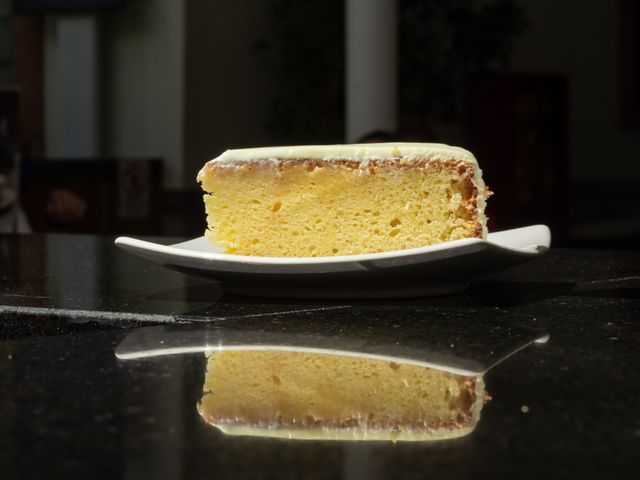


Find more like this
- Meal
- Dessert
- Cuisine
- Mediterranean
- Diet
- VegetarianHalal
- Method
- Oven
- Quick & Easy
- Easy