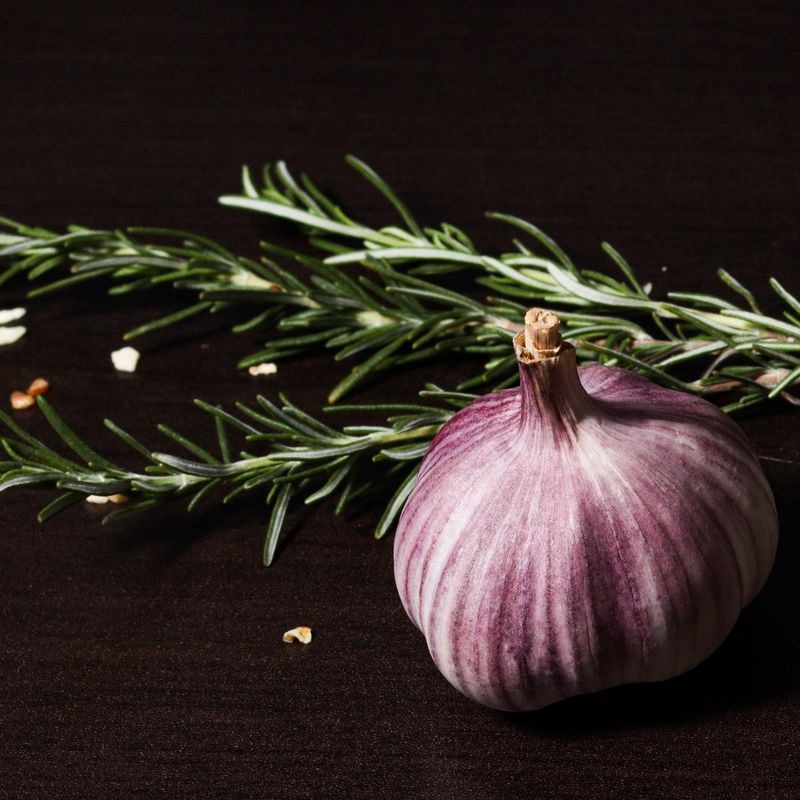
Rosemary and Garlic Lamb Broth
A deep, aromatic Mediterranean lamb broth built on roasted bones and layered with fresh rosemary, garlic, and tomato. Slow-simmered for maximum flavor extraction, this broth is rich enough to drink on its own or use as the foundation for soups, stews, and risotto.
- Prep
- 15 min
- Cook
- 3 hr
- Total
- 3 hr 15 min
- Makes
- About 2 quarts (2 liters)
Steps
Before you start
- Pat lamb bones dry with paper towels so they brown better.
- Gather all aromatics before you begin—have garlic peeled and rosemary sprigs ready.
- Use a pot large enough to hold bones submerged with 3 inches of water headroom.
Roast the lamb bonesOven 450°F / 230°C
- Preheat your oven to 450°F (232°C).
- Toss the patted-dry lamb bones with 2 tablespoons olive oil, salt, and pepper on a large rimmed baking sheet.
- Spread in a single layer and roast for 25–30 minutes, stirring halfway through, until the bones are deeply browned and caramelized.
- This step builds a rich, savory foundation for your broth.
+ Show details− Hide details
Ready when: Bones are deep mahogany brown with caramelized edges, no pale spots
Tip: Don't skip roasting—it concentrates flavor and removes excess moisture from the bones.
Start the broth base
- Transfer the roasted bones to a 12-quart stockpot (or your largest pot).
- Pour 2 cups of the cold water into the roasting pan, scrape up all the brown bits with a wooden spoon, and pour the liquid into the pot with the bones.
- Add the remaining 12 cups cold water; the bones should be submerged with about 2 inches of water above them.
+ Show details− Hide details
Ready when: Bones fully submerged
Tip: Starting with cold water helps extraction; the gradual heating dissolves collagen and proteins more completely.
Bring to a simmer and skim
- Set the pot over medium-high heat and bring to a gentle simmer—don't boil hard.
- As the liquid heats, skim the gray foam and impurities that rise to the surface using a spoon or skimmer.
- Skim for 3–5 minutes until the foam subsides and the liquid becomes clearer.
+ Show details− Hide details
Ready when: Liquid simmers gently with occasional bubbles breaking the surface
Tip: Skimming removes impurities that cloud the broth and can make it taste gamey. Don't rush this step.
Add aromatics and herbs
- Once skimmed, add the onion halves (unpeeled to add color), carrot halves, celery stalk, crushed garlic cloves, tomato paste, rosemary sprigs, thyme sprigs, bay leaves, and black peppercorns.
- Stir gently to combine.
- The tomato paste adds depth and slight acidity to balance the richness.
+ Show details− Hide details
Ready when: All ingredients incorporated
Tip: Crushing the garlic cloves rather than mincing them releases their aroma gradually, flavoring the broth without becoming bitter.
Simmer low and slow
- Reduce the heat to low and adjust so the broth barely simmers—you should see only the occasional lazy bubble breaking the surface, not a rolling boil.
- Cover the pot loosely with a lid (slightly ajar allows some evaporation) and simmer for 3 hours.
+ Show details− Hide details
Ready when: Broth has turned a rich amber color; aromatics have softened and given up their flavor
Tip: Too vigorous a boil will cloud the broth and cause it to evaporate too quickly. Low and slow is always better.
Strain the broth
- After 3 hours, carefully pour the broth through a fine-mesh strainer into a large bowl, discarding the bones and solids.
- For an even clearer broth, pour it again through fine-mesh lined with cheesecloth.
- The finished broth should be clear with an amber to light brown color.
+ Show details− Hide details
Ready when: Clear, amber-colored liquid; all solids removed
Tip: Let the broth drain slowly—don't press on the solids, which will cloud the liquid. Patience yields clarity.
Cool and degrease (if desired)
- If you have time, let the broth cool to room temperature, then refrigerate overnight.
- Once chilled, any fat will solidify on the surface and can be easily lifted off with a spoon.
- For an unstocked broth or if using immediately, you can skim off excess fat while the broth is still warm using a spoon or fat separator.
- Use as is or return to the stovetop and reduce to concentrate flavor.
+ Show details− Hide details
Ready when: Fat layer has solidified and can be removed cleanly, or surface is mostly clear if degreasing while warm
Tip: Chilling overnight makes degreasing much easier, but it's optional. Some cooks prefer to leave a thin layer of fat for richness.
Good to know
Tips
- Roasting the bones is non-negotiable for depth—it transforms the broth from bland to complex. Spend the time.
- If your broth tastes too gamey, a squeeze of lemon juice (about 1 tbsp per quart) at the end brightens it and rounds out the flavor.
- For a richer, more body-forward broth, simmer a fourth hour, but watch for evaporation and adjust water as needed.
- Freeze broth in ice cube trays for easy portioning into soups, sauces, and risotto.
Make ahead
Lamb broth is best made 1–2 days ahead. It deepens in flavor as it sits. Prepare through the straining step and refrigerate.
Storage & reheating
Refrigerator: up to 5 days in an airtight container. Freezer: up to 3 months in freezer bags (fill flat for easy stacking) or ice cube trays for smaller portions. Reheat on the stovetop over medium heat until steaming, or thaw overnight in the refrigerator first.
Substitutions
- fresh rosemary sprigs → 2 tsp dried rosemary. Use half the fresh amount when substituting dried herbs, as they're more concentrated. Add during the last hour to avoid bitterness.
- fresh thyme sprigs → 2 tsp dried thyme. Like rosemary, dried thyme is more potent. Reduce quantity and add late in cooking.
- tomato paste → 1 cup crushed canned tomatoes (drained well). Adds brightness and acidity; reduces depth slightly. Use the same weight in liquid.
- lamb bones (knuckle, neck, and/or shoulder blade) → beef or veal bones. Creates a more neutral-flavored broth with the same Mediterranean herbs. Chicken bones will yield a lighter, less gelatinous result.
More broths
See all →

Find more like this
- Meal
- Lunch
- Cuisine
- Mediterranean
- Main ingredient
- Lamb
- Method
- Oven
- Quick & Easy
- Easy