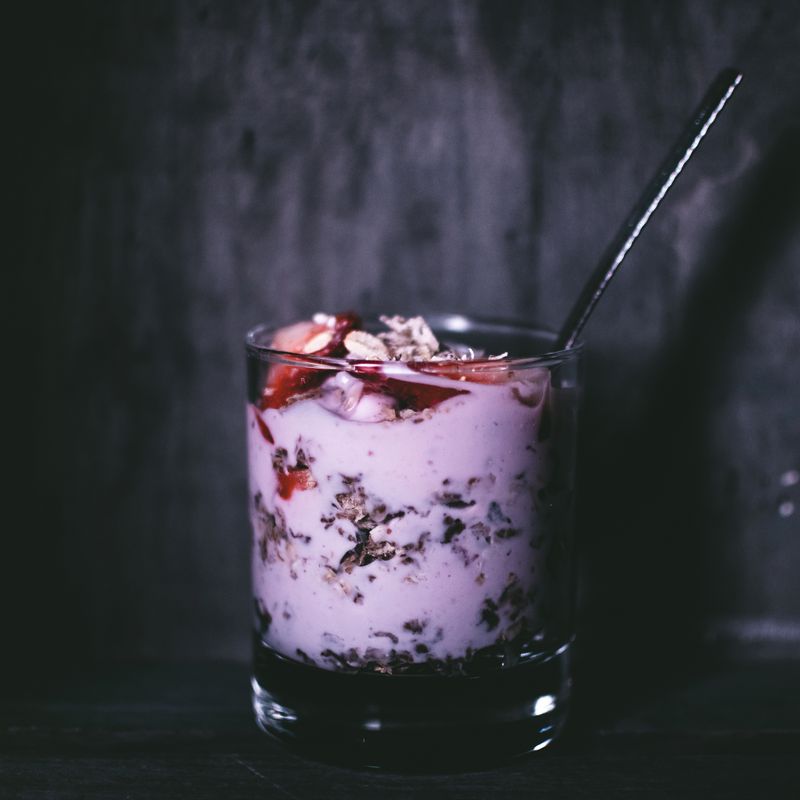
Rose Water Panna Cotta with Pistachio Granola Topping
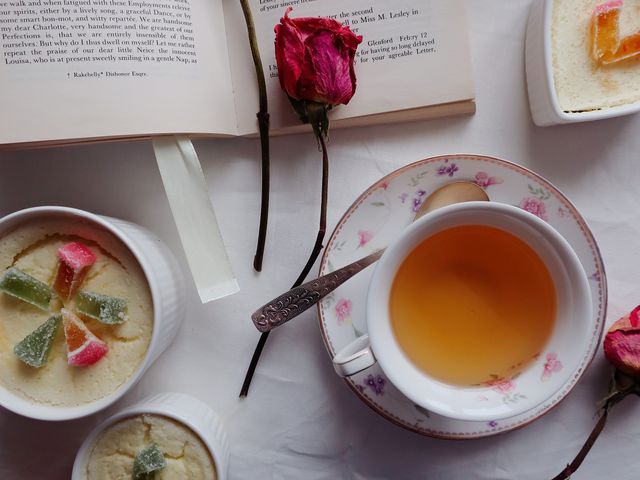
Silky, delicate panna cotta infused with rose water and Greek yogurt, topped with a crunchy, buttery pistachio granola. This elegant Persian-inspired dessert is rich yet refreshing, with the floral notes of rose complemented by toasted nuts and a drizzle of honey. Perfect for entertaining—make it ahead and chill.
- Prep
- 20 min
- Cook
- 8 min
- Wait
- 4 hr
- Total
- 4 hr 28 min
- Makes
- 6 servings (about 1 cup panna cotta + ¼ cup granola per serving)
Steps
Before you start
- Read the recipe entirely; gelatin timing is crucial for texture
- Have all ingredients at room temperature before starting
- Chill serving glasses or bowls in the freezer for 15 minutes before filling
- Toast pistachios lightly to intensify their flavor
Bloom the gelatin
- Pour 3 tablespoons (45 ml) of cold water into a small bowl.
- Sprinkle the 1.5 teaspoons (6 g) of powdered gelatin evenly over the water.
- Let it sit undisturbed for 5 minutes until it becomes opaque and spongey (this is blooming).
- Do not stir.
+ Show details− Hide details
Ready when: Gelatin is opaque, spongey, and has absorbed the water
Tip: Blooming prevents lumps in the panna cotta. Never skip this step.
Heat the creamOven 160°F / 70°C
- Pour 1.5 cups (360 ml) of cold heavy cream into a medium saucepan.
- Warm it over medium heat, stirring occasionally with a whisk, until it reaches 160°F (71°C)—it should steam gently but not boil.
- This takes about 5–6 minutes.
- Remove from heat.
+ Show details− Hide details
Ready when: Cream reaches 160°F (71°C) and steams gently
Tip: Use a thermometer to avoid overheating; boiling changes the cream's texture.
Dissolve the gelatin
- Add the bloomed gelatin to the hot cream, stirring constantly with a whisk until completely dissolved, about 1 minute.
- The mixture should be smooth with no lumps.
- Remove from heat and let cool for 2 minutes, stirring occasionally.
+ Show details− Hide details
Ready when: Gelatin fully dissolved, no visible lumps in mixture
Tip: Whisk constantly to prevent lumps; if you see any, pass the mixture through a fine sieve.
Combine yogurt and flavorings
- In a separate bowl, whisk the 0.75 cup (180 g) of room-temperature Greek yogurt with 3 tablespoons (45 ml) of honey, 2 teaspoons (10 ml) of rose water, and a pinch of kosher salt.
- Whisk until smooth and well combined, about 1 minute.
+ Show details− Hide details
Ready when: Mixture is smooth and homogeneous, no yogurt lumps visible
Tip: Use room-temperature yogurt so it incorporates smoothly without temperature shock.
Temper and blend
- Slowly pour the cooled cream mixture into the yogurt mixture while whisking constantly.
- Add about one-third of the cream mixture first, whisking continuously, then add the remaining cream in two more portions, whisking well after each addition.
- The final mixture should be smooth, light, and pale pink.
+ Show details− Hide details
Ready when: Mixture is completely smooth, homogeneous, and light pink
Tip: Adding cream slowly prevents the yogurt from curdling. Whisk constantly and don't rush.
Strain and fill glasses
- Pour the panna cotta mixture through a fine-mesh sieve into a bowl, pushing gently with the back of a spatula to catch any lumps or air bubbles.
- Divide evenly among 6 chilled serving glasses (about ¾ cup / 180 ml per glass).
- Cover loosely with plastic wrap.
+ Show details− Hide details
Ready when: Panna cotta evenly distributed; surface is smooth
Tip: Straining ensures a silky texture; don't press too hard or you'll incorporate air.
Chill the panna cotta
- Refrigerate the filled glasses for at least 4 hours, or until the panna cotta is set and jiggles slightly when gently shaken (it should not be rigid).
- The mixture will set as the gelatin cools and firms.
+ Show details− Hide details
Ready when: Panna cotta jiggles gently when shaken but holds its shape
Tip: Do not freeze; gelatin-based desserts become rubbery when frozen.
Toast nuts for granolaOven 325°F / 165°C
- Preheat the oven to 325°F (163°C).
- In a shallow baking pan (9×13 inch / 23×33 cm), combine 1.25 cups (180 g) of chopped pistachios, 0.75 cup (70 g) of rolled oats, and 0.5 cup (55 g) of sliced almonds.
- In a small bowl, whisk together 4 tablespoons (55 g) of melted butter, 3 tablespoons (45 ml) of honey, 0.5 teaspoon (2.5 ml) of vanilla extract, 0.25 teaspoon (1.5 g) of salt, and 0.25 teaspoon (0.5 g) of optional ground cardamom.
- Pour the wet mixture over the nuts and oats, and toss well with a spatula until evenly coated.
+ Show details− Hide details
Ready when: All nuts and oats coated evenly with honey-butter mixture
Tip: Toss the mixture thoroughly so everything toasts evenly. Don't skip the cardamom if you have it—it's a classic Persian touch.
Bake until goldenOven 325°F / 165°C
- Spread the nut mixture evenly across the pan.
- Bake at 325°F (163°C) for 12–14 minutes, stirring halfway through with a spatula, until the granola is light golden brown and fragrant.
- Watch closely toward the end—it can burn quickly.
- Remove from the oven and spread on a clean sheet of parchment paper to cool completely, breaking up any clumps as it cools, about 15 minutes.
+ Show details− Hide details
Ready when: Granola is light golden brown, fragrant, and crunchy when cool
Tip: Stir at the midpoint to ensure even browning. It will continue to crisp as it cools.
Assemble and serve
- Remove the panna cotta from the refrigerator.
- Top each glass with 3–4 tablespoons (about 30 g) of cooled granola.
- If desired, garnish with a few edible dried rose petals and a light drizzle of honey (about 1 teaspoon per serving).
- Serve chilled.
+ Show details− Hide details
Ready when: Panna cotta topped with granola and optional garnishes
Tip: Add granola just before serving so it stays crunchy. Add it earlier if you prefer a softer texture.
Good to know
Tips
- Rose water intensity varies by brand; start with 2 teaspoons and add ½ teaspoon more at a time if you want a stronger floral note. Too much rose water becomes soapy.
- Gelatin sets best in the coldest part of your refrigerator (usually the back, lowest shelf). Avoid placing panna cotta near the door, where temperature fluctuates.
- For a vegan version, substitute 1 tablespoon (15 ml) of cornstarch whisked into 2 tablespoons (30 ml) of cold coconut milk for the gelatin. The texture will be slightly less silky but still delicious.
- The granola recipe makes extra, which is perfect: store it in an airtight container and enjoy with yogurt, breakfast, or as a dessert topping for other dishes.
Make ahead
Panna cotta can be made up to 2 days ahead; cover and refrigerate. Granola keeps in an airtight container at room temperature for up to 5 days. Assemble just before serving for maximum crunch.
Storage & reheating
Panna cotta: Cover and refrigerate for up to 3 days. Do not freeze. Granola: Store in an airtight container at room temperature for up to 5 days, or in the refrigerator for up to 1 week (it will soften slightly but remains pleasant). Reheat granola in a 300°F (149°C) oven for 3–5 minutes to restore crispness if desired.
Substitutions
- rose water (culinary grade) → 2 teaspoons (10 ml) of orange zest or 1 teaspoon (5 ml) of vanilla extract. Use orange zest for a citrusy twist, or vanilla for a more neutral floral note. Stir into the yogurt mixture in step 4.
- Greek yogurt (plain, full-fat) → 0.75 cup (180 g) of crème fraîche or sour cream. Both add tanginess and richness. Use the same amount and temperature-adjust the same way. The panna cotta will be slightly denser.
- shelled roasted salted pistachios → 1.25 cups (140 g) of chopped hazelnuts, walnuts, or mixed nuts. Any roasted nut works. Hazelnuts and walnuts pair beautifully with rose water. Keep the same total weight for consistent texture.
- ground cardamom → 0.25 teaspoon (0.5 g) of ground cinnamon or a pinch of saffron threads (soaked in 1 tablespoon warm water, then drained). Cinnamon adds warmth; saffron adds luxury and a golden hue. Both are authentic Persian flavors.
More puddings & custards
See all →
Find more like this
- Meal
- Dessert
- Cuisine
- Persian
- Diet
- Gluten-Free
- Method
- Oven