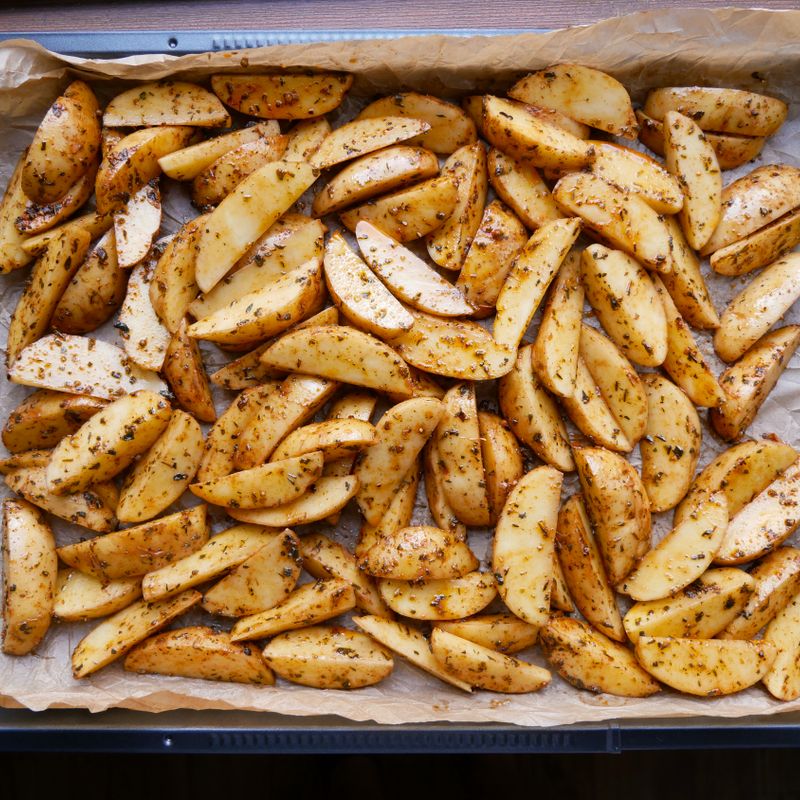
Roasted Garlic and Potato Chowder with Herb Oil
A creamy and aromatic potato chowder enriched with sweet, caramelized roasted garlic. Roasting transforms the garlic's raw pungency into mild, buttery mellowness that permeates the entire soup. A vibrant parsley and roasted garlic herb oil finishes each bowl with a fresh, fragrant accent. This is comfort food at its finest—warming, nourishing, and deeply flavorful.
- Prep
- 13 min
- Cook
- 40 min
- Wait
- 24 min
- Total
- 1 hr 17 min
- Makes
- 4–6 servings, about 6 cups
Steps
Before you start
- Preheat your oven to 400°F (200°C) before beginning
- Have a 3-quart (3-liter) or larger heavy-bottomed pot ready
- Read through the recipe: the garlic roasts while you prep vegetables and start the chowder, so activities overlap
- Measure out the vegetable broth and cream before starting stovetop cooking
Roast the garlicOven 400°F / 205°C
- Preheat your oven to 400°F (200°C).
- Separate 1 head of garlic into individual unpeeled cloves and discard any papery outer layers.
- In a small baking dish or on a baking sheet, toss the garlic cloves with 1 tablespoon olive oil and a small pinch each of salt and pepper, making sure each clove is lightly coated.
- Arrange in a single layer.
- Place the dish in the preheated oven and roast for 25–30 minutes, until the cloves are deep golden brown and very soft when pressed.
+ Show details− Hide details
Ready when: Garlic cloves are deep golden brown and very soft when pressed, with papery skins slightly split
Tip: Don't peel the garlic before roasting; the skins protect the cloves from burning and turning bitter. Roasting is what transforms raw garlic's harsh bite into sweet, buttery mellowness.
Prepare vegetables and herbs
- While the garlic roasts, prepare the other ingredients.
- Peel the Yukon gold potatoes and cut them into ½-inch (1.3 cm) cubes to ensure even cooking throughout.
- Dice the onion into small, roughly ¼-inch pieces.
- Cut the celery into small dice as well, removing any large tough strings first.
- Peel 3 fresh garlic cloves and mince them finely.
- Finely chop the fresh parsley and set aside.
- Measure out the vegetable broth and heavy cream into separate containers so they're ready to add.
+ Show details− Hide details
Ready when: All vegetables are cut to consistent sizes, garlic is minced fine, and parsley is finely chopped
Tip: Uniform potato size is crucial; aim for roughly the same ½-inch pieces so they cook evenly and finish at the same time.
Sauté aromatics
- In a large heavy-bottomed pot (3-quart/3-liter capacity or larger), melt 2 tablespoons butter with 1 tablespoon olive oil over medium heat.
- Once the mixture is foaming, add the diced onion and celery.
- Sauté for 5–6 minutes, stirring occasionally, until the vegetables begin to soften and the onion becomes translucent at the edges.
- Add the minced fresh garlic and cook for 1 minute longer, stirring constantly, until the raw garlic becomes very fragrant.
+ Show details− Hide details
Ready when: Onion is translucent at the edges, celery is softened, and minced garlic is very fragrant
Add potatoes, broth, and simmer
- Add the diced potatoes to the pot and pour in 4 cups vegetable broth.
- Stir well to combine.
- Increase the heat to medium-high and bring the mixture to a gentle boil (about 2 minutes), then reduce the heat to medium and maintain a steady, gentle simmer.
- The roasted garlic should be nearly finished by now.
- Let the potatoes simmer for 15–18 minutes, until they are completely tender and can be easily broken with a spoon but still hold their distinct shape.
+ Show details− Hide details
Ready when: Potatoes break easily with a spoon but still hold their shape, and broth has reduced slightly
Tip: Maintain a gentle, steady simmer; a vigorous rolling boil can break apart the potatoes and make the broth cloudy. Adjust heat if needed to maintain a gentle bubble.
Cool and add roasted garlic
- Remove the roasted garlic from the oven when the cloves are golden and very soft—they should be done right around when your potatoes finish simmering.
- Let the garlic cloves cool for 2–3 minutes until cool enough to handle safely.
- Gently squeeze or push the softened roasted garlic cloves out of their papery skins directly into the simmering pot.
- You should get about 3–4 tablespoons of sweet roasted garlic puree.
- Stir well to distribute the roasted garlic throughout the chowder.
+ Show details− Hide details
Ready when: All roasted garlic is incorporated throughout the soup and no skins remain visible
Tip: Work quickly but carefully; the roasted garlic cloves will slip out of their skins easily if they're soft enough. Don't worry if a tiny piece of skin gets in—just fish it out with a spoon.
Add cream and thyme
- Reduce the heat to low to prevent the cream from boiling.
- Pour in 1 cup heavy cream and sprinkle 1 teaspoon fresh thyme leaves (or ½ teaspoon dried thyme if fresh is unavailable) directly into the pot.
- Stir gently and let simmer for 2–3 minutes over low heat, allowing the thyme to infuse its flavor.
- Do not let the mixture boil.
+ Show details− Hide details
Ready when: Chowder is steaming and slightly thickened, thyme aroma is noticeable
Tip: Keep the heat low and watch carefully; heavy cream can separate if it comes to a rolling boil. Gentle heat creates a silky, emulsified soup.
Season and prepare herb oil
- Taste the chowder carefully and adjust the seasoning with salt and pepper to your liking.
- The roasted garlic provides natural sweetness and umami depth, so start with less salt than you might think and taste as you go.
- While the chowder sits on very low heat, prepare the herb oil: In a small bowl, combine ½ cup finely chopped fresh parsley with any reserved roasted garlic cloves (2–3 cloves, squeezed from their skins).
- Add 1 tablespoon olive oil and ½ tablespoon fresh lemon juice.
- Stir well and season the herb oil with a small pinch of salt and pepper.
+ Show details− Hide details
Ready when: Chowder is well-seasoned and balanced; herb oil is well mixed and fragrant
Tip: Chop the parsley as finely as possible for a more elegant, cohesive herb oil that distributes beautifully on each bowl.
Serve hot
- Ladle the creamy chowder into individual soup bowls or mugs.
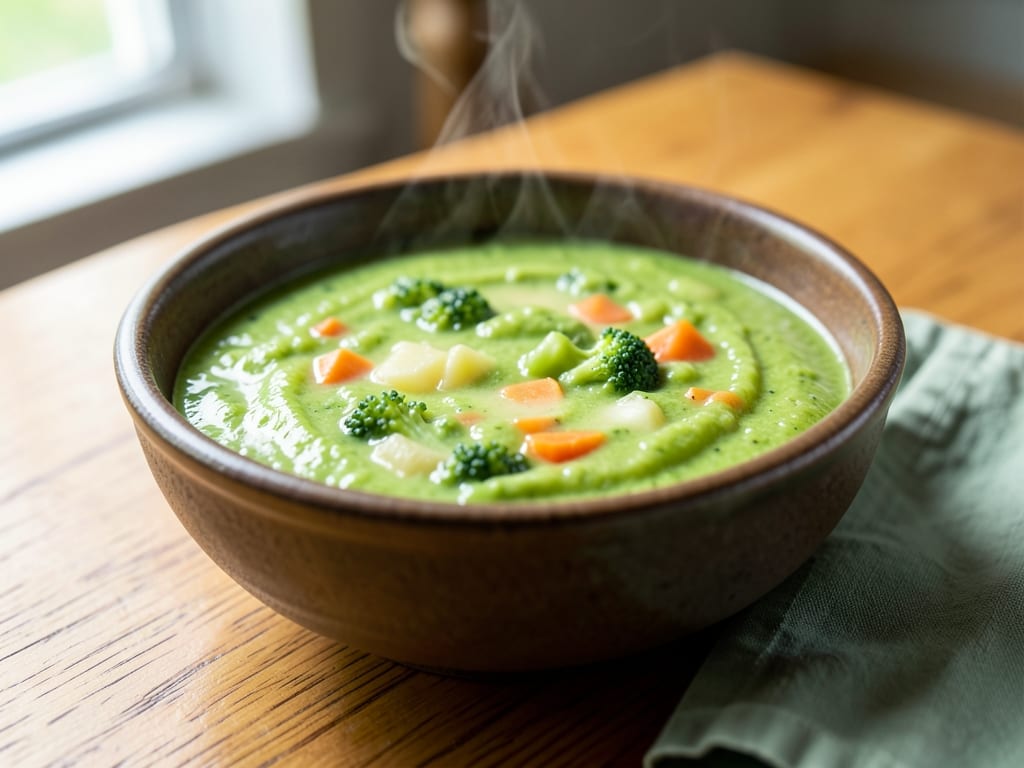
- Spoon a generous amount of the vibrant green herb oil onto the surface of each bowl.
- You can swirl it gently to distribute or leave it as a striking garnish.
- Serve immediately while the chowder is hot and the herb oil is fresh and fragrant.
+ Show details− Hide details
Tip: The herb oil is best served fresh and on top rather than mixed in completely, as it provides a bright, fresh contrast to the rich, creamy chowder.
Good to know
Tips
- Don't skip the roasting step—it transforms raw garlic's harsh, pungent bite into mild, sweet, buttery depth that is the soul of this chowder and cannot be replicated with raw or simply sautéed garlic.
- Keep the heat low when adding cream to prevent it from separating or breaking. Heavy cream loses its silky texture if it comes to a hard boil.
- The chowder thickens as it cools and sits. When reheating, thin it with a splash of vegetable broth or milk if it becomes too thick; it should be pourable.
- For a silkier, more refined texture, you can blend one-quarter to one-half of the finished chowder using an immersion blender after adding the roasted garlic but before adding the cream. This creates a partially blended soup that's thicker and more elegant.
Make ahead
The roasted garlic can be prepared 1–2 days ahead and stored in an airtight container in the refrigerator. The herb oil can be made up to 4 hours ahead and refrigerated. The complete chowder is best made the day of serving for optimal texture, but it keeps refrigerated for up to 1 day.
Storage & reheating
Refrigerator: Store the chowder in an airtight container for up to 3 days. Reheat gently on the stovetop over medium-low heat, adding a splash of vegetable broth or milk if it becomes too thick. The herb oil keeps refrigerated for up to 2 days but is best made fresh. Freezer: The chowder freezes well for up to 3 months (freeze without the herb oil topping). Thaw overnight in the refrigerator and reheat gently on the stovetop. The herb oil is not recommended for freezing, as the parsley loses its bright color and fresh texture.
Substitutions
- heavy cream → Whole milk or half-and-half. This makes a lighter chowder that is less rich and creamy. Use the same quantity; the soup will be thinner and more broth-forward.
- Yukon gold potatoes → Red potatoes or waxy fingerling potatoes. These hold their shape better during simmering than starchy varieties. Use the same total weight.
- fresh thyme leaves → Fresh marjoram, oregano, or dill. Use approximately the same quantity (1 teaspoon fresh leaves) for similar flavor impact. Each will shift the herbaceous notes slightly.
- fresh flat-leaf parsley, loosely packed → Fresh chives, tarragon, or dill. Chives add a subtle onion note; tarragon brings anise undertones; dill is more delicate. The herb oil will have a different but complementary character.
More chowders
See all →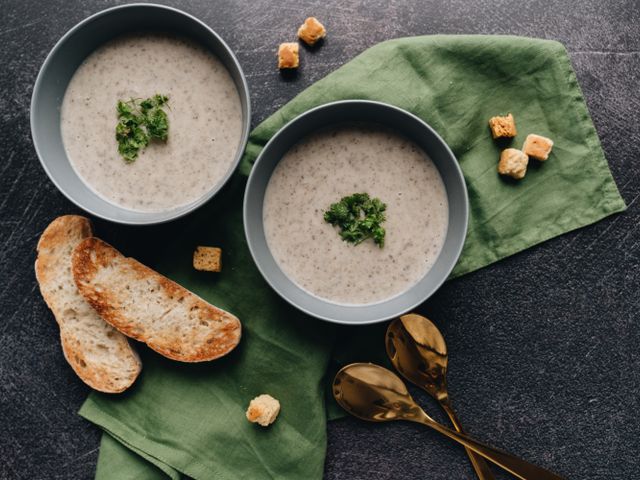
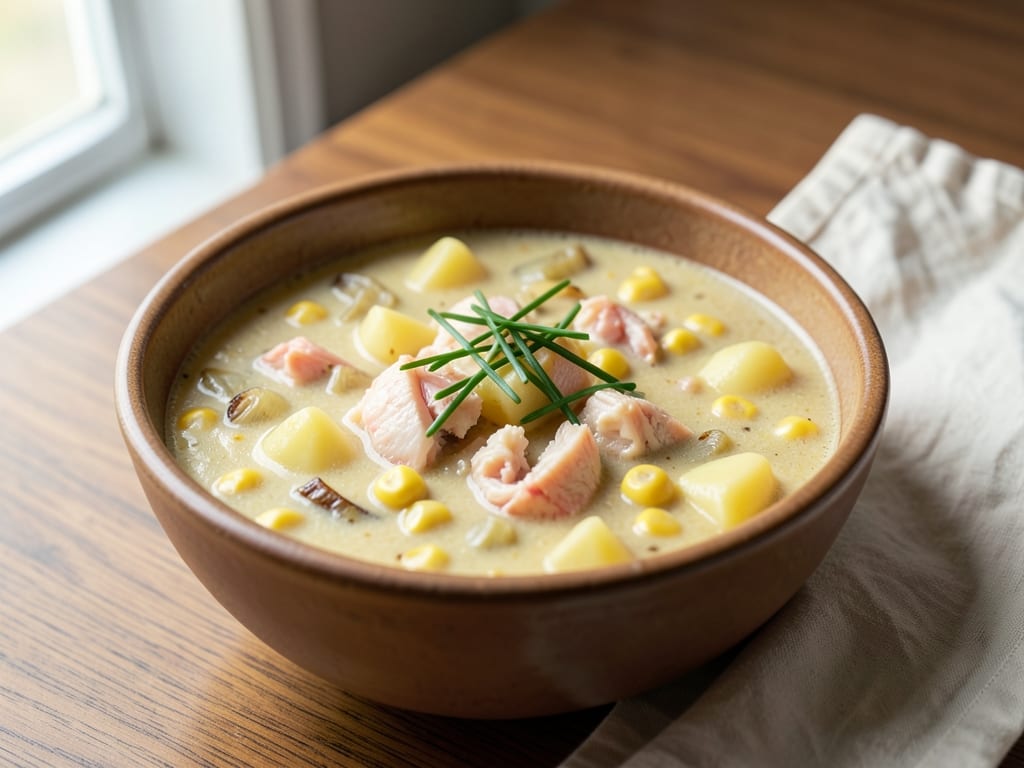
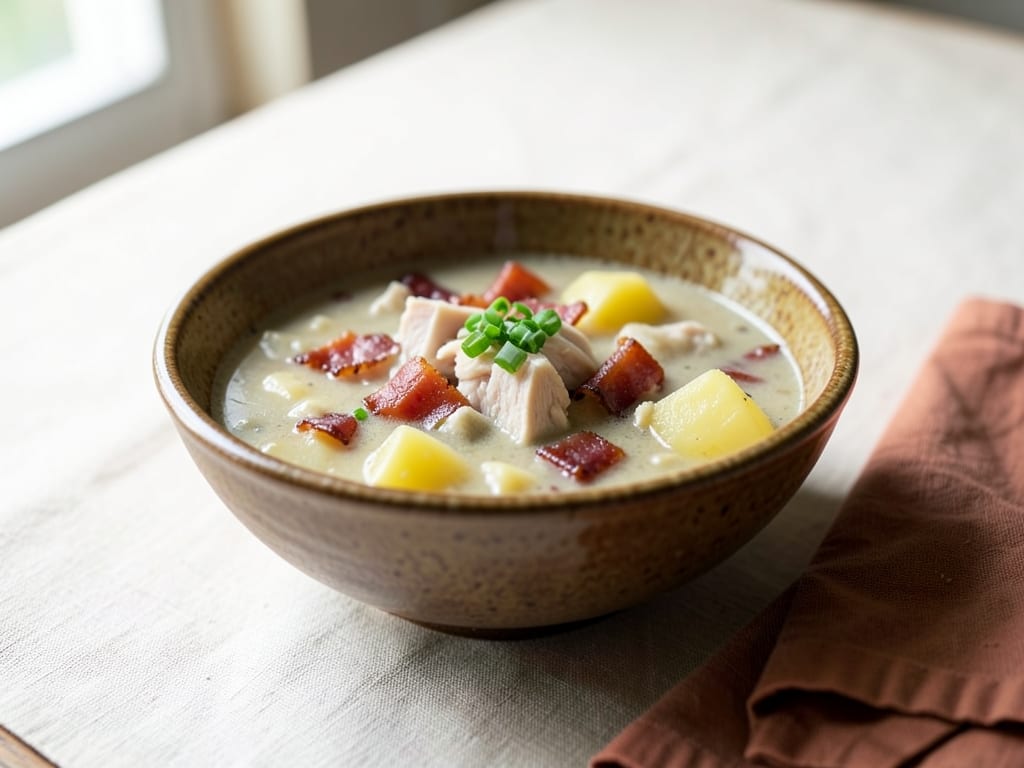


Find more like this
- Meal
- Dinner
- Cuisine
- American
- Main ingredient
- Potatoes
- Quick & Easy
- One-Pot
- Season
- Winter Comfort Food