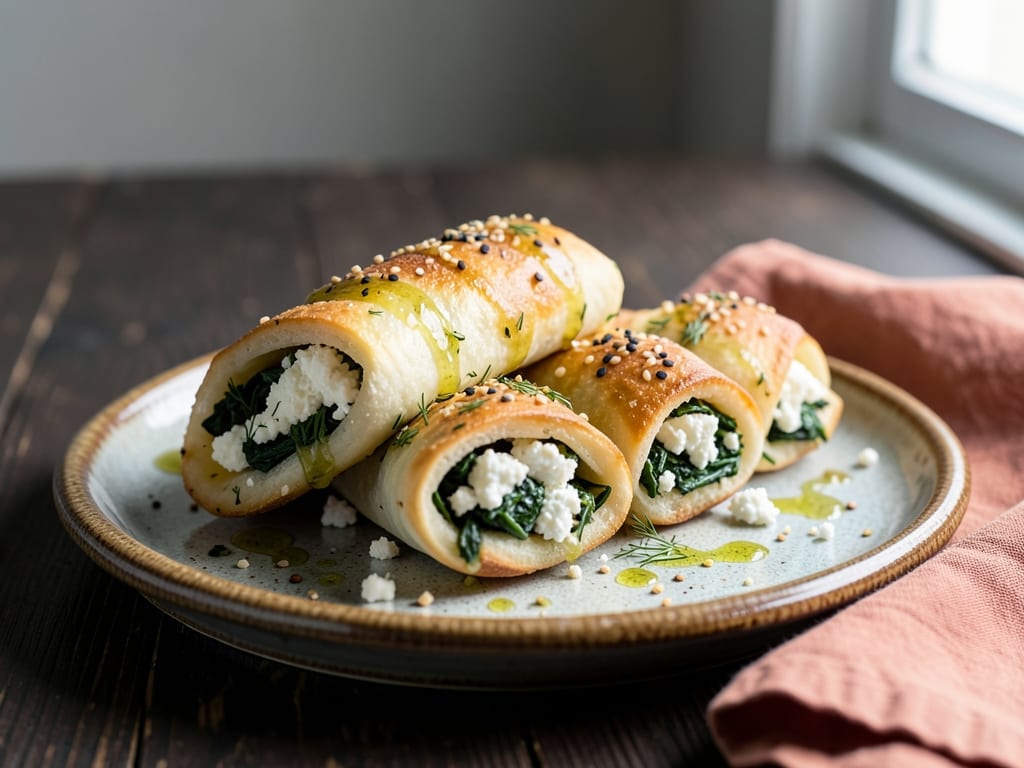
Roasted Garlic and Herb Manakish
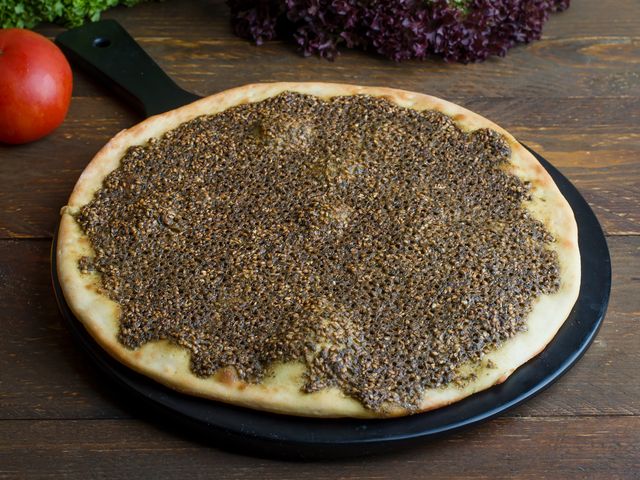
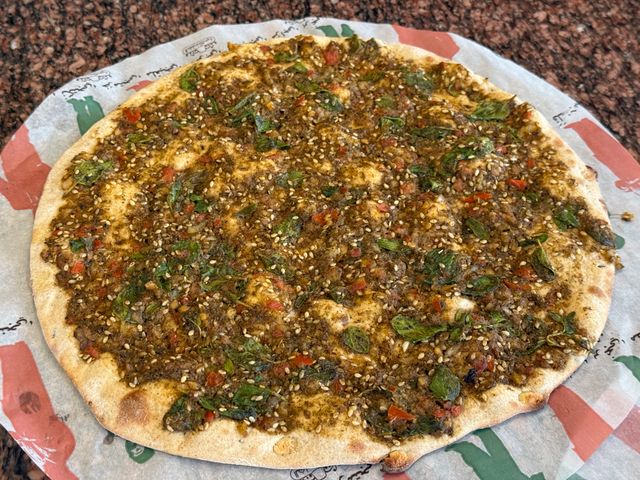
Lebanese flatbread topped with roasted garlic, fresh parsley, thyme, and sumac. The dough is soft and pillowy, and the topping—a fragrant blend of roasted garlic, herbs, and olive oil—creates a savory, aromatic crust when baked. Perfect warm from the oven with labneh or as an appetizer.
- Prep
- 30 min
- Cook
- 35 min
- Wait
- 1 hr 15 min
- Total
- 2 hr 20 min
- Makes
- 4 flatbreads (about 7 inches each)
Steps
Before you start
- Preheat oven to 450°F (230°C) for the garlic roasting step.
- Have all ingredients measured and ready—dough comes together quickly.
- The dough benefits from a warm, draft-free spot to rise (near an oven or in a turned-off oven).
Roast the garlicOven 450°F / 230°C
- Preheat the oven to 450°F (230°C).
- Place the 2 whole garlic heads on a small oven-safe skillet or in a ramekin.
- Drizzle with 1 tablespoon of the topping olive oil, turning to coat.
- Roast for 20–22 minutes until the garlic is very soft and golden, with the cloves easily squeezing out when pressed.
- Remove and set aside to cool slightly, then squeeze the roasted cloves from their skins into a small bowl.
+ Show details− Hide details
Ready when: Garlic is golden and very soft; cloves squeeze easily from skins
Tip: Don't skip roasting—it transforms raw garlic into a sweet, mild, spreadable paste that anchors the topping.
Mix the dough
- In a large bowl, combine 3 cups (390 g) bread flour, 2.25 teaspoons (7 g) instant yeast, and 1.5 teaspoons (9 g) fine sea salt.
- Add 1.25 cups (300 ml) of 110°F (43°C) warm water and 2 tablespoons (30 ml) extra-virgin olive oil.
- Stir with a wooden spoon or mix by hand until a rough, shaggy dough forms—it will be slightly sticky.
+ Show details− Hide details
Ready when: Dough is shaggy and all dry flour is incorporated
Tip: Don't overwork the dough at this stage—a loose, rough texture is correct.
Knead until smooth
- Transfer the dough to a clean work surface.
- Knead for 8–10 minutes, pushing with the heel of your hand, folding it back over itself, and rotating a quarter turn after each push.
- The dough should become smooth, elastic, and slightly tacky but not sticky.
- If it sticks, dust lightly with flour.
+ Show details− Hide details
Ready when: Dough is smooth, elastic, and springs back when poked
Tip: Knead long enough for gluten to develop—a slightly under-kneaded dough will tear when you stretch it.
First rise
- Oil the large mixing bowl lightly and place the dough in it, turning to coat all sides.
- Cover with a damp towel or plastic wrap.
- Let rise in a warm, draft-free spot (such as near an oven or inside a turned-off oven) for 45–50 minutes until roughly doubled in size and airy.
+ Show details− Hide details
Ready when: Dough is puffy and roughly double in volume; poke leaves a slight indent that doesn't fully spring back
Tip: If your kitchen is cold, place the bowl in an oven with just the light on for gentler warmth.
Divide and shape
- Turn the dough onto a lightly floured work surface.
- Divide into 4 equal pieces (each about 115 g).
- Gently shape each piece into a ball by folding the edges under.
- Let them rest, uncovered, for 5 minutes.
+ Show details− Hide details
Ready when: Balls are round and slightly firm
Tip: Resting the dough before stretching prevents it from shrinking back on itself.
Stretch into flatbreads
- Line a baking sheet with parchment paper.
- Take one dough ball and place it on a lightly floured work surface.
- Using your fingertips or a rolling pin, gently stretch it into a rough oval or circle about 7 inches (18 cm) long and ½ inch (1.25 cm) thick.
- Avoid making it paper-thin.
- Transfer to the baking sheet.
- Repeat with the remaining 3 dough balls, spacing them about 2 inches apart.
+ Show details− Hide details
Ready when: All 4 flatbreads are stretched and on the baking sheet
Tip: If dough springs back, let it rest 2–3 minutes and try again—pushing too hard will tear it.
Make the herb topping
- In a small bowl, combine the roasted garlic cloves (mashed lightly with a fork), the remaining 3 tablespoons (45 ml) extra-virgin olive oil, 1 cup (30 g) finely chopped fresh parsley, 2 tablespoons (6 g) fresh thyme leaves, 1 tablespoon (8 g) sumac, and a pinch of freshly ground black pepper.
- Stir until well blended and fragrant.
+ Show details− Hide details
Ready when: Topping is well mixed and fragrant
Tip: Don't over-mash the roasted garlic—small soft clumps add nice texture to the topping.
Top the flatbreads
- Divide the herb-garlic mixture evenly among the 4 flatbreads, spreading it generously over the top of each (about 2½ tablespoons per flatbread).
- Leave a thin border around the edges to allow for puffing during baking.
- Use a spoon or the back of a brush to spread evenly.
+ Show details− Hide details
Ready when: All flatbreads are evenly covered with topping
Tip: Don't press the topping down—it should sit loosely on the dough so the herbs stay bright and fragrant.
Bake until goldenOven 425°F / 220°C
- Preheat the oven to 425°F (220°C).
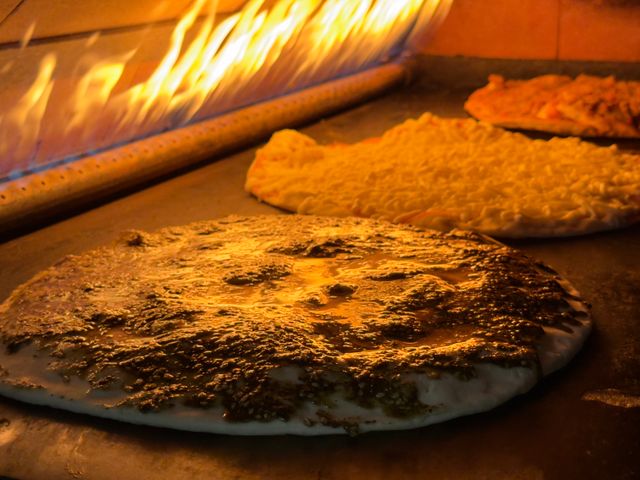
- Bake the manakish for 12–15 minutes until the edges are puffed and golden brown and the bottom is firm when you tap it (lift one to check).
- The topping should be fragrant and the herb oil sizzling slightly at the edges.
+ Show details− Hide details
Ready when: Edges are puffed and golden; bottom is firm and lightly browned; herb oil sizzles
Tip: If the topping begins to brown too quickly, lower the oven temperature to 400°F (200°C) for the last 5 minutes.
Cool and serve
- Transfer the manakish to a wire rack or clean kitchen towel.
- Let cool for 2–3 minutes until the flatbreads firm up slightly but are still warm.
- Serve immediately, folded in half or whole, drizzled with a bit more olive oil if desired.
+ Show details− Hide details
Ready when: Flatbreads are warm and slightly firmer; topping has set but is still fragrant
Tip: Serve within 10 minutes of baking for the best texture and warmth.
Good to know
Tips
- Roasting the garlic is non-negotiable—it mellows the raw bite and becomes a creamy, golden paste that anchors the topping flavor.
- Manakish is best eaten warm or at room temperature within a few hours of baking; the flatbreads gradually firm up and the topping loses its fresh, herbal brightness once cooled completely.
- If you don't have sumac, the manakish will still be delicious without it, but sumac adds a distinctive tangy flavor and pretty burgundy-red color that's characteristic of the traditional Lebanese version.
- For a moister result, drizzle a bit more good olive oil over the warm manakish just before serving.
Make ahead
Store the herb-garlic topping in an airtight container in the refrigerator for up to 2 days. Prepare and shape the dough balls, cover, and refrigerate for up to 12 hours; bring to room temperature and let rise slightly before stretching and baking.
Storage & reheating
Store cooled manakish in an airtight container at room temperature for up to 2 days. Reheat in a 350°F (175°C) oven for 5–7 minutes until warm. For longer storage, wrap tightly and freeze for up to 1 month; thaw at room temperature and reheat before serving. The topping does not freeze well once baked.
Substitutions
- fresh flat-leaf parsley → fresh cilantro or a mix of parsley and mint. Cilantro will add a more assertive, citrusy flavor; mint brightens the topping and complements the roasted garlic.
- sumac → finely grated zest of 1 lemon or lime. Sumac provides tangy color and flavor; zest offers tartness but less visual pop. Add the zest just before baking so it doesn't burn.
- fresh thyme → fresh oregano or za'atar (1 tablespoon / 5 g). Oregano is peppery and robust; za'atar is already a herb blend, so omit the thyme and sumac if using it.
- bread flour → all-purpose flour or whole-wheat flour. All-purpose flour will yield a slightly less chewy crumb; whole-wheat adds nuttiness but may require an extra tablespoon of water.