Red Lentil and Potato Budget Biryani
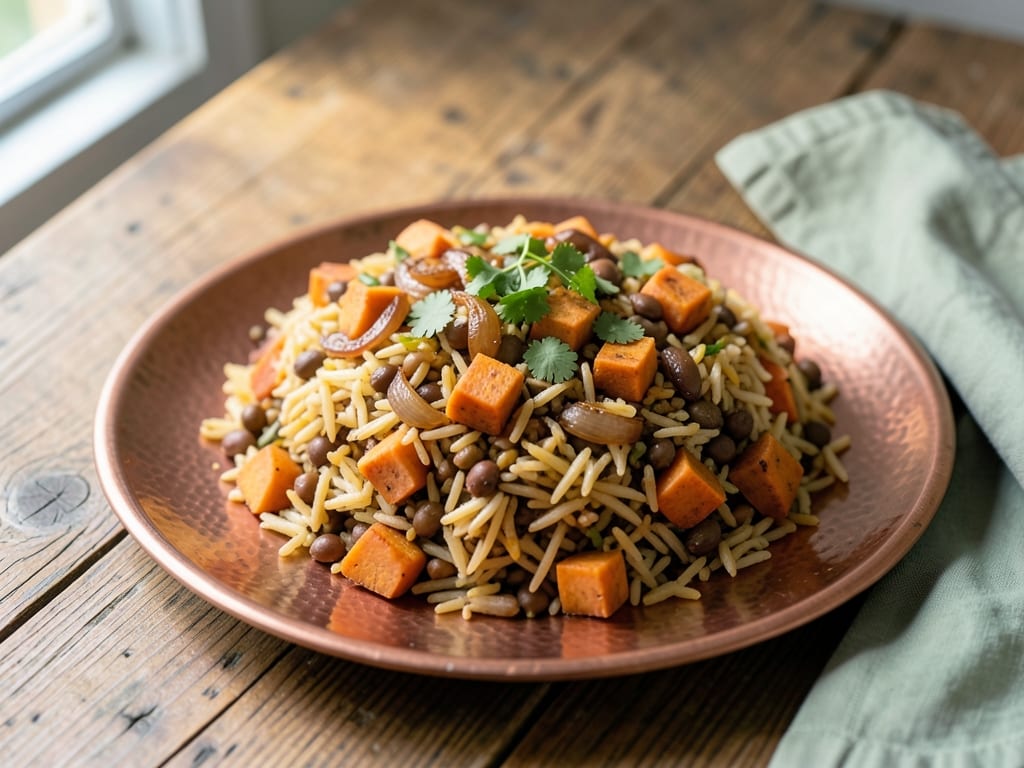
A humble one-pot biryani built on layers of basmati rice, red lentils, and potatoes with caramelized onions, tomatoes, and warm spices. This budget-friendly version skips the meat but keeps all the aromatic depth through toasted cumin, cinnamon, cardamom, and bay leaves. The lentils cook into the rice, creating a creamy, nourishing texture while the potatoes stay tender. Perfect for weeknight dinners or when you want restaurant-style rice without breaking the bank.
- Prep
- 20 min
- Cook
- 45 min
- Wait
- 15 min
- Total
- 1 hr 20 min
- Makes
- 4 servings (about 1.5 cups each)
Steps
Before you start
- Rinse basmati rice in cold water 3–4 times until the water runs clear, then let it sit dry for 10 minutes
- Cut potatoes into ¾-inch (2 cm) cubes; keep them separate from other ingredients
- Have all whole spices measured and ready before you start cooking
- Use a 4–5 quart (3.8–4.7 L) heavy-bottomed pot with a tight-fitting lid
Fry the potatoes
- Heat the oil in the 4–5 quart pot over medium-high heat (3–4 minutes).
- Once shimmering, add the cubed potatoes in a single layer.
- Fry without stirring for 4–5 minutes, then stir and continue frying for another 3–4 minutes until the edges are golden and crispy.
- Remove the potatoes with a slotted spoon to a plate; set aside.
+ Show details− Hide details
Ready when: Potatoes are golden and lightly crispy on edges
Tip: Don't stir too much—let them develop color. They'll finish cooking in the steam later, so slightly underdone here is fine.
Toast the whole spices
- In the same pot with residual oil, add the cumin seeds, cinnamon stick, cardamom pods, and black peppercorns over medium heat.
- Toast for 1–2 minutes, stirring gently, until fragrant.
- The spices should darken slightly and fill the kitchen with aroma.
+ Show details− Hide details
Ready when: Spices are fragrant and slightly darkened
Tip: Toast just until aromatic—overtoasting makes them bitter. You should smell the cumin and cinnamon clearly.
Sauté the onions
- Add the sliced onions to the pot and cook over medium heat, stirring often, for 8–10 minutes.
- The onions should turn soft and golden-brown with some caramelized edges.
- Lower heat to medium-low if they start to brown too quickly on the bottom.
+ Show details− Hide details
Ready when: Onions are soft and light golden-brown
Tip: This slow browning builds sweetness. Rushing it results in raw-tasting onions. Stir every minute or so.
Build the spice base
- Add the ginger-garlic paste and cook for 1 minute, stirring constantly.
- Then add the ground turmeric, ground cumin, and red chili powder.
- Stir for another 30–45 seconds until the raw spice smell fades and the mixture becomes fragrant.
- You should see the oil separate slightly from the spices.
+ Show details− Hide details
Ready when: Spices are fragrant and oil begins to separate
Tip: Don't skip this bloom step—it draws out flavor. The mixture should smell rich and spiced, not raw.
Add tomatoes and simmer
- Add the diced tomatoes and stir well.
- Cook over medium heat, stirring occasionally, for 4–5 minutes.
- The tomatoes will break down and release their juices, creating a loose paste.
- The oil should start to separate from the tomato mixture again.
+ Show details− Hide details
Ready when: Tomatoes are broken down and oil separates from the base
Tip: This is the flavor foundation. Let the tomatoes fully soften and cook down, not just warm through.
Add lentils and water
- Pour in the rinsed red lentils and the 3 cups of water.
- Add the bay leaves.
- Stir well to combine.
- Bring to a gentle boil over medium-high heat, then immediately lower the heat to medium-low.
- Simmer uncovered for 8–10 minutes, stirring occasionally, until the lentils are softening and the liquid is mostly absorbed (some liquid may remain).
- Season to taste with salt.
+ Show details− Hide details
Ready when: Lentils are soft and most liquid is absorbed; some liquid may remain
Tip: Don't fully cook the lentils here—they'll continue softening in the steam. You want them mostly cooked but still with a tiny bite.
Layer the rice
- Spread the rinsed basmati rice evenly over the lentil mixture.
- Return the fried potatoes to the pot and scatter them on top of the rice.
- Do not stir.
- The rice should sit on top of the lentils and potatoes in a loose pile.
+ Show details− Hide details
Ready when: Rice is evenly spread and potatoes are scattered on top
Tip: Layering keeps the rice grains separate and the potatoes on top where they'll crisp up. Don't stir—you want distinct layers.
Steam the biryani
- Cover the pot with its tight-fitting lid.
- If the lid doesn't seal well, place a piece of aluminum foil under the lid to trap steam.
- Set the heat to high for 2 minutes to bring moisture to a steam, then lower to low heat.
- Cook for 15 minutes without opening the lid.
- The biryani is done when all water is absorbed, the rice is tender, and you hear no sizzling or steaming sounds from inside.
+ Show details− Hide details
Ready when: No steam or sizzle sounds; rice is tender and grains are separate; all liquid absorbed
Tip: Do not lift the lid during steaming—you'll lose the steam and extend the cooking time. The first 2 minutes on high builds the steam; the rest is gentle cooking.
Rest and fluff
- Remove the pot from the heat and let it rest, still covered, for 5 minutes.
- Then remove the lid and gently fluff the rice with a fork, breaking up any clumps and mixing the layers slightly (just a gentle fold, not aggressive stirring).
- Taste and adjust salt if needed.
+ Show details− Hide details
Ready when: Rice is fluffy; grains are mostly separate
Tip: Resting prevents the rice from drying out. Fluff gently with a fork to keep grains intact.
Garnish and serve
- Transfer the biryani to a serving bowl or platter.
- Garnish with fresh cilantro if desired.
- Serve hot, with lime wedges and a simple raita or pickle on the side if you have them.
+ Show details− Hide details
Tip: The cilantro adds a fresh, aromatic finish. You can also serve with sliced onions or a dollop of plain yogurt.
Good to know
Tips
- Biryani is all about technique and layering. The rice stays fluffy because it steams on top; the lentils add creaminess below. Don't stir during cooking—this is key to the texture.
- The fried potatoes add richness and texture. If you want to save time or oil, you can skip frying them and add raw potato cubes directly in step 6 with the lentils, but they won't have the crispy edges.
- This biryani is best eaten fresh, within a few hours. The rice begins to lose its fluffy texture over time. Leftovers are still good but are better reheated with a splash of water than eaten cold.
- For extra flavor, reserve a tablespoon of the fried onions from step 3 to garnish the finished dish instead of using cilantro. Or use both. Fresh mint also works beautifully as a garnish.
Make ahead
Make the ginger-garlic paste and measure all dry spices the night before to speed up assembly. You can prep the potatoes, onions, and tomatoes a few hours ahead and refrigerate separately in airtight containers.
Storage & reheating
Store leftovers in an airtight container in the refrigerator for up to 3 days. To reheat, add a splash of water (about 2–3 tablespoons per serving) to a skillet over medium heat, gently breaking apart the biryani and stirring until warmed through (about 5–7 minutes). Do not microwave—the dry heat will make the rice hard. The biryani does not freeze well because the rice texture suffers, but you can freeze the cooked lentil and potato base separately (up to 1 month) and cook fresh rice to layer on top when you're ready to eat.
Substitutions
- red lentils → Yellow lentils or toor dal. Both cook at similar speed and will blend into the rice, creating the same creamy texture. Avoid brown or green lentils, which don't break down as easily.
- basmati rice → Long-grain white rice or jasmine rice. Basmati has the best fragrance and stays fluffy, but these alternatives work. Jasmine will be slightly stickier; reduce water by 2–3 tablespoons.
- medium waxy potatoes (such as Yukon Gold) → Cauliflower florets (about 4 cups) or carrots and peas. Cauliflower adds texture and stays firm; add it in step 7 rather than frying it separately. Carrots and peas cook faster, so add them in step 6 with the lentils instead.
- ginger-garlic paste → 1 tbsp fresh ginger, minced, plus 3–4 cloves garlic, minced (total about 20 g). Fresh paste is superior but takes time. Mince finely and add in step 4. Powder ginger and garlic powder are less ideal but work (reduce amounts by half).