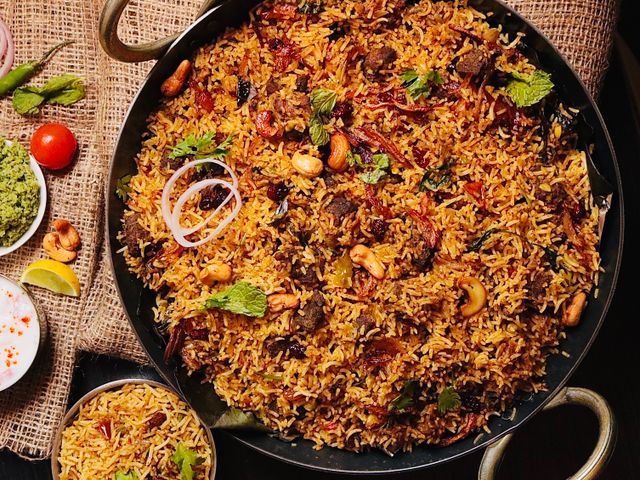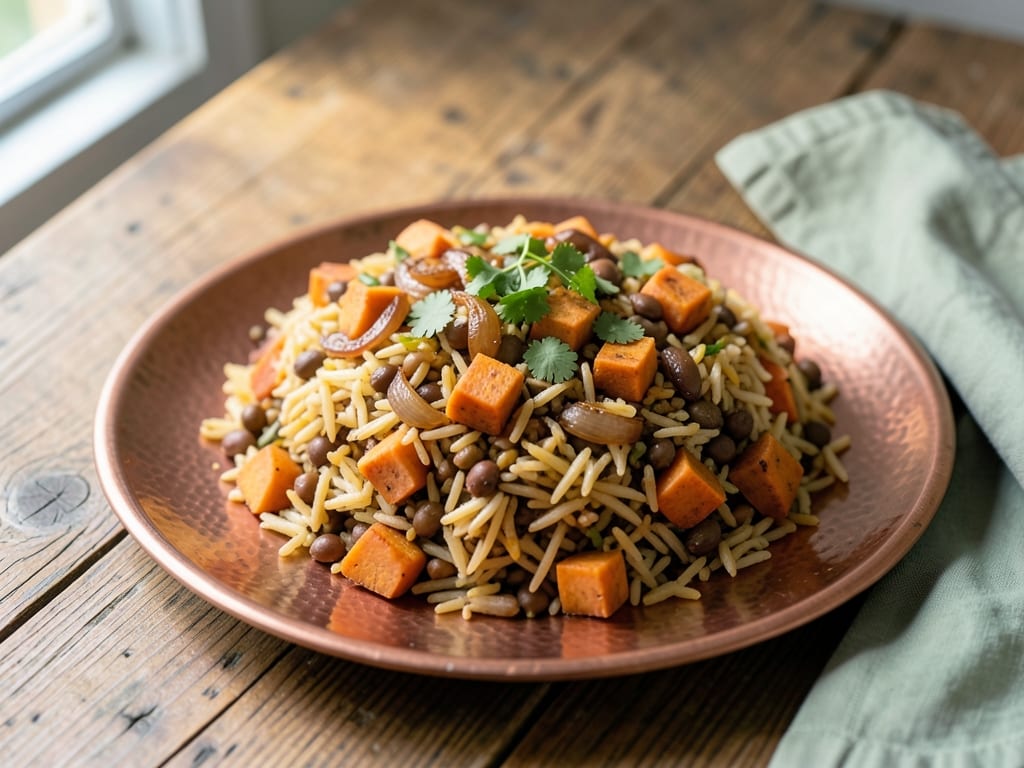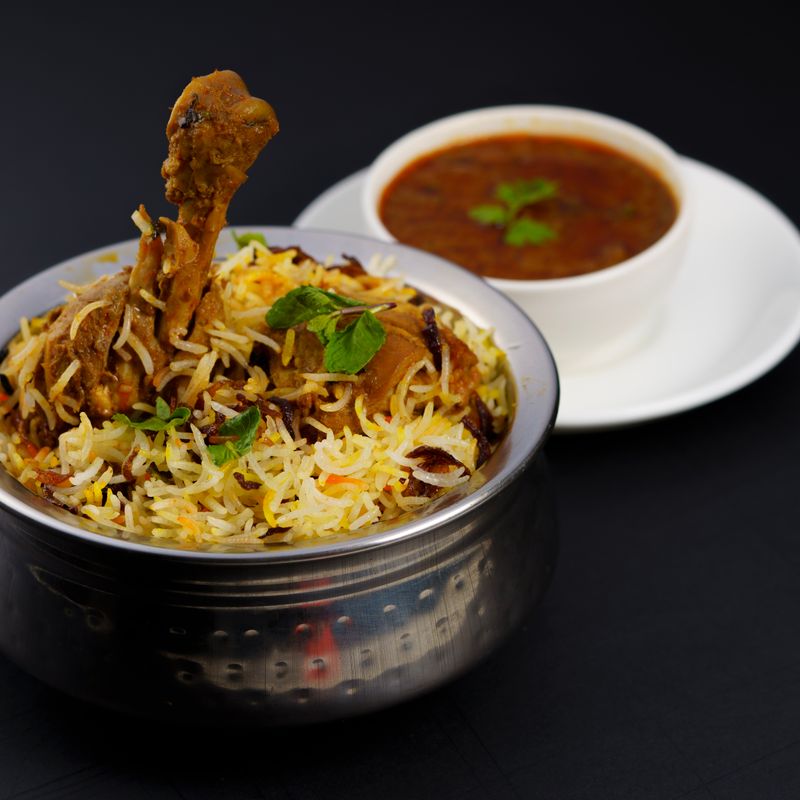
Bottle Gourd and Lentil Biryani
A fragrant, layered vegetarian biryani featuring tender bottle gourd, earthy red lentils, and basmati rice infused with warm spices. The layers are cooked together using the traditional dum pukht method, creating a one-pot meal where every grain absorbs the flavors of caramelized onions, ginger-garlic, and whole spices. The bottle gourd stays delicate and mild, balancing the earthiness of lentils and aromatic rice. Serve with raita and a simple salad for a complete meal.
- Prep
- 25 min
- Cook
- 50 min
- Wait
- 15 min
- Total
- 1 hr 30 min
- Makes
- 4 servings (about 1½ cups per person)
Steps
Before you start
- Soak basmati rice in cold water for 20 minutes, then drain well
- Measure all spices ahead of time
- Peel and dice bottle gourd into ½-inch cubes
- Rinse lentils and set aside
Caramelize onions
- Heat 2 tablespoons ghee in a heavy-bottomed 3–4 quart pot over medium-high heat.
- Once shimmering, add the sliced onion.
- Stir frequently and cook for 10–12 minutes until the onion turns deep golden brown and crispy.
- Transfer half the fried onion to a small bowl for garnish.
- Keep the remaining onion in the pot along with its ghee.
+ Show details− Hide details
Ready when: Onion is deep golden brown and crispy, not burnt
Tip: Stir constantly to prevent burning. Lower heat slightly if onion is browning too fast.
Cook aromatics and bottle gourd
- Add the remaining 2 tablespoons ghee to the pot with the fried onion.
- Add ginger-garlic paste and slit green chilis; stir for 1 minute until fragrant.
- Add the diced bottle gourd and stir gently for 2–3 minutes, coating well with ghee.
- The bottle gourd should soften slightly but remain in pieces.
+ Show details− Hide details
Ready when: Bottle gourd is coated with ghee and slightly softened
Tip: Stir gently to keep bottle gourd pieces intact.
Toast whole spices
- Add cumin seeds, cinnamon stick, bruised green cardamom pods, bay leaves, and cloves to the pot.
- Stir continuously for 1 minute until the spices become fragrant and begin to pop slightly.
+ Show details− Hide details
Ready when: Spices are fragrant and cumin seeds are lightly toasted
Tip: Don't let spices burn; they should be fragrant and slightly darker, not black.
Add lentils and rice
- Pour in 3.5 cups water and bring to a boil over high heat.
- Add the rinsed red lentils and stir to combine.
- Once the mixture returns to a boil, add the drained basmati rice and stir well.
- Reduce heat to medium and cook uncovered for 8–10 minutes, stirring occasionally, until the rice absorbs most of the liquid and is partially cooked.
- The grains should still have a slight firmness in the center.
+ Show details− Hide details
Ready when: Rice is partially cooked and most liquid is absorbed; rice grains are still firm
Tip: Stir occasionally to prevent rice from sticking to the bottom. Don't overcook at this stage.
Season and layer finishing ingredients
- Taste the rice mixture and add salt to your preference.
- Gently fold in the chopped cilantro and mint leaves.
- If using yogurt, fold it in gently now.
- Arrange the biryani so the ingredients are roughly even, with no large pockets of rice on top.
+ Show details− Hide details
Ready when: Herbs are evenly distributed and yogurt is folded in
Tip: Use a gentle hand to fold; you want to preserve the structure of the rice and bottle gourd pieces.
Finish cooking (dum pukht method)
- Reduce heat to low.
- Cover the pot tightly with aluminum foil, pressing it around the edges, then place the lid firmly on top to trap steam.
- Cook undisturbed for 10 minutes.
- You may hear a gentle steam sound, which is good; this indicates the biryani is steaming inside.
+ Show details− Hide details
Ready when: Steam is visible when you lift the lid; rice is tender and liquid is absorbed
Tip: Resist the urge to peek or stir. The steam trapped inside is essential for the final texture.
Rest and finish
- Remove the pot from heat and keep it covered for 5 minutes.
- Then carefully remove the foil and lid, fluffing the biryani gently with a fork to separate the grains.
- Transfer to a serving platter and garnish with the reserved crispy fried onions.
+ Show details− Hide details
Ready when: Rice grains are separate, fluffy, and cooked through
Tip: Fluff gently with a fork to avoid mashing the rice and bottle gourd.
Good to know
Tips
- Do not skip soaking and draining the basmati rice. This removes excess starch and ensures fluffy, separated grains in the final dish.
- Bottle gourd is delicate and mild, so handle it gently and avoid overcooking before the dum pukht stage. Overcooked bottle gourd can become mushy.
- The dum pukht (slow-cooking in trapped steam) method is what makes a true biryani. Resist opening the lid during cooking, as this releases steam and extends cooking time.
- For extra richness, gently stir a tablespoon of saffron threads soaked in warm milk into the pot just before covering for the final steam.
Make ahead
You can prepare the bottle gourd, lentils, and rice up to 1 day ahead. Keep bottle gourd in an airtight container in the refrigerator. The onions can be fried and stored in an airtight container at room temperature for up to 4 hours.
Storage & reheating
Store leftover biryani in an airtight container in the refrigerator for up to 3 days. Reheat gently on the stovetop over low heat, covered, for 5–7 minutes, stirring occasionally and adding a splash of water if needed. Do not microwave, as this can make the rice dry and hard. Biryani does not freeze well because the bottle gourd texture degrades.
Substitutions
- bottle gourd (lauki) → zucchini or patty pan squash. These will cook faster (6–8 minutes in step 2), so watch closely to keep pieces intact. Both offer a similarly mild, tender texture.
- red lentils (masoor dal) → yellow lentils (moong dal) or green lentils. Yellow lentils cook in the same time and have a similar soft texture. Green lentils take slightly longer and hold their shape better if you prefer more structure.
- basmati rice → jasmine rice or long-grain white rice. Both absorb flavors well, though jasmine rice is softer and may require slightly less water (3¼ cups instead of 3½).
- ghee → unsalted butter or neutral oil (vegetable, canola, or sunflower). Use the same amount. Ghee provides the richest flavor, but butter or oil will work. If using oil, reduce to 3 tablespoons total for the same amount of fat.