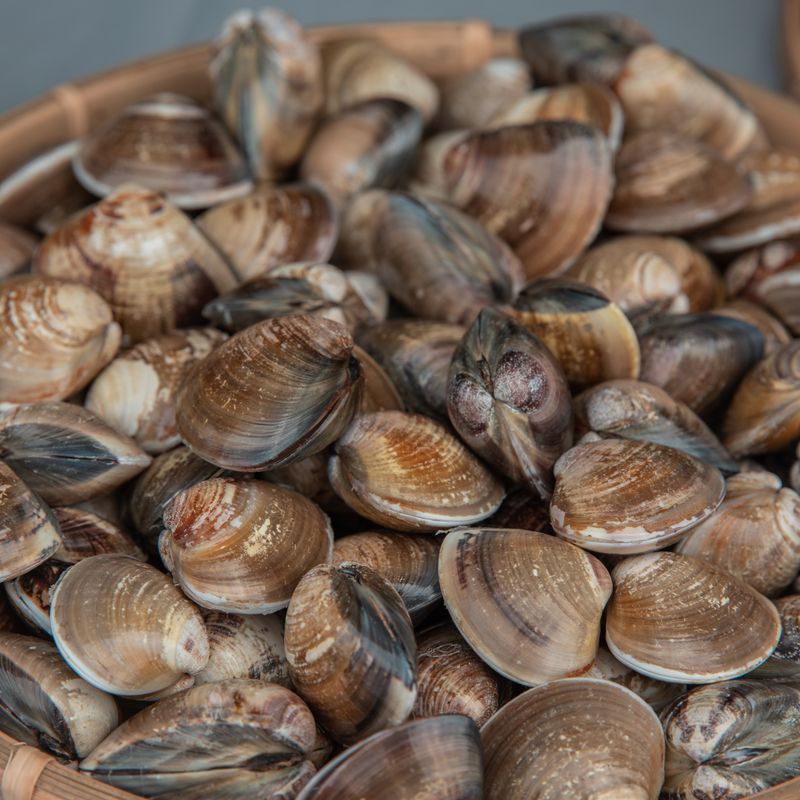
Portuguese White Fish and Clam Couscous
A rustic one-pot Portuguese seafood dish featuring littleneck clams and white fish fillets simmered with saffron, tomatoes, and pearl couscous in a fragrant broth. The couscous absorbs all the briny, golden flavors while the seafood cooks gently above, creating a complete meal in one pot. Finished with fresh parsley and lemon, this weeknight dinner feels restaurant-worthy but comes together on the stovetop in under an hour.
- Prep
- 15 min
- Cook
- 40 min
- Wait
- 5 min
- Total
- 1 hr
- Makes
- Serves 4 (about 1.5 cups per serving)
Steps
Before you start
- Read the entire recipe and gather all ingredients before starting—this helps the cooking flow smoothly
- Scrub the clams under cold water and discard any with broken shells or that don't close when tapped
- Ensure you have a large heavy-bottomed pot or wide shallow pan at least 12 inches (30 cm) wide
- Squeeze fresh lemon juice before you start cooking (about 2 tablespoons / 30 ml total needed)
Infuse saffron in broth
- Warm 1/2 cup (120 ml) of the fish broth in a small pot or mug over medium heat until steaming, about 2 minutes.
- Add the saffron threads and set aside to steep for 5 minutes.
- The broth will turn deep golden and extract the saffron's distinctive flavor and color—you'll notice its distinctive earthy-floral aroma.
+ Show details− Hide details
Ready when: Broth turns deep golden yellow and smells fragrant
Tip: Don't boil the broth—steep it gently so the saffron's delicate flavor isn't damaged by high heat. Boiling can make it bitter.
Prepare seafood and vegetables
- Scrub the clams under cold running water, discarding any with broken shells or that don't close when lightly tapped—these may have been dead before cooking and are unsafe to eat.
- Cut the white fish fillets into 2-inch (5 cm) chunks.
- Dice the yellow onion into 1/4-inch (6 mm) pieces and mince the garlic.
- Have all ingredients prepped and within reach.
+ Show details− Hide details
Tip: Prepping ingredients in advance keeps the cooking smooth and prevents scrambling mid-step. This is especially important for seafood, which cooks quickly.
Sauté onion and garlic
- Heat the olive oil in a large heavy-bottomed pot or wide shallow pan (at least 12 inches / 30 cm across) over medium-high heat.
- Once the oil is shimmering and hot, add the diced onion and cook, stirring occasionally, for 4 minutes until softened and beginning to turn translucent.
- Add the minced garlic and sweet paprika, stirring constantly, and cook for 1 minute until fragrant.
+ Show details− Hide details
Ready when: Onion is translucent, garlic is fragrant, and paprika is aromatic
Tip: Don't let the garlic brown or the paprika will become bitter and acrid—stir constantly and watch carefully once you add them.
Deglaze and simmer liquids
- Pour in the white wine and scrape up any browned bits stuck to the bottom of the pan using a wooden spoon—these flavorful bits (called fond) add depth and richness to the dish.
- Let the wine reduce for 2 minutes over medium-high heat until slightly syrupy.
- Add the remaining 2.5 cups (590 ml) of fish broth, the infused saffron broth, canned crushed tomatoes, and bay leaves.
- Stir well and bring to a simmer over medium-high heat, about 3–4 minutes.
+ Show details− Hide details
Ready when: Liquid is simmering gently with small bubbles breaking the surface; wine has reduced slightly
Tip: Don't skip the deglazing step—those browned bits contain concentrated flavor that's essential to the final depth of the dish.
Steam clams open
- Add the scrubbed clams to the simmering broth.
- Cover the pot with a lid and cook over medium-high heat for 8–10 minutes, stirring gently once halfway through.
- As they cook, the clams will open and release their briny liquor into the broth, enriching the sauce.
- Using tongs or a slotted spoon, transfer the opened clams to a bowl, leaving all the liquid in the pot.
- Discard any clams that haven't opened—they are unsafe to eat.
+ Show details− Hide details
Ready when: Clam shells have opened completely; unopened ones should be discarded
Tip: Any clams that don't open should be discarded—they were likely dead before cooking and may harbor harmful bacteria. Do not force them open.
Stir in pearl couscous
- Return the pot to medium heat.
- Stir in the pearl couscous, making sure all the grains are submerged in the liquid.
- The couscous should be evenly distributed and just covered by liquid—this prevents lumping.
- Return to a gentle simmer, about 2 minutes.
- If the liquid doesn't cover the couscous, add a splash of water or broth.
+ Show details− Hide details
Ready when: Couscous is submerged and liquid is simmering gently
Tip: Pearl couscous grains can clump if not stirred well—take time to separate them thoroughly and distribute evenly in the liquid.
Simmer couscous until tender
- Reduce the heat to medium-low and partially cover the pot (leave a slight gap so steam can escape and prevent overflow).
- Simmer for 12–15 minutes, stirring gently every 3–4 minutes to ensure even cooking and prevent sticking on the bottom.
- The pearl couscous should become tender and absorb most of the liquid, though some liquid will remain so the fish can simmer in it.
+ Show details− Hide details
Ready when: Couscous grains are tender when bitten and have absorbed most of the liquid
Tip: Pearl couscous takes longer to cook than traditional couscous (which takes only 5–7 minutes)—don't rush this step. If the pot is drying too quickly, add a splash more broth.
Nestle in fish and cook through
- Gently nestle the fish chunks into the couscous and remaining liquid, spacing them out so they cook evenly and don't overlap.
- Cover the pot partially and simmer over medium-low heat for 6–8 minutes, until the fish is opaque throughout and flakes easily when gently pressed with a fork.
- The internal temperature should reach 145°F (63°C).
- Season the entire pot generously with salt and freshly ground black pepper to taste.
- Squeeze in the fresh lemon juice and stir very gently to combine, being careful not to break up the fish.
+ Show details− Hide details
Ready when: Fish is opaque throughout, flakes easily with a fork, and reaches 145°F (63°C) internal temperature
Tip: Don't stir vigorously once the fish is added—large, gentle folds are best to keep chunks intact and prevent the fish from breaking apart into shreds.
Rest and garnish
- Remove the pot from heat and let it rest, covered, for 2 minutes.
- This allows the residual heat to finish gently cooking any pieces that are slightly underdone and helps all the flavors meld together.
- Remove and discard the bay leaves.
- Transfer the couscous mixture to a large serving bowl or divide among individual serving bowls.
- Top with the reserved steamed clams, nestling them into the couscous.
- Scatter the fresh chopped parsley over the top and serve immediately with lemon wedges on the side.
+ Show details− Hide details
Tip: The resting period is essential—it allows the dish to come together cohesively and ensures no part of the seafood is undercooked.
Good to know
Tips
- This dish is a Portuguese-inspired one-pot meal—traditionally served with crusty bread (like ciabatta or sourdough) to soak up the flavorful broth.
- Saffron is essential for authentic flavor and aroma; don't skip it or substitute turmeric. Turmeric gives color but lacks saffron's distinctive earthy-floral complexity.
- Buy clams from a reputable fishmonger and cook them the same day for the best flavor and to ensure food safety. Keep them in a cool place until cooking.
- Make this dish in a shallow wide pan rather than a deep pot—it allows the seafood to cook more evenly and the couscous to absorb the broth properly without overcooking in excess liquid.
Make ahead
The broth (through step 4) can be made up to 1 day ahead and refrigerated. Reheat gently before adding the couscous. The seafood and vegetables can be prepped up to 4 hours ahead and refrigerated until needed. The complete finished dish is best made and served fresh.
Storage & reheating
Refrigerate leftovers in an airtight container for up to 2 days. Reheat gently on the stovetop over medium-low heat, adding a splash of water or broth to restore moisture. Do not freeze—the texture of the seafood and couscous will suffer.
Substitutions
- Cod or halibut fillets, skinned → Halibut, haddock, sea bass, or monkfish. Any firm white fish works well. Avoid delicate fish like flounder, which may fall apart. Adjust cooking time slightly if the fish is thinner or thicker than 1 inch (2.5 cm).
- Littleneck clams → Mussels, or a mix of clams and mussels. Mussels cook faster (5–7 minutes instead of 8–10). Manila clams are smaller but cook in the same time; use 2 to 2.5 pounds (900 g to 1.1 kg) for the same portion.
- Pearl couscous → Israeli couscous or traditional couscous. Israeli couscous cooks in about 8–10 minutes. Traditional couscous cooks in 5–7 minutes. Adjust simmering time and liquid as needed—traditional couscous may need slightly less broth.
- Fish broth → Clam broth, vegetable broth, or chicken broth. Fish or clam broth is most authentic and creates the best depth of flavor. Vegetable or chicken broth will work but will taste less briny and seafood-forward.
More quinoa & couscous
See all →
Find more like this
- Meal
- Dinner
- Cuisine
- Mediterranean
- Method
- Stovetop
- Quick & Easy
- One-Pot