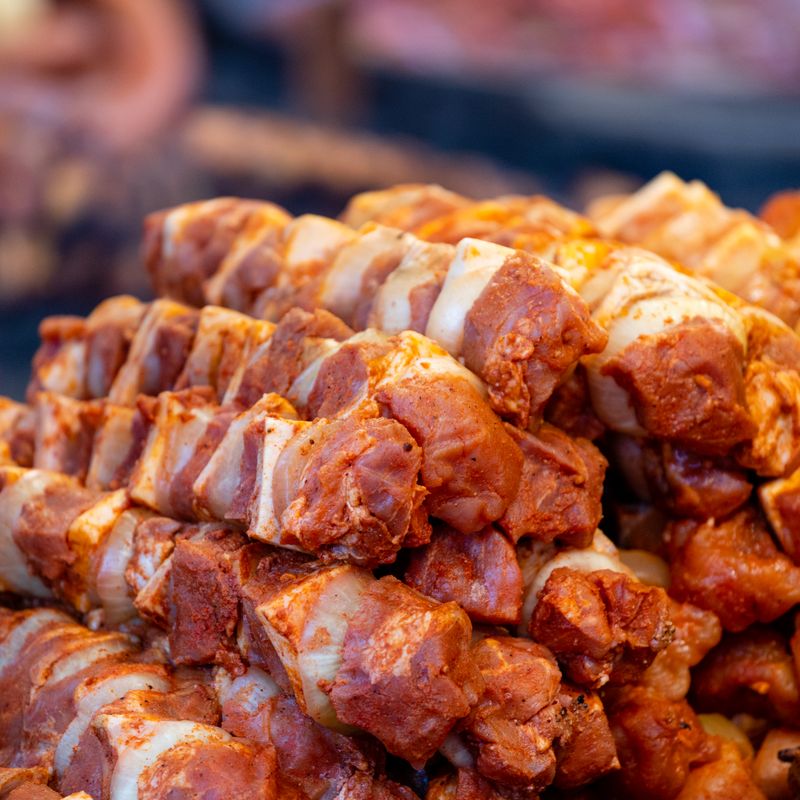
Pork Shoulder with Apple Cider Vinegar Brown Sugar Marinade
A classic American BBQ marinade combining tangy apple cider vinegar and sweet brown sugar with aromatic garlic and onion. The acid tenderizes the pork while the sugar caramelizes during low-and-slow cooking, creating a deeply flavorful bark. This overnight marinade is ideal for smoking or slow roasting a pork shoulder until the meat pulls apart at the gentlest tug.
- Prep
- 15 min
- Cook
- 7 hr
- Wait
- 18 hr 20 min
- Total
- 1.1 days
- Makes
- About 4 pounds pulled pork (10 servings)
Steps
Before you start
- Plan ahead: the entire process takes about 25–26 hours from marinade to serving
- Ensure your meat thermometer is calibrated and ready; accuracy is essential for safe, properly cooked pork
- Have your smoker or oven ready to preheat 30–45 minutes before cooking
- Reserve the raw marinade in a separate container if you plan to use it as a finishing sauce; boil it for 5 minutes before serving for food safety
Prep the pork shoulder
- Pat the pork shoulder dry with paper towels, paying special attention to the skin and any surface moisture.
- If desired, score the skin in a crosshatch pattern using a sharp knife, making cuts about ¼ inch deep and spaced 1 inch apart.
- This allows the marinade to penetrate deeper into the meat and helps develop a crispier bark during cooking.
- Place the pork in a large 2-gallon zip-top bag or non-reactive container.
+ Show details− Hide details
Ready when: Pork is dry with visible scores; ready to receive marinade
Tip: Scoring is optional but recommended—it increases surface area and allows deeper flavor penetration from the acid marinade.
Make the marinade
- In a large bowl, combine 1 cup (240 ml) apple cider vinegar, ½ cup (100 g) packed brown sugar, 8 minced garlic cloves (about 40 g), 1 diced medium onion (about 150 g), 2 tablespoons (30 g) salt, and 1 tablespoon (6 g) black pepper.
- Whisk until the brown sugar mostly dissolves.
- If using paprika or red pepper flakes, add them now and stir well to distribute evenly.
- Taste the marinade and adjust the balance of vinegar, sweetness, and salt to your preference before marinating the pork.
+ Show details− Hide details
Ready when: Sugar is mostly dissolved; spices are fully incorporated; marinade tastes balanced
Tip: Tasting before marinating lets you correct the flavor profile now—once the pork soaks, adjustments are harder to make.
Marinate the pork overnight
- Pour the entire marinade over the pork in the zip-top bag or container.
- Turn the pork to coat it thoroughly on all sides, ensuring it's well submerged.
- If using a zip-top bag, press out as much air as possible and seal tightly.
- If using a container, cover it tightly.
- Refrigerate for 12–18 hours, ideally overnight.
- If marinating in a container (not a bag), flip the pork halfway through the marinating time to ensure even exposure to the marinade.
+ Show details− Hide details
Ready when: Pork is fragrant and has absorbed the marinade; color is slightly darker
Tip: Do not marinate longer than 24 hours—the acid will eventually break down muscle fibers, making the texture mushy.
Bring pork to room temperatureOven 212°F / 100°C
- Remove the pork shoulder from the refrigerator 1–2 hours before you plan to start cooking.
- Place it on a cutting board and let it rest at room temperature.
- Carefully pour off the marinade into a separate container and reserve it for moping and serving.
- If you plan to use the raw marinade as a finishing sauce or glaze after cooking, boil it in a saucepan for at least 5 minutes over medium-high heat (212°F / 100°C) to eliminate any bacteria from contact with raw pork.
+ Show details− Hide details
Ready when: Pork feels warm to the touch, no longer cold from the refrigerator
Tip: Room temperature meat cooks more evenly than cold meat. The interior will reach target temperature more reliably.
Preheat cooker and pat pork dryOven 225°F / 105°C
- Preheat your smoker to 225–250°F (107–121°C) or your oven to 300°F (149°C).
- While heat builds, pat the marinated pork dry with fresh paper towels.
- Removing surface moisture is crucial—it allows the exterior to develop a dark, flavorful bark rather than steaming.
- Place the pork skin-side up on the smoker grates or in a roasting pan (skin-side up if cooking in the oven).
+ Show details− Hide details
Ready when: Smoker or oven has reached the target temperature; pork is positioned skin-side up and ready
Tip: A firm, dark bark (exterior crust) develops best on a dry surface. Wet pork will steam instead of bark.
Smoke or roast until tenderOven 225°F / 105°C
- Place the pork in the preheated smoker at 225–250°F (107–121°C) or in the oven at 300°F (149°C).
- Cook for approximately 6–8 hours, or about 1.5–2 hours per pound, until a meat thermometer inserted into the thickest part of the meat (away from bone) reads 190–203°F (87–95°C).
- The pork is done when it is fork-tender and pulls apart easily with minimal resistance.
- Every 1–2 hours, you may mop or spritz the pork with the reserved marinade if desired—this adds layers of flavor and keeps the surface moist.
- Watch for a stall (a plateau where temperature stops rising around 160°F); this is normal.
- If the stall persists beyond 2 hours, wrap the pork tightly in foil to push through it.
+ Show details− Hide details
Ready when: Internal temperature reads 190–203°F (87–95°C); meat shreds apart easily when prodded with a fork; exterior is dark and crusty
Tip: If the pork temperature stalls at 160°F and won't budge, wrap it tightly in foil to retain heat and power through the plateau. This can save 1–2 hours of cook time.
Rest and shred the pork
- Remove the pork from the smoker or oven and place it on a cutting board.
- Let it rest, uncovered, for 15–20 minutes.
- During this time, the residual heat distributes through the meat and juices are reabsorbed into the muscle fibers, keeping the pulled pork moist.
- Using two sturdy forks or a pair of meat shredders, shred the pork into bite-sized pieces, discarding any large pockets of fat if desired.
- Transfer the shredded pork to a large serving platter or container.
- Drizzle with some of the warmed, boiled-off marinade for added flavor, or serve the marinade on the side for guests to add as desired.
+ Show details− Hide details
Ready when: Pork shreds easily and cleanly; juices run clear and are reabsorbed into the meat
Tip: Resting is non-negotiable. Skipping it causes juices to run out onto the board when you shred, leaving the pork dry and stringy.
Good to know
Tips
- Scoring the skin increases surface area and allows the acid to penetrate deeper, tenderizing the meat faster and creating a better bark. Make crosshatch cuts about ¼ inch deep and 1 inch apart.
- A meat thermometer is essential. Pork shoulder reaches perfect pullable tenderness at 190–203°F (87–95°C). Lower temperatures yield a firmer texture; higher temperatures risk overcooking. Check temperature in the thickest part, away from bone.
- The pork will likely hit a temperature plateau (stall) around 160°F where it stops rising for 1–2+ hours. This is normal—wrapping tightly in foil helps it power through and saves time.
- If using the raw marinade as a finishing sauce or glaze, always boil it for at least 5 minutes over medium-high heat (212°F / 100°C) to kill bacteria from contact with raw pork.
Make ahead
The marinade can be prepared up to 2 days ahead and stored in an airtight container in the refrigerator. The pork can be marinated for up to 24 hours in advance. Once cooked and shredded, the pulled pork can be held in a slow cooker on the warm setting for up to 4 hours before serving.
Storage & reheating
Room temperature: Shredded pork should not be left at room temperature for more than 2 hours. Refrigerator: Store shredded pork in an airtight container for up to 4 days. Reheat gently in a slow cooker with a splash of reserved (boiled) marinade or broth, or microwave in 2-minute intervals, stirring between intervals. Freezer: Wrapped tightly in plastic wrap and then foil, pulled pork freezes for up to 3 months. Thaw in the refrigerator overnight and reheat gently in a slow cooker or on the stovetop over medium-low heat with a little liquid.
Substitutions
- apple cider vinegar → White vinegar or rice vinegar (1:1 ratio). White vinegar is more assertive and sharp; rice vinegar is milder and slightly sweet. Adjust quantity to taste after making the marinade.
- brown sugar, packed → Molasses mixed with white sugar (¼ cup molasses + ¼ cup white sugar) or honey (½ cup). Molasses adds deeper, richer flavor; honey adds smoothness. Either will deepen the color and complexity of the finished pork.
- onion, yellow or white → Shallots or leeks (use the same weight). Shallots are sweeter and more refined; leeks are milder and slightly grassy. Both infuse the marinade with aromatic sweetness.
- paprika (sweet or smoked) → Smoked paprika (use same amount). Smoked paprika adds a campfire-like smokiness that complements the vinegar and works beautifully with low-and-slow cooking.
More roasts
See all →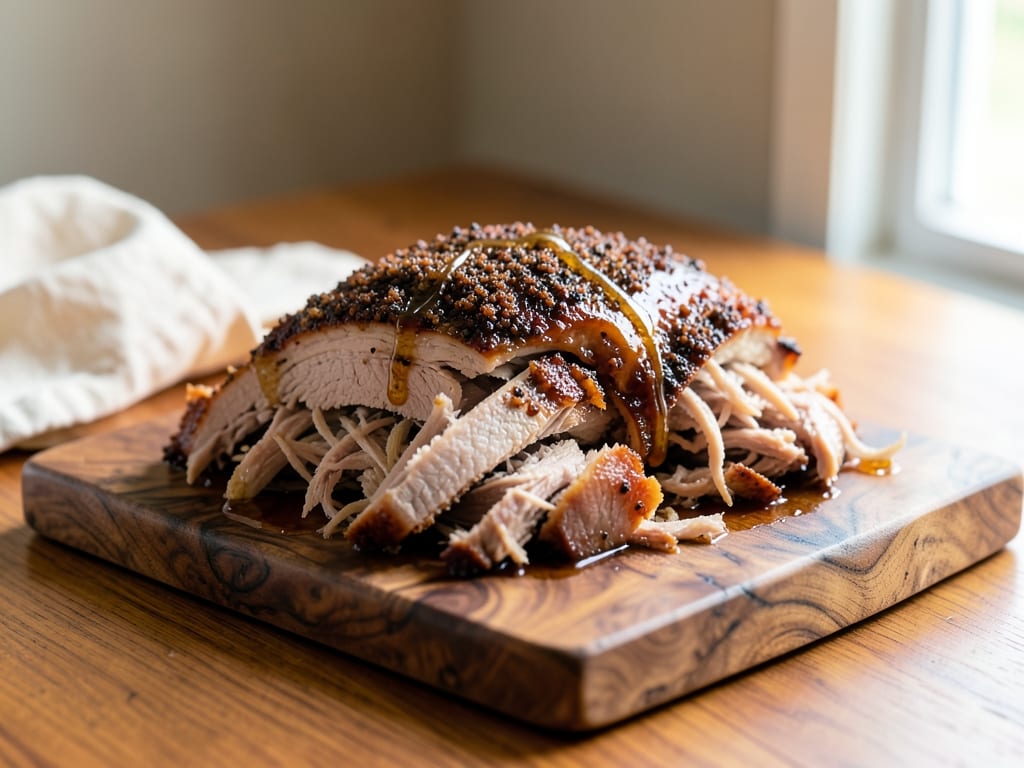



Find more like this
- Meal
- Dinner
- Cuisine
- American
- Main ingredient
- Pork Shoulder
- Quick & Easy
- Make AheadFreezer Friendly
- Occasion
- Summer BBQ