
Pomegranate Walnut Rice
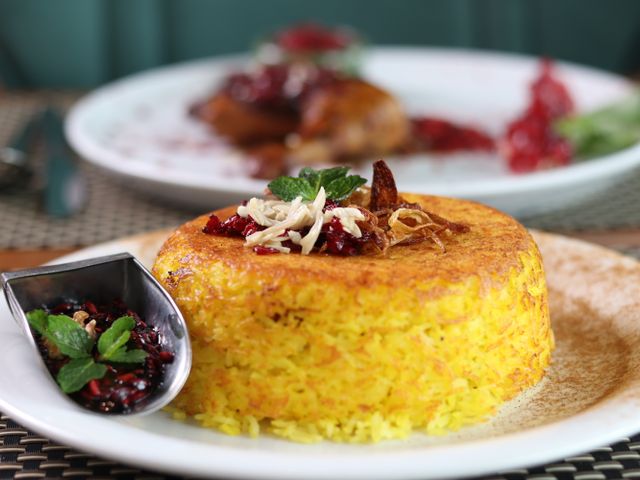
A fragrant Persian-style rice studded with toasted walnuts, tart pomegranate seeds, and delicate rose petals. Basmati rice is cooked until fluffy and light, then folded with caramelized onions, butter, and the jewel-toned pomegranate for a dish that's both sophisticated and deeply aromatic. Perfect as a side for roasted meats or as a vegetarian main.
- Prep
- 15 min
- Cook
- 25 min
- Wait
- 15 min
- Total
- 55 min
- Makes
- 6 servings (about 5 cups)
Steps
Before you start
- Rinse the basmati rice under cold water until the water runs clear (this removes excess starch)
- Have pomegranate seeds and walnuts prepped and ready
- Use a 3-quart saucepan with a tight-fitting lid
Toast walnuts
- In a small skillet over medium heat, toast the chopped walnuts for 3–4 minutes, stirring frequently, until fragrant and lightly golden.
- Transfer to a plate and set aside.
+ Show details− Hide details
Ready when: Walnuts are fragrant and lightly golden with no dark spots
Tip: Watch carefully—walnuts burn quickly once they start to brown
Caramelize onions
- In the same skillet, melt 2 tablespoons (28 g) of the butter over medium-high heat.
- Add the sliced onions and cook for 8–10 minutes, stirring occasionally, until deeply golden and caramelized.
- Season lightly with salt.
- Transfer to a clean plate.
+ Show details− Hide details
Ready when: Onions are deep golden brown and very soft
Tip: Don't rush this step—proper caramelization develops deep flavor. Lower heat slightly if they're browning too fast
Bring water and rice to boil
- In a 3-quart saucepan, bring the cold water to a rolling boil over high heat.
- Add the 1.5 teaspoons (9 g) kosher salt.
- Stir in the rinsed basmati rice and return to a boil.
- Boil uncovered for 5–6 minutes, stirring occasionally.
+ Show details− Hide details
Ready when: Rice grains are just tender but still slightly firm; a grain should bend but not break
Tip: Stir occasionally to prevent clumping. Don't let the rice fully cook—it will finish steaming
Drain rice and steam
- Pour the rice through a fine-mesh sieve to drain well.
- Return the drained rice to the saucepan.
- Dot the top with the remaining 2 tablespoons (29 g) of butter.
- Stir in the ground cardamom, optional cinnamon, and black pepper.
- Cover the saucepan with a tight-fitting lid.
+ Show details− Hide details
Tip: Make sure the lid fits snugly so steam doesn't escape
Reduce heat and steam rice
- Place the saucepan over low heat and steam covered for 8–10 minutes.
- You may hear gentle crackling sounds at the bottom—this is fine and creates a slightly crispy bottom layer (called tah dig).
- Do not lift the lid during steaming.
+ Show details− Hide details
Ready when: Rice grains are separate and fluffy; steam should have stopped escaping from under the lid
Tip: Resist opening the lid—steam loss will dry out the rice. The faint crackling at the bottom is desirable; watch for dark smoke which means heat is too high
Fold in pomegranate, walnuts, and petals
- Remove the saucepan from heat and let rest covered for 2–3 minutes.
- Fluff gently with a fork or rice paddle.
- Add the caramelized onions, toasted walnuts, pomegranate seeds, and dried rose petals.
- Fold gently to distribute evenly without breaking the rice grains.
+ Show details− Hide details
Ready when: All ingredients are distributed throughout the rice
Tip: Fold gently and use a light hand—aggressive stirring breaks the delicate basmati grains. Add pomegranate seeds last so they stay intact
Serve
- Transfer to a serving platter or bowl.
- Taste and adjust seasoning if needed with a pinch of salt or pepper.
- Serve warm or at room temperature.
Good to know
Tips
- Always rinse basmati rice under cold water until the water runs clear—this removes excess starch and ensures fluffy, separate grains
- Caramelized onions are key to the depth of flavor; don't skip them or rush them. They should be golden and deeply colored
- This rice pairs beautifully with Persian grilled chicken, roasted lamb, or vegetarian preparations like herb frittatas
- For an extra-special touch, serve the rice in a mound on a platter and garnish the top with a few pomegranate seeds and a light scatter of rose petals
Make ahead
The rice may be made up to 4 hours ahead. Cool completely, cover, and refrigerate. Reheat gently in a 325°F (163°C) oven, covered, for 10–12 minutes, stirring once. Add pomegranate seeds and fresh rose petals after reheating for best color and texture.
Storage & reheating
Room temperature: up to 2 hours. Refrigerator: up to 4 days in an airtight container. Not recommended for freezing due to the pomegranate seeds (texture becomes mushy). To reheat: warm gently in a covered oven or on the stovetop with a splash of water, stirring occasionally, until heated through.
Substitutions
- fresh pomegranate seeds → dried cranberries or barberries (add them with the onions so they plump). Pomegranate provides tart brightness; dried berries give similar acidity but work best if softened slightly during cooking
- raw walnuts → toasted almonds, pistachios, or pine nuts. Walnuts are classic, but any toasted nut adds richness. Toast time may vary slightly by nut type
- dried culinary rose petals → a small pinch of saffron threads (about ⅛ teaspoon, steeped in 2 tablespoons warm water). Rose petals add delicate floral notes; saffron offers earthiness and color instead. Both are authentic in Persian cooking
- basmati rice → jasmine rice or long-grain white rice. Basmati has the finest texture and fragrance; jasmine is similar but slightly softer; long-grain white rice works but is less aromatic
More pilaf
See all →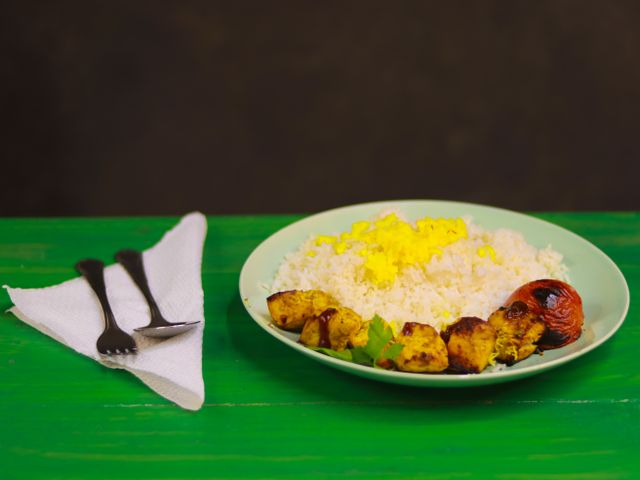


Find more like this
- Meal
- Dinner
- Cuisine
- Persian
- Main ingredient
- Basmati Rice
- Method
- Stovetop