Pesto Rice
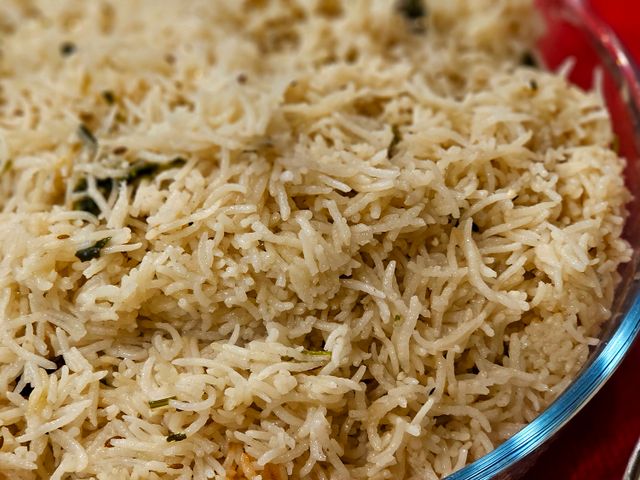
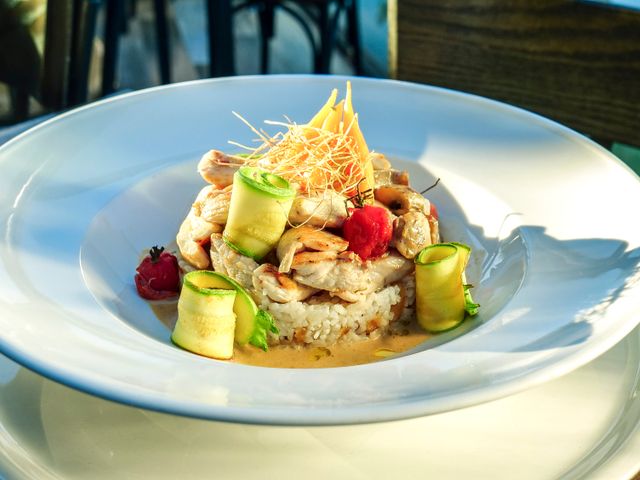
A vibrant Italian-inspired pilaf where fluffy rice is folded with fresh basil pesto, toasted pine nuts, and sharp Parmesan cheese. The pesto is stirred in off the heat to preserve its bright color and herbaceous flavor. Serve as a side dish or light main course with grilled vegetables or roasted chicken.
- Prep
- 15 min
- Cook
- 20 min
- Wait
- 10 min
- Total
- 45 min
- Makes
- About 4 cups (serves 4 as a side dish)
Steps
Before you start
- Have your basil pesto ready (homemade or store-bought)
- Measure out all ingredients before you start cooking
- Use a 2–3 quart heavy-bottomed saucepan for even heat distribution
Toast the pine nuts
- Place the pine nuts in a small skillet over medium heat.
- Toast, shaking the pan frequently, for 3–4 minutes until fragrant and light golden brown.
- Be careful not to burn them.
- Pour into a small bowl and set aside.
+ Show details− Hide details
Ready when: Pine nuts are fragrant and light golden brown
Tip: Watch closely—pine nuts burn quickly. If you don't have a skillet, you can toast them in a dry 350°F (175°C) oven for 5–7 minutes instead.
Sauté shallot and rice
- Heat the olive oil in the 2–3 quart saucepan over medium heat.
- Add the minced shallot and cook, stirring occasionally, for 1–2 minutes until just softened.
- Add the Arborio rice and stir constantly for 2–3 minutes until the rice is coated in oil and begins to turn translucent at the edges, with a nutty aroma.
+ Show details− Hide details
Ready when: Rice is coated and edges are translucent, with a nutty smell
Tip: Do not skip toasting the rice—this gives the pilaf structure and prevents a mushy texture.
Deglaze with wine
- Pour in the white wine, stirring constantly, until it is almost completely absorbed by the rice, about 1–2 minutes.
- You should smell the wine evaporate and see the rice grains separate.
+ Show details− Hide details
Ready when: Wine is mostly absorbed, rice grains are separate
Add broth and simmer
- Pour in the warm broth in two additions.
- First add 1½ cups (360 ml), bring to a gentle simmer over medium heat, and stir occasionally.
- Once that liquid is mostly absorbed (about 8 minutes), add the remaining 1½ cups (360 ml).
- Simmer for another 7–8 minutes, stirring gently every 1–2 minutes, until the rice is tender but still has a slight bite and most of the liquid is absorbed.
+ Show details− Hide details
Ready when: Rice is tender with a slight bite, liquid is mostly absorbed
Tip: Arborio rice should have a creamy but still-defined kernel. If it looks mushy, stop cooking; if it still has a hard core, add a splash more warm broth and cook 1–2 minutes longer.
Finish with pesto and cheese
- Remove the saucepan from heat.
- Stir in the basil pesto and butter, folding gently until evenly distributed throughout the warm rice.
- Add three-quarters of the grated Parmesan and fold in.
- Season with salt and freshly ground black pepper to taste.
+ Show details− Hide details
Ready when: Pesto and cheese are evenly folded throughout, rice is creamy
Tip: Add the pesto off the heat to preserve its bright green color and fresh flavor. Do not overmix, or you will break down the rice grains.
Rest and serve
- Cover the saucepan and let the pesto rice rest for 2–3 minutes to allow the flavors to meld and the rice to settle slightly.
- Fluff gently with a fork.
- Transfer to a serving bowl or plates, top with the toasted pine nuts and remaining grated Parmesan, and serve hot.
+ Show details− Hide details
Ready when: Rice is tender and creamy, flavors are integrated
Tip: This dish is best served immediately. If you need to hold it, cover loosely with foil to keep warm for up to 10 minutes.
Good to know
Tips
- For homemade pesto: blend 2 cups fresh basil leaves, ⅓ cup pine nuts, 2–3 garlic cloves, ½ cup extra-virgin olive oil, and ½ cup Parmigiano-Reggiano until smooth. Taste and season with salt and pepper. If using store-bought, choose one with clean, recognizable ingredients.
- Use warm broth, not cold, to maintain a steady simmer and even cooking. Cold broth will cool the rice and extend cooking time unpredictably.
- Arborio rice's starch is what makes the pilaf creamy. Do not rinse the rice before cooking, as this removes the starch. If you prefer a less creamy dish, you may use long-grain white rice, though the texture will be lighter.
- This pilaf pairs beautifully with grilled vegetables, roasted chicken, or fresh burrata cheese. A squeeze of lemon juice at the end brightens the herbaceous flavors.
Make ahead
You can make basil pesto up to 5 days ahead and store it in an airtight container in the refrigerator. Toast the pine nuts up to 2 hours ahead and keep at room temperature in a covered bowl. The rice pilaf itself is best made and served fresh, though you can prepare the broth and have all ingredients measured and ready to cook up to 4 hours ahead.
Storage & reheating
Pesto rice keeps in an airtight container in the refrigerator for up to 2 days. Reheat gently on the stovetop over medium-low heat with a splash of warm broth or water, stirring occasionally, for 3–5 minutes until heated through. Do not microwave, as it can make the rice mushy. The rice does not freeze well due to the pesto; freeze the plain rice and pesto separately if you must, then combine and reheat when ready to serve.
Substitutions
- Arborio rice → Carnaroli rice. A similar short-grain risotto rice with good starch content for creamy results
- basil pesto → Sun-dried tomato pesto or arugula (rucola) pesto. Swap for a different herb or vegetable pesto to change the flavor profile; use the same amount
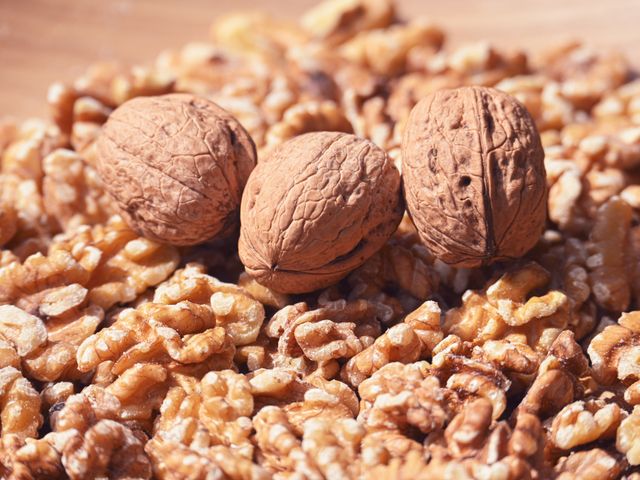
- pine nuts → Sliced almonds or walnuts, lightly toasted. Provides a similar crunch and nutty flavor, though flavor will be slightly different
- Parmigiano-Reggiano cheese, finely grated → Pecorino Romano cheese. A sharper, saltier alternative; grate finely and add a pinch less salt to the rice