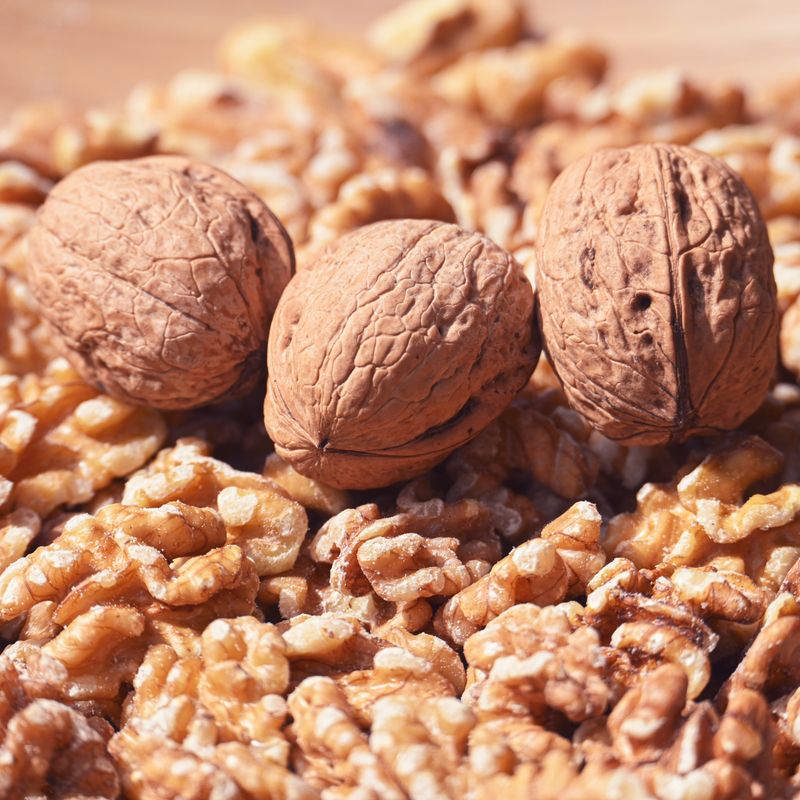
Charred Radicchio and Walnut Farro
A nutty, bitter-sweet grain pilaf that balances tender farro with charred radicchio and toasted walnuts. Apple cider vinegar brings brightness to this hearty Italian-inspired side dish that pairs beautifully with roasted meats or stands alone as a vegetarian main.
- Prep
- 15 min
- Cook
- 35 min
- Wait
- 15 min
- Total
- 1 hr 5 min
- Makes
- 4 servings (about 5 cups)
Steps
Before you start
- Toast the walnuts so they're fragrant and ready to add
- Cut the radicchio into thick wedges so they hold together when charred
- Measure out the farro and have the vegetable broth nearby
Toast the walnuts
- Heat a 10-inch skillet over medium heat.
- Add the chopped walnuts and stir frequently for 3–4 minutes until fragrant and lightly golden.
- Transfer to a plate.
- This step brings out their nutty flavor.
+ Show details− Hide details
Ready when: Walnuts smell fragrant and are light golden brown
Tip: Don't walk away—nuts burn quickly and will taste bitter if left unattended.
Char the radicchio
- Add 2 tablespoons (30 ml) of olive oil to the same skillet over medium-high heat.
- When the oil shimmers, add the radicchio wedges in a single layer (work in two batches if needed).
- Let them sit undisturbed for 3–4 minutes on each side until deeply charred and caramelized.
- Transfer the charred radicchio to a cutting board.
+ Show details− Hide details
Ready when: Radicchio has dark, caramelized edges; inner leaves are tender
Tip: Resist the urge to move the radicchio around—char develops best with undisturbed contact with the hot pan.
Sauté the aromatics
- Add the remaining 2 tablespoons (30 ml) of olive oil to the skillet.
- Add the diced onion and cook over medium heat for 3–4 minutes, stirring occasionally, until softened and translucent.
- Add the minced garlic and cook for 1 minute more until fragrant.
+ Show details− Hide details
Ready when: Onion is translucent; garlic is fragrant but not browned
Tip: Keep the heat at medium so the garlic doesn't burn and turn bitter.
Toast the farro
- Add the farro to the skillet and stir constantly for 2–3 minutes.
- The grains should become slightly dry and fragrant, and some may pop lightly.
- This toasting step adds nutty depth to the finished pilaf.
+ Show details− Hide details
Ready when: Farro appears dry and smells toasted; grains are warm
Tip: Toast just long enough to release the grain's aroma; over-toasting will make the farro taste bitter.
Deglaze and add broth
- Pour the vegetable broth into the skillet, stirring to scrape up any browned bits from the bottom of the pan.
- Bring to a boil over medium-high heat, then reduce the heat to medium-low.
- The liquid should maintain a gentle simmer.
+ Show details− Hide details
Ready when: Liquid boils and releases steam; browned bits dissolve
Tip: Scraping the bottom ensures all the flavorful caramelized bits are incorporated into the broth.
Simmer the farro
- Once the broth is at a gentle simmer (medium-low heat), cook uncovered for 25–30 minutes, stirring occasionally.
- The farro should absorb most of the liquid and become tender but still slightly chewy (al dente).
- If the liquid reduces too quickly, add more broth or hot water, a splash at a time.
+ Show details− Hide details
Ready when: Grains are tender but have a slight bite; liquid is mostly absorbed
Tip: Farro varies in how long it takes to cook; start tasting at 20 minutes. You want tender grains, not mushy ones.
Chop and finish cooking
- While the farro simmers, chop the charred radicchio into bite-sized pieces (about ¾ inch / 2 cm).
- When the farro is nearly done, stir in the chopped radicchio, toasted walnuts, and apple cider vinegar.
- If using butter or Parmigiano-Reggiano, stir those in now.
- Taste and adjust seasoning with salt and black pepper.
+ Show details− Hide details
Ready when: Ingredients are combined; flavors are balanced and vibrant
Tip: Add the vinegar off the heat to preserve its brightness. Taste before serving so you can season to your preference.
Rest and serve
- Remove from heat and let the farro rest for 5 minutes.
- This allows the grains to absorb any remaining moisture and the flavors to meld.
- Give it a gentle stir, then serve warm.
+ Show details− Hide details
Ready when: Grains are fully cooked and separated; dish is warm
Tip: This rest is crucial for texture—it prevents a mushy, overcooked finish.
Good to know
Tips
- Toast the walnuts before charring the radicchio—they burn easily and cook faster than the vegetables, so doing them first ensures they're ready when you need them.
- Farro's cooking time varies by brand and age. Pearl farro cooks faster than whole grain farro. Start checking for doneness at 20 minutes and taste frequently.
- If your broth reduces faster than the farro cooks, add hot water a splash at a time rather than adding cold liquid, which drops the temperature and slows cooking.
- The apple cider vinegar is key to this dish—it cuts through the richness of the walnuts and balances the bitter-sweet char of the radicchio. Taste the finished dish before serving to make sure the acidity is bright.
Make ahead
The radicchio can be charred up to 2 hours ahead and stored at room temperature. The farro can be cooked 1 day ahead, refrigerated separately from the radicchio, and reheated gently with a splash of broth before combining and serving.
Storage & reheating
Store leftovers in an airtight container in the refrigerator for up to 4 days. The grains may absorb additional moisture; add a splash of broth or water when reheating on the stovetop over medium heat for 3–5 minutes, stirring gently. Do not freeze—the texture of the cooked farro and radicchio becomes grainy and unpleasant when thawed.
Substitutions
- farro (pearled) → spelt berries or wheat berries. Both have a similar chew and nutty flavor, though they may take 35–40 minutes to cook. Check the package for timing and adjust broth accordingly.
- radicchio, 1 small head → Belgian endive or treviso. Both have a similar bitter-sweet profile and char beautifully. Use the same weight and cut method.
- walnuts, raw or lightly toasted → hazelnuts or roasted chestnuts. Hazelnuts add a deeper, slightly sweeter nut flavor. Chestnuts are earthier and less oily. Use the same amount.
- apple cider vinegar → aged balsamic vinegar or white wine vinegar. Balsamic adds sweetness; white wine vinegar is more delicate. Start with 1½ tablespoons and adjust to taste.
More pilaf
See all →
Find more like this
- Meal
- Dinner
- Cuisine
- Italian
- Diet
- HalalSugar-Free
- Method
- Stovetop