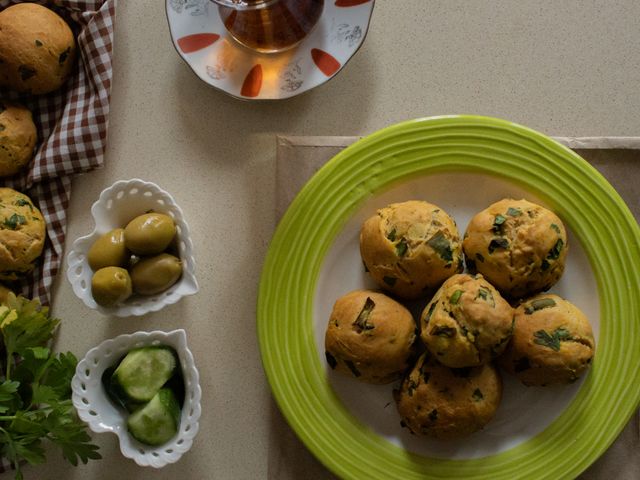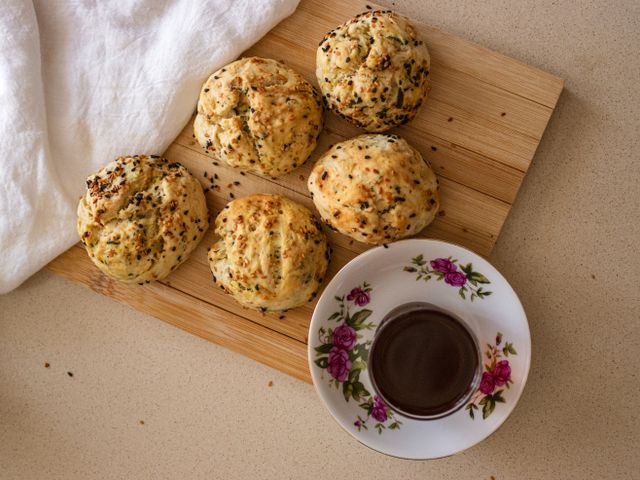
Peach and Ginger Scones
Tender, buttery scones studded with fresh diced peaches and warm ground ginger, with a hint of vanilla. These bake up golden and flaky, perfect for breakfast or afternoon tea. Fresh ginger brings gentle heat that complements the sweet, juicy peaches beautifully.
Steps
Before you start
- Preheat oven to 400°F (200°C)
- Chill butter in the freezer for 15 minutes
- Choose ripe but firm peaches so they hold their shape
- Line a baking sheet with parchment paper
Mix dry ingredients
- In a large bowl, whisk together flour, baking powder, salt, ground ginger, and sugar.
- Make sure the ground ginger is evenly distributed throughout the flour so the warmth is consistent in each scone.
+ Show details− Hide details
Ready when: mixture is light and uniform
Tip: Whisk thoroughly to ensure baking powder and ginger distribute evenly
Cut in the butter
- Add the cold butter cubes to the flour mixture.
- Using a fork or pastry cutter, break the butter into the flour using a gentle cutting and flattening motion.
- Work quickly to keep the butter cold.
- Continue until the mixture resembles coarse cornmeal with some pea-sized butter pieces still visible.
- Do not overmix—you want distinct butter pieces to create flaky layers.
+ Show details− Hide details
Ready when: mixture resembles coarse cornmeal with visible pea-sized butter pieces
Tip: Keep everything cold; warm butter will melt into the dough and make dense, tough scones instead of flaky ones
Add wet ingredients and fresh ginger
- In a small bowl, whisk together cold heavy cream and vanilla extract.
- Pour this into the flour mixture along with the finely grated fresh ginger.
- Using a fork, gently fold everything together until just combined.
- Be careful not to overwork the dough—it should be shaggy and only just come together.
+ Show details− Hide details
Ready when: dough is shaggy and just barely combined
Tip: Stop mixing as soon as you see no dry flour—overworking develops gluten and makes tough, dense scones
Fold in peaches gently
- Add the diced peaches to the dough and fold them in carefully using 4–5 gentle strokes with a spatula or fork.
- The dough will be quite moist and fragile; handle it as little as possible.
- It should still look loose and biscuit-like, not smooth or kneaded.
+ Show details− Hide details
Ready when: peaches are evenly distributed without overmixing
Tip: Fold in the peaches at the last moment so they don't break down or release too much juice
Shape the scones
- Turn the dough out onto a lightly floured work surface.
- Gently pat it into a 7-inch (18 cm) round that is about 1 inch (2.5 cm) thick.
- Do not knead or overwork.
- Using a bench scraper or sharp knife, cut the round into 8 wedges, like a pie.
- Place each wedge onto the prepared baking sheet, leaving about 2 inches (5 cm) between them.
+ Show details− Hide details
Ready when: 8 even wedges are placed on the baking sheet
Tip: A bench scraper or bench knife gives the cleanest cuts without crushing the delicate dough
Top and chill brieflyOven 400°F / 205°C
- If using coarse sugar, lightly brush the tops of each scone with a tiny amount of water or cream, then sprinkle with coarse sugar.
- Place the baking sheet in the freezer or refrigerator for 5–10 minutes while the oven finishes preheating to 400°F (200°C / 180°C fan).
- This chill helps the scones bake up flakier.
+ Show details− Hide details
Ready when: scones are cold to the touch
Tip: A brief chill prevents the butter from spreading too quickly in the oven and makes the scones tall and flaky
Bake the sconesOven 400°F / 205°C
- Remove the baking sheet from the fridge.
- Bake at 400°F (200°C / 180°C fan) for 16–18 minutes, until the scones are golden brown on top and a light golden-brown color around the sides.
- The tops should feel firm to the touch and the bottoms should be pale to medium golden.
- Do not underbake or they will be doughy; do not overbake or they will dry out.
+ Show details− Hide details
Ready when: tops are golden brown, sides are light golden, and tops feel firm when lightly pressed
Tip: Bake on the middle oven rack so the bottoms don't burn and the tops brown evenly
Cool on a rack
- Transfer the baking sheet to a cooling rack (or place the rack on top of the sheet).
- Allow the scones to cool for 10 minutes at room temperature.
- They will firm up as they cool; avoid eating them straight from the oven as they are delicate while hot.
+ Show details− Hide details
Ready when: scones are cool enough to handle and have set
Tip: A brief rest allows the structure to set so they stay tender and don't crumble when you pick them up
Good to know
Tips
- Measure flour by weight (grams) whenever possible for the most consistent, reliable results. If using cups, spoon gently into the measuring cup and level off—do not scoop directly from the bag.
- The dough should feel cool and buttery, never warm. If your kitchen is hot, chill the mixing bowl and even the flour before starting.
- Peaches release juice as they sit; add them just before shaping. If the dough becomes too wet, a light dusting of flour helps, but be careful not to add too much.
- These scones are best eaten the day they are baked, while they still have a tender crumb and slight warmth. Serve with clotted cream, whipped cream, or a simple drizzle of honey.
Make ahead
Prepare the dough through Step 5, cut into wedges, and freeze them on the baking sheet for up to 1 week in an airtight container. Bake directly from frozen, adding 2–3 minutes to the baking time.
Storage & reheating
Room temperature: Store in an airtight container for up to 2 days. Refrigerator: Keep in an airtight container for up to 3 days; reheat gently in a 300°F (150°C) oven for 5 minutes. Freezer: Wrap cooled scones individually in plastic wrap and freeze for up to 1 month; thaw at room temperature for 30 minutes or reheat from frozen at 300°F (150°C) for 10 minutes.
Substitutions
- heavy cream (or buttermilk) → Buttermilk or Greek yogurt thinned with 1–2 tbsp water. Both create a tangier flavor and equally tender crumb. Use the same amount.
- ripe but firm fresh peaches → Nectarines, apricots, or plums (same weight). Any stone fruit works; choose ripe but firm varieties so they don't dissolve during mixing and baking.
- fresh ginger root → An additional ¼ tsp ground ginger (omit the fresh ginger entirely if preferred). Fresh ginger adds brightness; ground-only scones will taste more subdued but still delicious.
- ground ginger → ¼ tsp ground cardamom or ½ tsp Chinese five-spice powder. Cardamom brings floral warmth; five-spice adds cinnamon, star anise, and clove for deeper complexity.