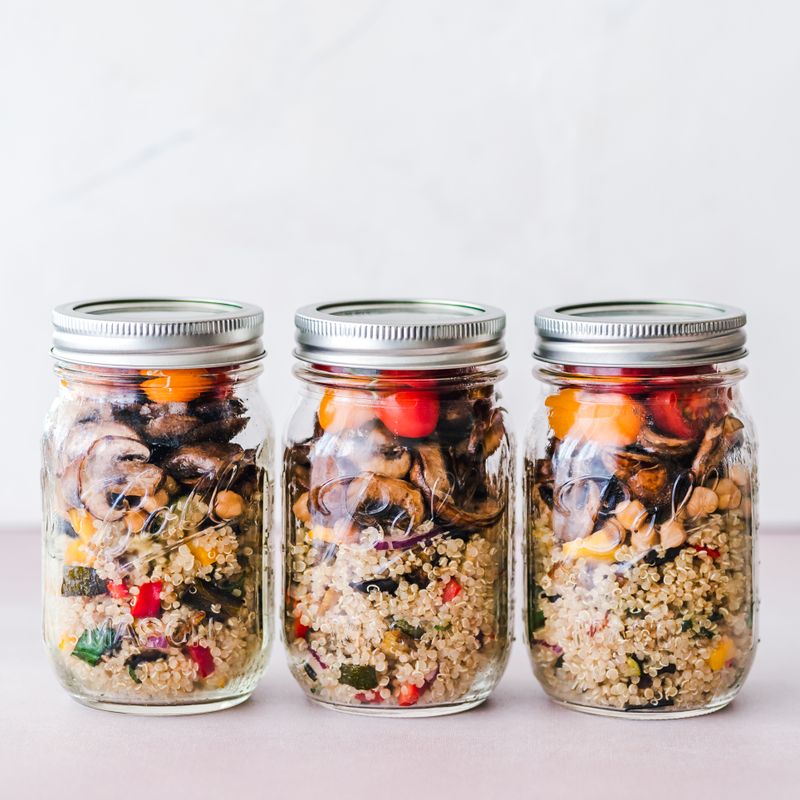
Passover Roasted Beet and Horseradish Cream Quinoa
A vibrant, Passover-friendly quinoa pilaf studded with roasted beets, dressed with a tangy horseradish and sour cream sauce, and finished with fresh dill. The earthy sweetness of the beets balances the sharp bite of horseradish, making this a sophisticated side dish for holiday meals or everyday dinners.
- Prep
- 15 min
- Cook
- 20 min
- Wait
- 25 min
- Total
- 1 hr
- Makes
- 4 servings (about 1 cup each)
Steps
Before you start
- Rinse the quinoa thoroughly under cold water until the water runs clear—this removes the bitter saponin coating
- If using fresh beets, roast them ahead (they take 45 minutes); store in the fridge until ready to use
- Have all ingredients measured and prepped before you begin cooking
Toast and cook quinoa
- Heat a 2-quart saucepan over medium-high heat.
- Add the rinsed quinoa (no oil needed) and toast, stirring frequently, for 2–3 minutes until it becomes fragrant and begins to turn light golden.
- Pour in the broth, stir once, and bring to a boil.
- Once boiling, reduce heat to low, cover with a tight-fitting lid, and simmer for 12–15 minutes until the liquid is absorbed and the quinoa is tender.
- You'll see small white "tails" emerging from the grains when they're done.
+ Show details− Hide details
Ready when: Liquid fully absorbed, grains fluffy with visible tails
Tip: Toasting the quinoa first deepens its flavor and prevents a mushy texture.
Let quinoa rest
- Remove the pan from heat and let it sit, covered, for 5 minutes.
- This allows the grains to finish steaming and separates them for a lighter texture.
- Do not stir yet.
Prepare horseradish cream
- While the quinoa rests, whisk together the sour cream, prepared horseradish, lemon juice, and a pinch each of salt and pepper in a small bowl.
- Stir until smooth and fully combined.
- The mixture should taste pleasantly sharp—if the horseradish flavor is too mild, add another teaspoon.
+ Show details− Hide details
Ready when: Cream is smooth and well mixed, no streaks
Tip: Pat the horseradish dry before adding so the sauce doesn't become watery.
Fluff and combine
- Uncover the quinoa and gently fluff it with a fork, breaking up any clumps.
- Add the roasted beet cubes and stir gently to distribute evenly throughout the warm quinoa.
- The residual heat will warm the beets and slightly soften their edges.
+ Show details− Hide details
Ready when: Beets are distributed evenly and grains are separated
Tip: Fold gently to keep the quinoa light—overstirring will make it gummy.
Season and dress
- Taste the quinoa mixture and season with additional salt and pepper as needed.
- Spoon the horseradish cream over the top and gently fold it in with a few strokes of the spoon, leaving some sauce visible as streaks.
- The goal is to blend without fully coating, preserving some visual contrast.
+ Show details− Hide details
Ready when: Sauce is partially folded in, streaks still visible
Tip: If serving warm, don't fully blend the cream in; gentle folds keep the texture light.
Finish and serve
- Transfer to a serving bowl or platter and sprinkle the chopped fresh dill evenly over the top.
- Serve warm or at room temperature.
- If making ahead, refrigerate in an airtight container and bring to room temperature or gently warm on the stovetop before serving.
+ Show details− Hide details
Tip: Add dill just before serving to keep it bright and fresh, not wilted or dull.
Good to know
Tips
- If using fresh beets instead of pre-roasted, wrap them individually in foil, roast at 400°F (200°C) for 40–45 minutes until a fork pierces the center easily, then cool, peel, and cube. This can be done a day ahead.
- For a lighter horseradish cream, fold the prepared horseradish into whipped yogurt (instead of all sour cream) or use a 50/50 blend of sour cream and Greek yogurt for tanginess without heaviness.
- Toast the quinoa dry (without oil) to enhance its nutty flavor and create a drier, fluffier texture—essential when pairing with a creamy sauce.
- This dish is naturally Passover-compliant when made with Passover-certified broth and horseradish, making it an elegant alternative to traditional matzoh-based sides.
Make ahead
Yes. Cook the quinoa and beets separately up to 2 days ahead; store in separate airtight containers in the fridge. Make the horseradish cream 1 day ahead. Assemble the dish up to 4 hours before serving, adding dill just before you serve. If chilled, let sit at room temperature for 15 minutes or warm gently in a saucepan over medium-low heat before serving.
Storage & reheating
Room temperature: up to 2 hours. Refrigerator: up to 4 days in an airtight container. Freezer: not recommended; the beets become mushy upon thawing and the horseradish cream separates. Reheat gently on the stovetop with a splash of broth if the mixture seems dry.
Substitutions
- vegetable or chicken broth → water or homemade chicken stock. Use water for a lighter flavor, or any Passover-certified broth for the holiday.
- prepared horseradish, drained → Dijon mustard (1 tablespoon) mixed with ½ teaspoon grated fresh ginger. Provides similar sharpness without the horseradish bite; slightly different flavor profile.
- fresh dill → fresh parsley or a mix of parsley and chives. Parsley is milder; use the same amount for a lighter herb flavor.
- roasted beets, medium → roasted red beets or golden beets, or a mix of colors. Golden and Chioggia beets are sweeter; red beets have a more earthy, mineral flavor. Any work equally well.
More quinoa & couscous
See all →



Find more like this
- Meal
- Dinner
- Cuisine
- Mediterranean
- Method
- Stovetop