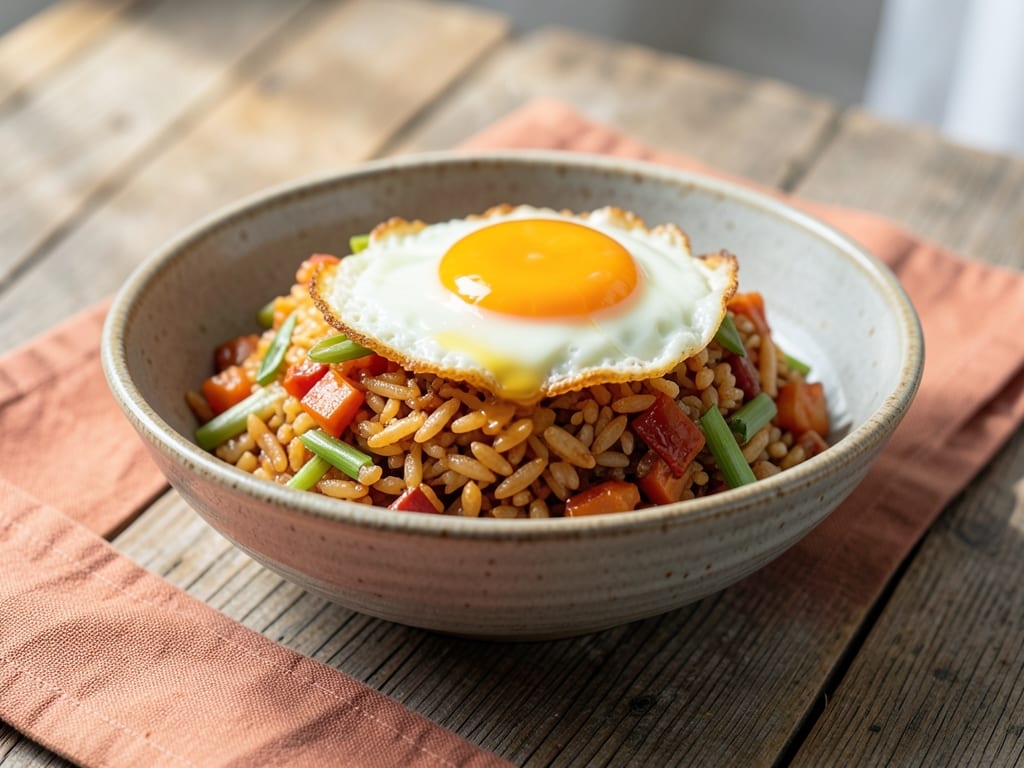
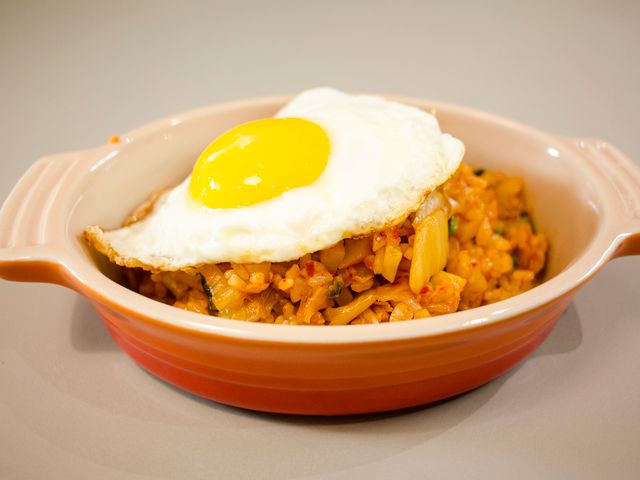
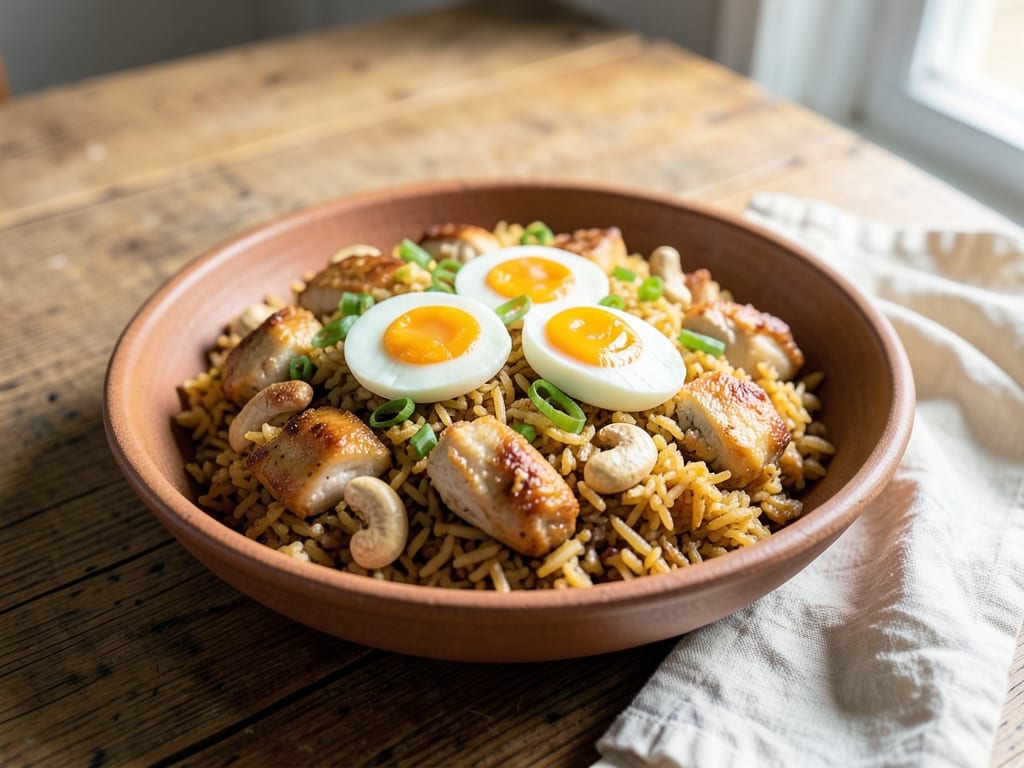
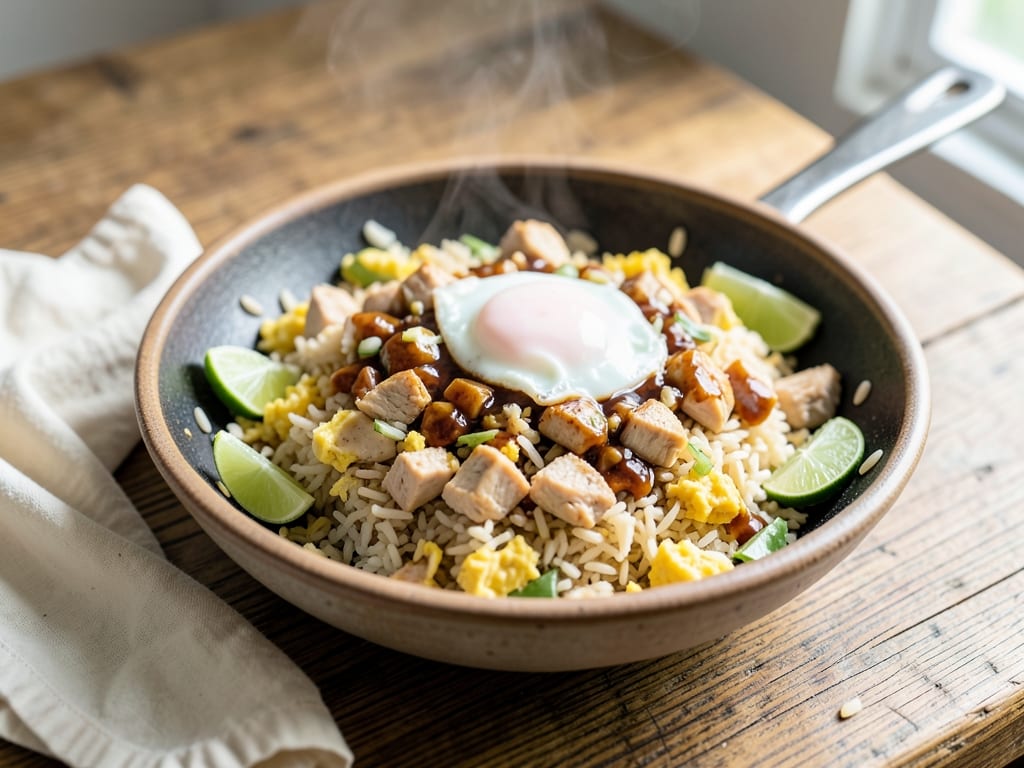
Party Spicy Korean Gochujang Chicken Rice
A dynamic stir-fried rice loaded with tender chicken, piquant gochujang, tangy kimchi, and finished with toasted sesame seeds and a drizzle of hot oil. This crowd-pleasing dish balances heat, umami, and brightness—perfect for feeding a group without fuss. Serve it as a main course or build a spread of banchan (side dishes) around it.
Steps
Before you start
- Use day-old or chilled cooked rice; warm rice will clump when stir-fried and won't get crispy edges
- Prep all ingredients and arrange them near the stove in small bowls (mise en place)
- Ensure your wok or large skillet is very hot before adding oil
Toast the sesame seeds
- Place sesame seeds in a small, dry skillet over medium heat.
- Shake the pan frequently for 2–3 minutes until fragrant and lightly golden.
- Transfer to a small bowl and set aside.
- This step is quick but it deepens their flavor enormously.
+ Show details− Hide details
Ready when: Seeds are fragrant and just turning light golden in color
Tip: Watch closely; sesame seeds burn quickly once they start to color. Don't walk away.
Cook the chicken
- Heat 1 tablespoon of vegetable oil in the wok over medium-high heat until it shimmers.
- Add the cubed chicken and cook, stirring often, for 6–8 minutes until the chicken is cooked through and lightly golden on the edges.
- The chicken should no longer be pink in the center.
- Transfer to a plate.
+ Show details− Hide details
Ready when: Chicken is white throughout with no pink, and lightly browned at the edges
Tip: Don't crowd the pan; let each piece of chicken touch the bottom so it develops some color. If your wok is small, cook in two batches.
Build the flavor base
- Add the remaining 2 tablespoons of vegetable oil and 1 tablespoon of butter to the wok.
- Once melted, add the minced garlic and the white and light green parts of the scallions.
- Stir-fry for about 1 minute until fragrant but not browned.
+ Show details− Hide details
Ready when: Garlic is fragrant and the scallions are wilted
Tip: If garlic starts to brown, the heat is too high; lower it slightly to avoid bitterness.
Add the gochujang slurry
- Pour the gochujang slurry into the wok and stir constantly for 2 minutes.
- The paste will deepen in color and smell intensely aromatic.
- Add the chicken stock and sugar, stirring until the gochujang is fully dissolved and the mixture is smooth.
+ Show details− Hide details
Ready when: Gochujang is fully incorporated into a smooth, cohesive sauce
Tip: Stir constantly to prevent the gochujang from sticking to the bottom of the wok.
Add the rice and stir-fry
- Increase the heat to high and add all the chilled rice to the wok.
- Use your spatula to break up any clumps and toss everything together continuously for 5–6 minutes.
- The rice should be heated through, and you should see some light browning on the edges of the grains.
- Stir in the soy sauce and drained kimchi, tossing constantly for another 2 minutes until the kimchi is evenly distributed and the rice is infused with color.
+ Show details− Hide details
Ready when: Rice is heated through with visible light browning on some edges, and kimchi is evenly mixed in with no lumps
Tip: Use the edge of your spatula to scrape and chop any clumps of rice against the side of the wok. Day-old rice works best here; fresh rice will clump and get mushy.
Return the chicken and finish
- Add the cooked chicken back into the wok and toss for 1 minute to heat it through and integrate it into the rice.
- Drizzle in the sesame oil and toss one more time.
- Taste and adjust seasoning: add more gochujang for heat, soy sauce for saltiness, or sesame oil for richness.
- If you like extra spice, sprinkle in the optional red chili flakes and toss.
+ Show details− Hide details
Ready when: Chicken is heated through and the entire dish is fragrant with sesame oil
Tip: Taste before serving so you can adjust the flavor to your guests' heat preference—gochujang is customizable.
Plate and garnish
- Transfer the rice to a serving platter or into individual bowls.
- Scatter the toasted sesame seeds over the top and garnish with the reserved dark green scallion slices.
- Serve immediately while hot.
+ Show details− Hide details
Tip: Serve with extra gochujang, sriracha, or hot sauce on the side so guests can add heat to taste.
Good to know
Tips
- Use day-old or freshly cooked and cooled rice. Warm rice will steam and clump; chilled rice will give you the crispy, separated grains that make a great fried rice.
- Mise en place (having all ingredients prepped and in bowls) is essential. Once you start stir-frying, the action is fast and you won't have time to chop.
- Heat your wok or skillet until it's smoking slightly before you add oil. A hot wok is your best tool for getting color and preventing sticking.
- Gochujang is quite salty, so taste the dish before adding more soy sauce. You can always add more salt, but you can't take it out.
Make ahead
You can prep all ingredients up to 4 hours ahead and store them in separate containers in the fridge. Toast the sesame seeds up to 1 day ahead. The rice must be cooked at least 2 hours ahead and chilled, or use day-old rice. The entire dish comes together in just 20 minutes once you're ready to cook.
Storage & reheating
Refrigerate leftovers in an airtight container for up to 3 days. Reheat gently in a wok or large skillet over medium-high heat, adding a splash of chicken stock or water if the rice seems dry (it will absorb liquid as it sits). Alternatively, microwave individual portions in a covered bowl for 1–2 minutes, stirring halfway through. Do not freeze; the texture of the rice will suffer and the kimchi will become too soft.
Substitutions
- boneless, skinless chicken breasts → 1.5 pounds (680 g) of diced pork shoulder, beef sirloin, or firm tofu (pressed and cubed). Pork and beef will take the same cooking time; tofu should be pan-fried first until golden, then added at the end to avoid breaking apart during the final toss.
- kimchi (napa cabbage or other vegetable), drained well → 1.25 cups (200 g) of diced scallions reserved from above, plus 2 tablespoons of pickle juice or rice vinegar for tanginess. If you can't find or don't like kimchi, this keeps the dish fresher and less fermented-tasting while preserving some of the signature Korean flavor.
- gochujang (Korean red chili paste) → 3 tablespoons of sriracha or 2 tablespoons of sambal oelek mixed with 1 teaspoon of sugar. These won't have gochujang's exact depth, but they'll deliver heat and a chili-forward flavor. Sriracha is tangier; sambal is fruitier and less sweet.
- short-grain white rice, cooked and chilled → Medium-grain or long-grain white rice, or jasmine rice. Short-grain rice is ideal for its slightly sticky texture, but other varieties work if they're chilled and broken up well before stir-frying.