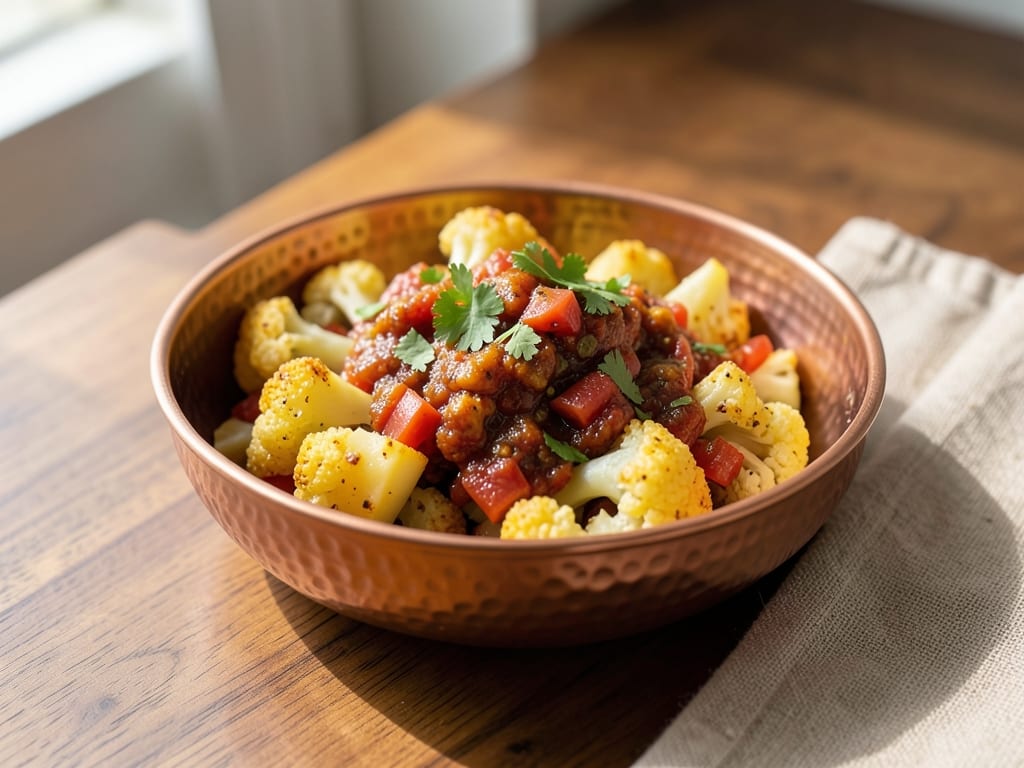
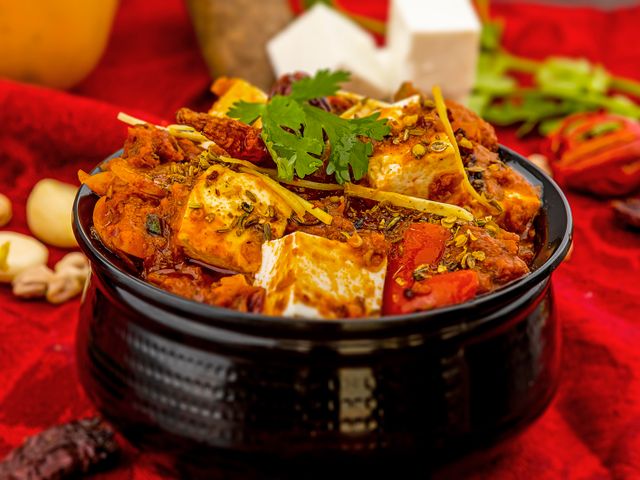
Party Cauliflower and Cashew Curry
A creamy, restaurant-style vegetable curry starring roasted cauliflower florets and cashews in a fragrant tomato-based sauce enriched with ginger, garlic, and warm spices. The cashews soften into the sauce while the cauliflower stays tender-crisp, making this dish elegant enough for entertaining yet simple enough for a weeknight dinner. Serve with rice or naan.
- Prep
- 20 min
- Cook
- 35 min
- Total
- 55 min
- Makes
- 6 servings (about 2 cups per person)
Steps
Before you start
- Have all ingredients prepped and measured before you begin
- If using raw cashews, soak them in 1 cup hot water for 5 minutes to soften (optional but helps them blend into the sauce faster)
- Gather your spices in small bowls so they're ready to add at the right moment
Toast the spices
- Heat the oil or ghee in a large skillet over medium heat for 1 minute.
- Add the cumin seeds and let them crackle and become fragrant, about 45 seconds, stirring gently.
- This releases their essential oils and deepens the flavor.
- Watch carefully so they don't burn.
+ Show details− Hide details
Ready when: Seeds smell fragrant and are lightly darkened
Tip: Whole spices toast faster than ground spices, so add them first
Cook the onions
- Add the diced onions to the toasted cumin.
- Stir well and cook over medium heat for 5–6 minutes, stirring occasionally, until the onions are translucent and start to soften.
- They should not brown at this stage.
- Lower the heat if they start to color too quickly.
+ Show details− Hide details
Ready when: Onions are soft, translucent, and fragrant
Tip: Soft onions absorb the spice flavors better and create a silky sauce base
Add ginger-garlic and chilies
- Stir in the ginger-garlic paste and minced green chilies (if using).
- Cook for 1–2 minutes over medium heat, stirring constantly.
- The mixture will become very fragrant.
- Do not let the paste burn—if it begins to stick to the bottom, add a splash of water immediately.
+ Show details− Hide details
Ready when: Paste is well incorporated and smells rich and aromatic
Tip: Ground spices like ginger-garlic paste can burn easily, so stir constantly and don't skip the water if needed
Add ground spices
- Add the coriander, turmeric, Kashmiri chili powder, and garam masala.
- Stir continuously for 30–45 seconds until all the spices are well combined and the oil is infused with their color and aroma.
- This 'blooming' of the ground spices is crucial for flavor depth.
+ Show details− Hide details
Ready when: Spices coat the onion mixture and smell pungent and warm
Tip: If the spices smell musty or bitter, they've overheated—start over if you have time
Add tomato puree
- Pour in the tomato puree and stir well, scraping the bottom of the pan to loosen any browned bits.
- Cook for 2–3 minutes over medium heat, stirring occasionally.
- The tomato will deepen in color and the raw tomato smell will fade.
- This step cooks off excess acidity.
+ Show details− Hide details
Ready when: Tomato is thickened slightly and smells cooked, not raw
Tip: Scraping the pan releases fond (browned bits) that adds richness to the sauce
Add cauliflower and cashews
- Add the cauliflower florets and whole or halved cashews to the pan.
- Stir well to coat everything in the spiced tomato mixture.
- The pan will be fairly full but the vegetables will cook down slightly as they release moisture.
+ Show details− Hide details
Ready when: All pieces are evenly coated with sauce
Tip: Toss gently so the cauliflower florets stay intact and don't break apart
Add liquid and simmer
- Pour in the coconut milk and water (or broth).
- Stir gently.
- Bring the mixture to a simmer over medium-high heat, then reduce the heat to medium-low.
- Simmer, uncovered, for 15–18 minutes.
- The cauliflower should become tender but still hold its shape, and the sauce should reduce slightly and thicken.
- Stir gently every 3–4 minutes to ensure even cooking and to prevent sticking.
+ Show details− Hide details
Ready when: Cauliflower is fork-tender; sauce coats the back of a spoon and is no longer watery
Tip: The sauce should be creamy and coat the vegetables, not runny—if it's too thin after 18 minutes, simmer 2–3 minutes more uncovered
Season and finish
- Taste the curry and add salt and black pepper to your liking.
- Start with ½ teaspoon of salt and adjust.
- If you prefer a smoother sauce, use an immersion blender to partially blend the curry (leave some texture) or transfer half the curry to a blender, puree, and stir back in.
- This step is optional but creates a silkier mouthfeel.
- Let the curry rest off the heat for 2–3 minutes so the flavors marry.
+ Show details− Hide details
Ready when: Curry is well seasoned and has a consistent color and texture
Tip: If you overblend, the curry loses its rustic appeal—aim for a sauce with visible vegetable bits
Garnish and serve
- Transfer the curry to a serving dish or directly to plates.
- Garnish with fresh cilantro and serve with fresh lime wedges on the side.
- Guests can squeeze lime juice to taste.
- Serve with steamed basmati rice, jasmine rice, or warm naan bread.
+ Show details− Hide details
Tip: A squeeze of lime brightens the curry and balances the richness of the coconut and cashews
Good to know
Tips
- For a restaurant-style finish, temper a spoonful of ghee with a few curry leaves and a pinch of red chili powder, then pour it over the finished curry just before serving.
- If you don't have Kashmiri chili powder, substitute with mild paprika (for color) plus a pinch of cayenne pepper (for heat), adjusting to taste.
- This curry is naturally vegan if you use vegetable oil instead of ghee and plant-based yogurt works as a cream substitute. To add protein, stir in 1 cup cooked chickpeas or paneer cubes in step 6.
- Make this curry in a slow cooker: sauté the onions, ginger-garlic, and spices on the stovetop through step 4. Transfer to a slow cooker, add the tomato puree, cauliflower, cashews, and coconut milk (use only ½ cup water). Cook on low for 4 hours or high for 2 hours, then season and serve.
Make ahead
Prepare the onions, cauliflower, and cashews up to 1 day ahead and store in airtight containers in the fridge. You can also make the ginger-garlic paste and chop the fresh chilies the night before. On serving day, the entire curry takes just 35 minutes on the stovetop from start to finish.
Storage & reheating
Store leftovers in an airtight container in the refrigerator for up to 4 days. The flavors actually improve the next day. Reheat gently on the stovetop over medium-low heat with a splash of water to loosen the sauce, stirring occasionally, until warmed through (about 5–7 minutes). Do not microwave, as it can scorch the sauce. The curry also freezes well for up to 3 months in a freezer-safe container; thaw overnight in the fridge and reheat as above.
Substitutions
- coconut milk, full-fat (canned) → heavy cream or Greek yogurt. Use the same amount of heavy cream for a richer sauce. If using yogurt (which adds tanginess), stir it in at the end off the heat to prevent curdling. The curry will be less coconut-forward but still creamy.
- raw or roasted cashews, unsalted → blanched almonds, peanuts, or sunflower seeds. Use the same weight. These nuts will soften in the sauce and add creaminess (especially if blended) but have different flavor profiles. Sunflower seeds are a nut-free option.
- ginger-garlic paste → 1½ tbsp fresh ginger, minced + 4 cloves garlic, minced. Freshly minced ginger and garlic will give a more assertive flavor. Use the same cooking time, but watch for burning if the pan is too hot.
- cauliflower, fresh → broccoli, potatoes, chickpeas, or a mix of vegetables. Use the same weight. Broccoli cooks slightly faster (reduce simmering time by 2–3 minutes). Potatoes take longer (add an extra 5 minutes to the simmer). Chickpeas add protein and won't break down.