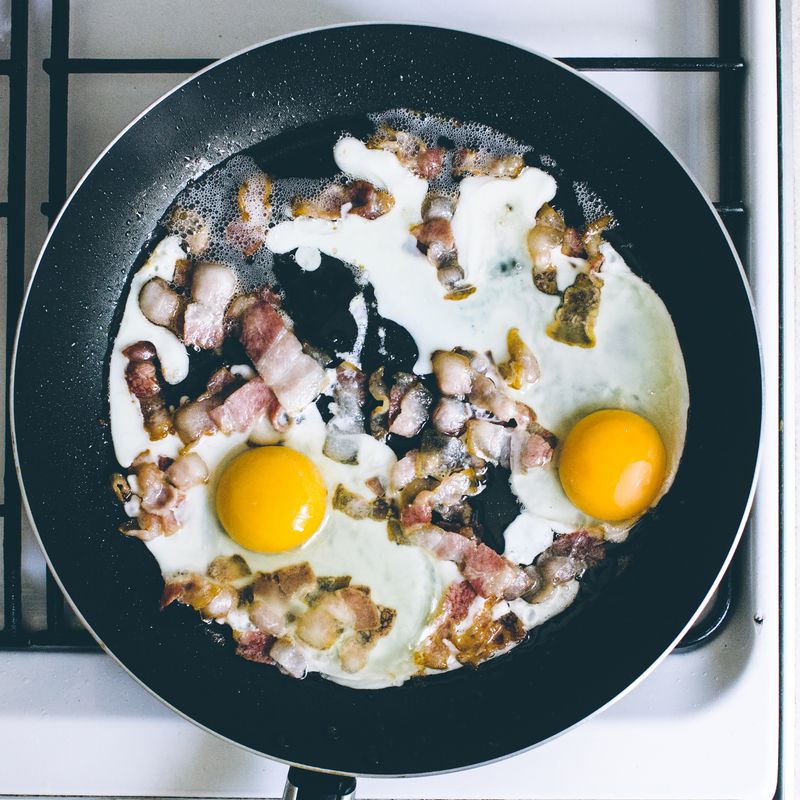
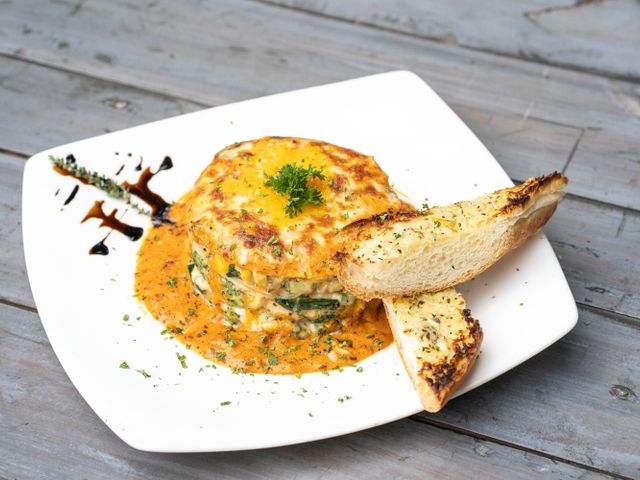
Pan-Fried Pancetta and Kale Lasagna
A rustic Italian-inspired lasagna built in a large skillet, layering crispy pancetta, sautéed kale, and creamy fontina cheese with tender lasagna noodles. Finished under the broiler until the cheese is golden and bubbling, this one-pan version is easier than a traditional baked lasagna while delivering deep, savory flavor. Perfect for a weeknight dinner that feels indulgent.
- Prep
- 15 min
- Cook
- 25 min
- Wait
- 8 min
- Total
- 48 min
- Makes
- 1 skillet lasagna (4 generous servings)
Steps
Before you start
- Preheat your broiler to high and position the rack 6 inches from the heat source
- Cook lasagna noodles according to package directions, drain well, and toss lightly with olive oil to prevent sticking
- Tear kale leaves from the tough center ribs and tear into 2-inch pieces
- Have all ingredients prepped and ready before you start cooking, as the assembly happens quickly
Render the pancetta
- Heat the 12-inch skillet over medium-high heat.
- Add the sliced pancetta and cook, stirring occasionally, for 5–6 minutes until the fat is rendered and the edges are crispy.
- The pancetta should be mostly cooked through but still have some chew.
- Transfer to a paper-towel-lined plate and crumble or leave in pieces.
+ Show details− Hide details
Ready when: Pancetta is crispy at the edges and fat has rendered
Tip: Don't overcook the pancetta to a crisp now; it will continue to firm up as it cools and cooks again in the oven.
Sauté garlic and kale
- Pour off most of the pancetta fat, leaving about 1 tablespoon in the skillet.
- Add the minced garlic and cook over medium heat for 30 seconds until fragrant.
- Add the torn kale in batches, stirring and wilting each batch before adding more.
- Once all the kale is in and has wilted (about 3–4 minutes total), season with salt and pepper.
- The kale should be tender but still hold some structure.
+ Show details− Hide details
Ready when: Kale is tender and wilted, garlic is fragrant but not browned
Tip: If you have a lot of moisture in the skillet after wilting the kale, let it cook off for another minute so the lasagna doesn't become watery.
Prepare the ricotta filling
- In a small bowl, mix the ricotta, egg, grated Parmigiano-Reggiano, nutmeg, salt, and pepper until smooth.
- Taste and adjust seasoning.
- This filling should be creamy and well-seasoned.
+ Show details− Hide details
Ready when: Mixture is smooth and fully combined
Tip: Make sure the ricotta and egg are at room temperature so they blend smoothly without lumps.
Layer the lasagna in the skillet
- Spread a thin layer of the ricotta mixture (about 3 tablespoons) evenly over the bottom of the skillet.
- Arrange 2–3 overlapping lasagna noodles over the filling, breaking them to fit the shape.
- Dollop half of the remaining ricotta filling over the noodles and spread gently.
- Scatter half of the cooked kale over the filling, then half of the cooked pancetta.
- Layer half of the Fontina cheese on top.
- Repeat with another layer: 2–3 noodles, remaining ricotta filling, remaining kale, remaining pancetta, and remaining Fontina.
- Finish with a final layer of 2–3 noodles on top, then spread the heavy cream over the noodles and scatter any remaining Fontina cheese (about 2 tablespoons).
+ Show details− Hide details
Ready when: All layers are stacked with final cream layer and cheese on top
Tip: Don't overfill each layer; a thin, even distribution of ingredients prevents the lasagna from becoming heavy or sliding apart when serving.
Broil until goldenOven 500°F / 260°C
- Transfer the skillet to the preheated broiler (rack positioned 6 inches from the heat).
- Broil for 6–8 minutes until the top is golden brown and the cheese is bubbling at the edges.
- Watch carefully to prevent the top from burning.
- The noodles should feel tender when pierced with a fork.
+ Show details− Hide details
Ready when: Top is golden brown, cheese is bubbling at the edges, and noodles are tender
Tip: Position the broiler rack at 6 inches—too close and the top will burn before the inside cooks; too far and the cheese won't brown properly.
Rest and serve
- Remove the skillet from the broiler and let it rest for 2–3 minutes.
- This allows the layers to set slightly, making it easier to serve without the lasagna collapsing.
- Use a spatula or tongs to portion into four servings directly from the skillet.
+ Show details− Hide details
Ready when: Skillet is cool enough to handle; lasagna is set but still warm
Tip: A small sharp spatula works best for cutting and lifting portions cleanly from the skillet.
Good to know
Tips
- If your skillet is not oven-safe or broiler-safe (check the handle and any non-metal parts), transfer the assembled lasagna to a 9×13-inch baking dish before broiling.
- For extra richness, add a thin layer of béchamel sauce (butter, flour, and milk) between the ricotta and noodle layers, but reduce the heavy cream on top to prevent the lasagna from becoming too wet.
- Fresh herbs like basil or parsley can be scattered between layers or sprinkled on top just before serving for brightness.
- Make sure the lasagna noodles are fully cooked but not mushy before layering; they will soften further as the lasagna broils.
Make ahead
You can assemble the lasagna in the skillet up to 4 hours ahead, cover it with plastic wrap or foil, and refrigerate. When ready to broil, add 2–3 minutes to the broiling time if the skillet is cold. Alternatively, cook the pancetta and kale separately and store them in the refrigerator for up to 3 days, then assemble and broil when you're ready to serve.
Storage & reheating
Store leftovers in an airtight container in the refrigerator for up to 3 days. Reheat gently in a 325°F (163°C) oven for 10–12 minutes, covered with foil, until warmed through. Do not reheat in a microwave, as the cheese and noodles can become tough. This lasagna is not recommended for freezing, as the ricotta-based filling and cooked noodles do not freeze and thaw well without significant texture changes.
Substitutions
- Fontina Val d'Aosta cheese → Taleggio or Gruyère cheese. Both have creamy melting qualities and rich, savory flavor. Use the same weight and slice or grate as directed.
- Lacinato kale → Fresh spinach or Swiss chard. Reduce spinach to 6 oz (170 g) since it wilts down more than kale. Swiss chard can be used at the same weight and will add a slight earthiness.
- pancetta, thinly sliced → Guanciale or thick-cut bacon. Guanciale adds authentic Roman flavor; bacon is milder. Use the same weight but adjust cooking time slightly if the pieces are thicker.
- whole-milk ricotta cheese → Whole-milk mascarpone (use 3⁄4 cup / 180 ml) plus 1⁄4 cup (60 ml) sour cream. This creates a richer, tangier filling. Adjust salt and pepper to taste, as mascarpone is less salty than ricotta.
More lasagna
See all →


Find more like this
- Meal
- Dinner
- Cuisine
- Italian
- Diet
- Sugar-Free
- Method
- Stovetop