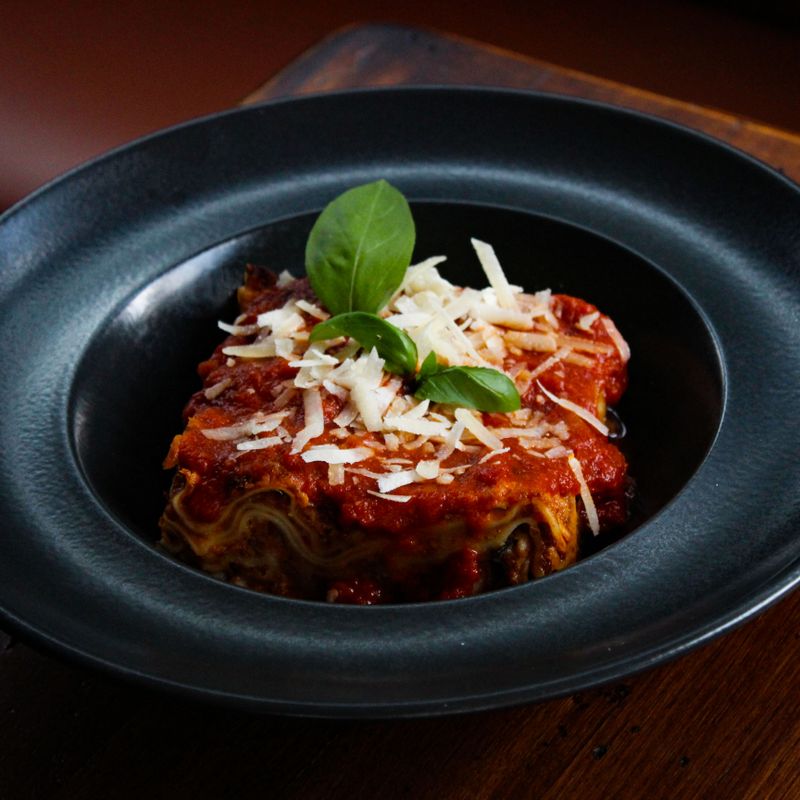
One-Pot Veal and Sage Lasagna
A rustic Italian braise where ground veal, sage, and white wine simmer together in one pot with layers of lasagna noodles, creating a cohesive, deeply flavored dish. No separate sauce-making or multiple pans required—just build, braise, and serve from the same vessel.
- Prep
- 20 min
- Cook
- 45 min
- Wait
- 15 min
- Total
- 1 hr 20 min
- Makes
- 6 servings (one 5-quart pot)
Steps
Before you start
- Break lasagna noodles into 2–3-inch pieces (you'll layer them raw, so they don't need to be perfect).
- Have sage fresh and ready to chop; this dish relies on its delicate flavor.
- Use a 5-quart Dutch oven or heavy-bottomed pot with a tight-fitting lid for even cooking.
- Preheat your oven to 350°F (175°C) before you start cooking on the stovetop.
Brown the veal
- Heat the olive oil in a 5-quart Dutch oven over medium-high heat (about 2 minutes, until shimmering).
- Add the ground veal in a single layer and cook undisturbed for 3–4 minutes to develop color, then break it apart with a wooden spoon and cook another 3–4 minutes, stirring occasionally, until no pink remains.
- Pour off excess fat if needed, leaving about 1 tbsp in the pot.
+ Show details− Hide details
Ready when: Veal is fully cooked with no pink visible
Tip: Resist the urge to stir too early; a good brown crust develops when the meat sits still for the first few minutes.
Build the aromatic base
- Reduce heat to medium.
- Add the diced onion to the pot and cook for 2 minutes, stirring, until it begins to soften.
- Stir in the minced garlic and chopped sage, and cook for 1 more minute until fragrant.
+ Show details− Hide details
Ready when: Garlic and sage are fragrant; onion is just soft
Tip: Don't let the garlic and sage brown; they'll taste bitter. Keep the heat at medium and watch carefully.
Deglaze and build liquid
- Pour in the white wine, scraping the bottom of the pot with your spoon to release any browned bits.
- Let it simmer for 2 minutes to reduce slightly and cook off some alcohol.
- Stir in the tomato paste and cook for 1 minute, coating the veal evenly.
+ Show details− Hide details
Ready when: Wine has reduced by about one-quarter; tomato paste is well incorporated
Tip: Scrape the fond (brown bits) from the bottom—that's where the flavor is. If the pot looks dry, add a splash of broth before the paste.
Add broth and tomatoes
- Pour in the chicken broth and crushed tomatoes.
- Stir well, scraping the sides and bottom.
- Bring the mixture to a simmer over medium heat (about 2–3 minutes), then taste and season with kosher salt and freshly ground black pepper to your preference.
+ Show details− Hide details
Ready when: Mixture is simmering gently; flavors are balanced
Tip: Taste now while you can adjust seasoning easily. Remember you'll add salty Parmesan later, so go light on the salt at this stage.
Create the first layer
- Spread about 1 cup of the veal-tomato braise evenly across the bottom of the pot.
- Scatter about one-third of the broken lasagna noodles over the braise (they should be mostly submerged in liquid or nestled close together).
- Dollop one-third of the ricotta in small spoonfuls over the noodles, then sprinkle one-third of the grated Parmesan.
+ Show details− Hide details
Ready when: First layer is visibly distinct and even
Tip: Work quickly so the bottom layer doesn't cool too much. Don't compress the layers; let the noodles and cheese rest loosely.
Add middle and top layers
- Repeat twice more: braise liquid (about 1 cup each time), noodles, ricotta, and Parmesan.
- The final layer should end with Parmesan on top.
- You should use all ingredients evenly distributed across three layers.
+ Show details− Hide details
Ready when: Three distinct layers visible; pot is full to about 1 inch below the rim
Tip: If you run low on braise liquid before finishing layers, add a splash of warm broth or water. The noodles need liquid to cook through.
Cover and braise in the ovenOven 350°F / 175°C
- Place the lid on the pot and transfer to a preheated 350°F (175°C) oven.
- Braise for 45 minutes, until the noodles are tender when pierced with a fork and the liquid is mostly absorbed (there should be a little moisture left, not a dry pot).
- The top should look set and slightly golden.
+ Show details− Hide details
Ready when: Noodles are tender throughout; liquid is mostly absorbed but not completely dry; top is lightly set
Tip: Resist peeking too often—each time you open the lid, you add 5 minutes to the cooking time. At 30 minutes, you can lift the lid briefly to check that the noodles are softening.
Rest and serve
- Remove the pot from the oven and uncover.
- Let the lasagna rest in the pot for 15 minutes; this allows the layers to firm up slightly and makes scooping cleaner.
- Serve directly from the pot, spooning generous portions with some of the remaining braising liquid into bowls or onto plates.
+ Show details− Hide details
Ready when: Lasagna has cooled slightly and layers hold their shape when scooped
Tip: If the pot was completely dry after cooking, add a few spoonfuls of warm broth before resting to keep it from drying further. You want a little sauce with each bite.
Good to know
Tips
- Lasagna noodles don't need to be boiled before adding to the pot; they soften from the braising liquid as it cooks. Breaking them into smaller pieces ensures they distribute evenly and cook through.
- Sage is the signature flavor here—use it fresh if possible. It has a subtle anise-like sweetness that complements veal perfectly. If you're substituting with dried sage, use sparingly, as it can quickly become overpowering.
- The one-pot method works because the noodles soften in the braising liquid (not pasta water), so all the savory, tomatoey flavor is built into every layer. There's no separate sauce.
- For cleaner servings, let the lasagna cool to warm before serving. Scooping while piping hot may result in loose layers; they'll hold together better after a brief rest.
Make ahead
You can assemble the entire lasagna (all layers) up to 8 hours ahead, cover it with the lid, and refrigerate. When ready to cook, add 5–10 minutes to the oven time since it will go in cold. Alternatively, make the veal braise up to 2 days ahead, refrigerate it, bring it to room temperature, then assemble and cook the lasagna.
Storage & reheating
Store leftovers in the same pot or transfer to an airtight container in the refrigerator for up to 4 days. Reheat gently on the stovetop over medium-low heat, adding a splash of broth or water if it has dried out. Do not freeze; the ricotta and lasagna noodles will not hold up well to freezing and thawing.
Substitutions
- ground veal → ground pork or a mixture of ground beef and pork. Veal is delicate and pairs beautifully with sage, but pork (or beef-pork blend) will give a richer, earthier result. Use the same weight.
- fresh sage leaves → 2 tsp dried sage. Fresh sage has a bright, peppery quality; dried sage is more muted. If using dried, reduce to 1½ tsp to avoid overpowering the dish.
- whole milk ricotta → mascarpone or a mixture of cream cheese and Greek yogurt. Ricotta gives a light, fluffy texture. Mascarpone is creamier and richer; use the same amount. Cream cheese mixed with yogurt (1:1) approximates ricotta's texture.
- dry white wine → dry vermouth or additional chicken broth. Wine adds acidity and flavor. Dry vermouth mimics this; broth makes it slightly earthier but the acidity will be lower.
More lasagna
See all →



Find more like this
- Meal
- Dinner
- Cuisine
- Italian
- Diet
- Sugar-Free
- Quick & Easy
- One-Pot