Onion and Egg Fried Rice
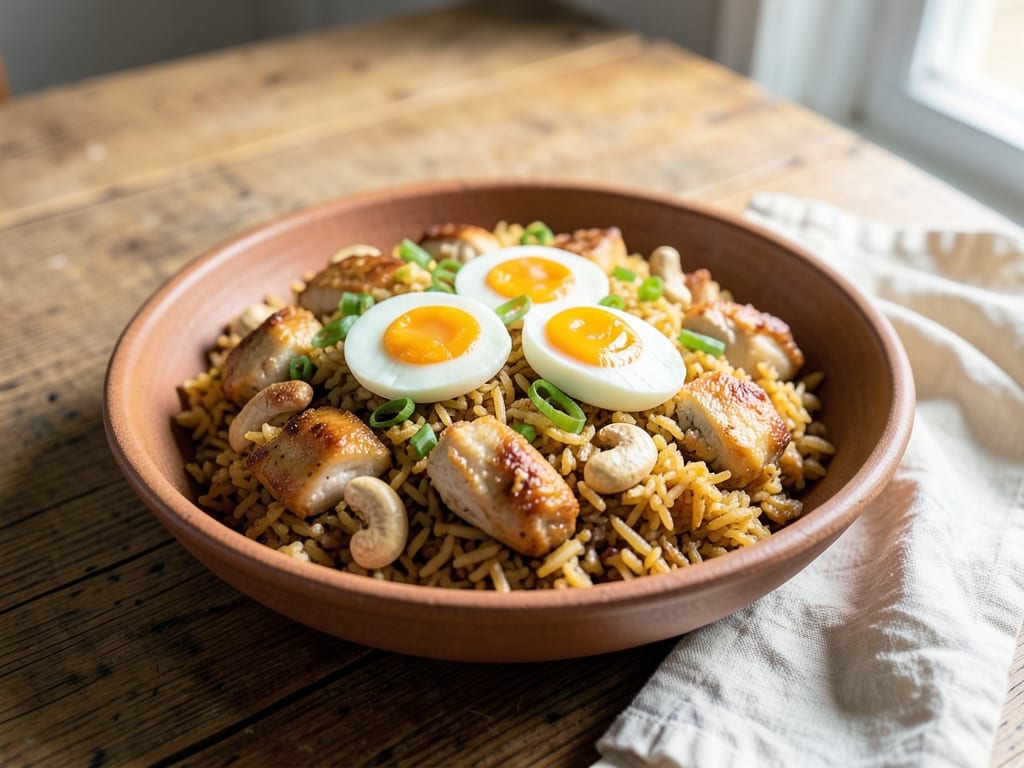
A classic stir-fried rice dish with fluffy scrambled eggs, caramelized onions, and aromatic white pepper. This simple but satisfying meal comes together in minutes when you start with cold, day-old rice. The key is high heat, quick movement, and building flavor through layered seasoning.
- Prep
- 10 min
- Cook
- 12 min
- Total
- 22 min
- Makes
- 4 servings (about 3 cups total)
Steps
Before you start
- Use day-old rice chilled in the refrigerator (fresh rice will clump); if you must use freshly cooked rice, spread it on a plate to cool completely
- Measure and prep all ingredients before you start cooking—fried rice cooks quickly and you won't have time to chop mid-stir-fry
- Have your wok or large skillet preheated over high heat for at least 1 minute
Scramble the eggs
- Heat a wok or 12-inch (30 cm) skillet over high heat for 1 minute until very hot.
- Add 1 tablespoon (15 ml) of oil and swirl to coat.
- Pour in the beaten eggs and let them sit undisturbed for 2 seconds, then scramble with a spatula, breaking them into small, soft curds.
- Once the eggs are just set but still slightly moist (about 1 minute), push them to the side of the wok and set aside.
+ Show details− Hide details
Ready when: Eggs are soft curds with no liquid pooling
Tip: Don't overcook the eggs now—they'll continue cooking when you stir in the rice.
Cook the onions
- Add another 1 tablespoon (15 ml) of oil to the wok.
- Add the diced onions and toss constantly with the spatula.
- Let them cook for 3–4 minutes, stirring every 20–30 seconds, until they turn translucent and the edges begin to brown slightly.
- You want them softened and lightly caramelized, not just raw.
+ Show details− Hide details
Ready when: Onions are soft and light golden at the edges
Tip: Don't walk away—constant movement prevents burning and ensures even cooking.
Add the rice
- Pour the cold rice into the wok in a single batch.
- Break up any remaining clumps with the spatula, pressing the rice against the hot pan for 15–20 seconds to hear it crackling slightly.
- This creates a light char flavor.
- Then toss continuously for 3–4 minutes, coating every grain with oil.
- The rice should look separated and glossy, with no wet or clumped spots.
+ Show details− Hide details
Ready when: Rice is hot throughout, glossy, and individual grains move freely
Tip: Cold rice has less moisture, so it fries better. Pressing it on the pan creates a subtle toasted flavor.
Season and combine
- Pour the soy sauce around the inner edge of the wok (so it hits the hot surface and releases aroma) and toss to coat evenly.
- Sprinkle the white pepper over the rice.
- Return the scrambled eggs to the wok and fold gently through the rice until well distributed.
- Toss continuously for 1 minute to heat through and combine all flavors.
+ Show details− Hide details
Ready when: Eggs are fully heated and no visible soy sauce pools remain
Tip: Add soy sauce to the hot pan edge—it blooms faster and gives deeper flavor than if stirred in cold rice.
Finish and serve
- Remove from heat.
- If using sesame oil, drizzle it over the rice and toss briefly to coat.
- Fold in the white and light green parts of the scallions if using.
- Taste and adjust seasoning with a pinch more salt, white pepper, or soy sauce if needed.
- Transfer to a serving bowl and top with dark green scallion slices if desired.
+ Show details− Hide details
Tip: Sesame oil burns easily, so add it only after the wok is off heat to preserve its nutty aroma.
Good to know
Tips
- The most common mistake is using warm or freshly cooked rice—it contains too much moisture and will clump and steam rather than fry. Chill rice overnight in the refrigerator for best results.
- Use high heat throughout; low heat will result in greasy, soggy rice. A wok is ideal because its shape and curved sides make constant tossing easy, but a large, flat-bottomed skillet works well too.
- Don't overcrowd the pan with rice in the first attempt. If you need to double this recipe, cook two batches separately rather than adding more rice to the wok at once, which will cool the pan and trap steam.
- This dish is endlessly customizable: add cooked chicken, shrimp, ham, or frozen peas in the final step; increase garlic and ginger for depth; or swap the onion for a mix of vegetables like carrots, bell peppers, and broccoli. Keep the cooking time fast and the heat high.
Storage & reheating
Store leftovers in an airtight container in the refrigerator for up to 3 days. Reheat in a wok or skillet over medium-high heat, stirring occasionally, until steaming (2–3 minutes). Add a splash of water if the rice seems dry. Do not freeze, as the texture of the rice will break down upon thawing.
Substitutions
- white pepper, ground → Black pepper, freshly ground. Black pepper is slightly more peppery and visible in the finished dish, but provides a similar warmth and spice.
- soy sauce → Tamari or low-sodium soy sauce. Use the same amount for tamari (which is gluten-free) or reduce to 2 tablespoons (30 ml) for low-sodium to control saltiness.
- neutral oil (vegetable, canola, or peanut) → Butter. Use clarified butter or ghee to avoid scorching; substitution works best for half the oil, with the remainder as neutral oil.
- yellow onion, medium → Shallots or white parts of scallions. Shallots are sweeter; use the same weight. Scallion whites will cook faster (reduce to 2–3 minutes), so adjust accordingly.