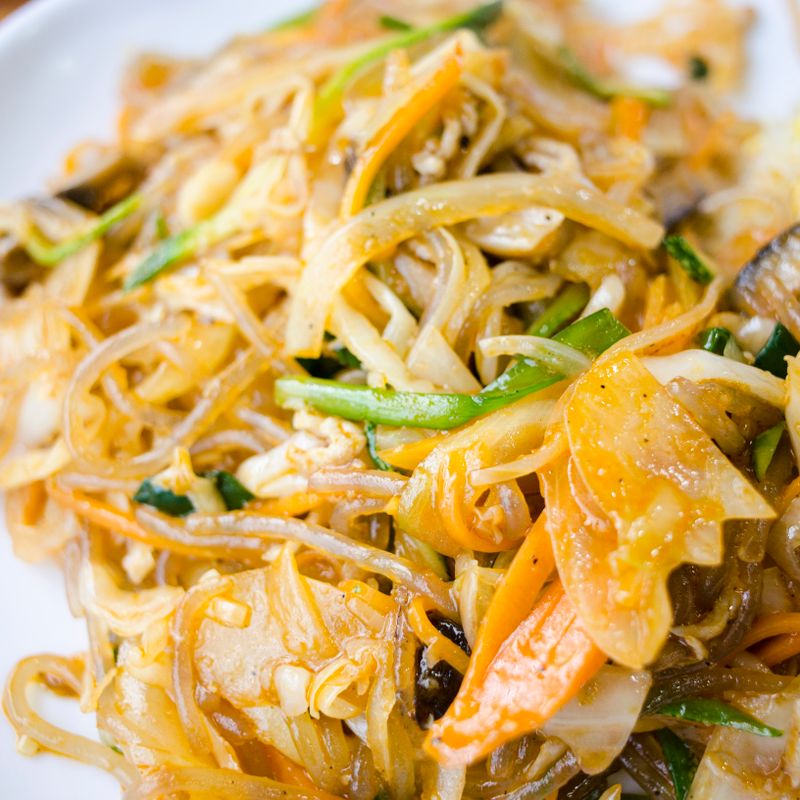
Cabbage and Carrot Fried Rice
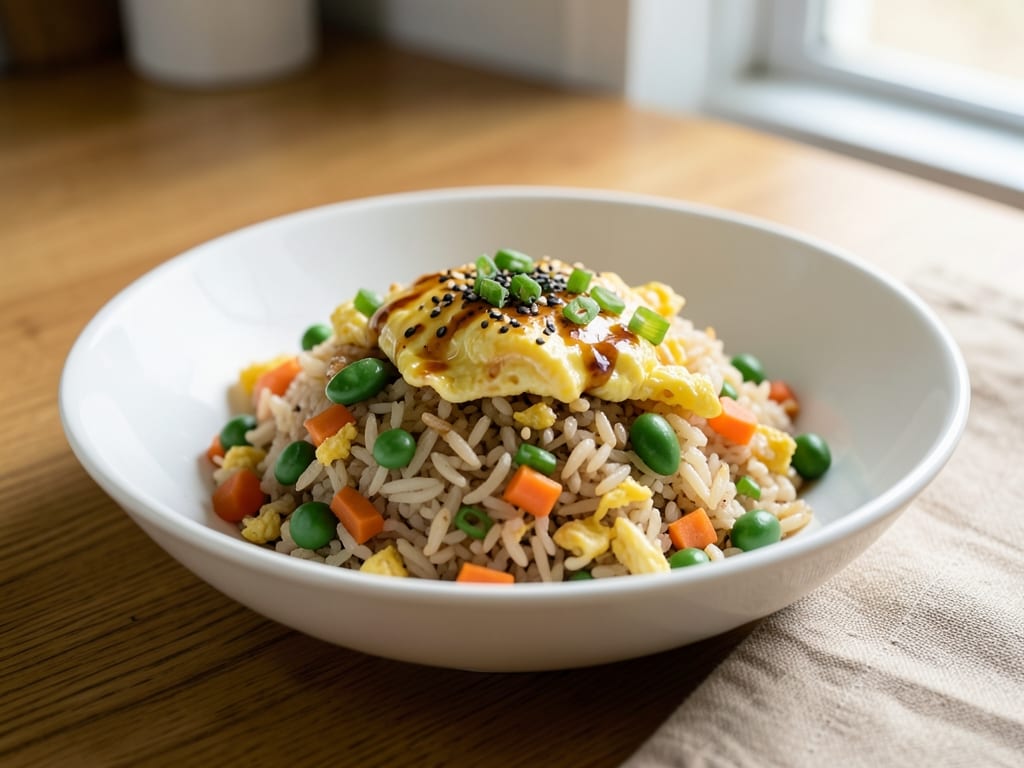
A quick, satisfying vegetable fried rice packed with shredded cabbage and carrots, bound together with scrambled eggs and a savory soy-based sauce. This dish comes together in one wok or large skillet and makes an excellent light lunch, dinner side, or base for protein additions.
- Prep
- 15 min
- Cook
- 12 min
- Total
- 27 min
- Makes
- 4 servings (about 2 cups per person)
Steps
Before you start
- Use leftover cooked rice that has been refrigerated (at least 4 hours, ideally overnight); cold rice separates better and won't clump
- Prep all vegetables and crack eggs into a bowl before you start cooking—fried rice happens quickly once heat is on
- Have soy sauce and sesame oil measured and ready by your stove
Scramble the eggs
- Heat 1 tablespoon (15 ml) of neutral oil in a 14-inch (36 cm) wok or 12-inch (30 cm) large skillet over medium-high heat.
- When the oil just begins to shimmer, pour in the beaten eggs.
- Let them sit for 15–20 seconds, then gently push the cooked egg toward the edge of the wok and tilt to allow uncooked egg to contact the hot surface.
- Stir gently until the eggs are just set but still slightly soft (about 1–2 minutes total).
- Transfer to a bowl and set aside.
+ Show details− Hide details
Ready when: Eggs are set but still slightly soft, not overcooked
Tip: Don't overcook the eggs here—they'll continue to cook when mixed with the rice. Soft, fluffy curds are what you want.
Cook aromatics and carrot
- Add the remaining 2 tablespoons (30 ml) of neutral oil to the wok and increase heat to high.
- Once the oil shimmers, add the minced garlic and ginger (if using) and stir-fry for 30 seconds until fragrant.
- Add the diced carrot and stir constantly for 2–3 minutes, until the carrot pieces soften slightly at the edges but remain crisp in the center.
+ Show details− Hide details
Ready when: Carrot is bright orange and slightly softened but not tender
Tip: High heat is essential here to get a light char and keep vegetables from becoming mushy. Don't wander away—this happens fast.
Add cabbage and cook until crisp-tender
- Add the shredded cabbage to the wok in batches if needed, stirring after each addition so it makes room.
- Toss constantly for 2–3 minutes until the cabbage wilts slightly and begins to soften but still has some bite and bright color.
+ Show details− Hide details
Ready when: Cabbage is slightly wilted but still bright green, with a slight tenderness but not limp
Tip: Shredded cabbage cooks very quickly at high heat. Keep stirring so it cooks evenly and doesn't brown unevenly.
Add rice and break up clumps
- Add the cold rice to the wok and stir continuously, breaking up any clumps with the back of a wooden spoon or spatula.
- Work through the rice for about 2 minutes, ensuring all grains are separated and coated with oil and mixed evenly with the vegetables.
+ Show details− Hide details
Ready when: Rice grains are separated, no clumps visible, and rice is heated through
Tip: Cold rice grains separate better than warm rice. If you must use warm rice, spread it on a plate first to cool slightly.
Season and finish
- Pour the soy sauce and sesame oil over the rice and vegetables, then add the white pepper.
- Toss continuously for 1–2 minutes to coat everything evenly and allow flavors to meld.
- Add the cooked eggs back to the wok along with the white scallion pieces (save the green parts for garnish) and toss gently to combine without breaking up the eggs too much.
- Taste and adjust seasoning with a bit more soy sauce if needed.
+ Show details− Hide details
Ready when: All ingredients are evenly coated, rice is hot throughout, and flavors are combined
Tip: Add sesame oil just before serving to preserve its fragrant, nutty flavor—it fades quickly with extended heat.
Garnish and serve
- Transfer to a serving platter or individual bowls and top with the reserved green scallion pieces.
- Serve immediately while hot.
+ Show details− Hide details
Tip: Green scallions add a fresh, sharp note—don't skip them or cook them with the dish.
Good to know
Tips
- Day-old or older rice works best—the drier the rice, the better the fried rice. Fresh rice will be gummy and clump no matter how much you stir. Spread warm cooked rice on a plate to cool if you don't have leftovers.
- High, consistent heat is key to good fried rice. A wok's curved sides make this easier, but a large, high-sided skillet works too. Keep everything moving to avoid sticking.
- For a heartier dish, add cooked shrimp, diced chicken, or tofu in step 4 along with the rice, stirring until heated through (about 1 minute).
- Customize the vegetables freely: use peas, corn, bell pepper, broccoli florets, or mushrooms. Keep total vegetable volume around 5–6 cups and prep them to similar sizes for even cooking.
Make ahead
Prep all vegetables (shred cabbage, dice carrot, mince garlic and ginger) up to 4 hours ahead and store in separate containers in the refrigerator. Keep cold rice chilled until ready to cook. Everything comes together in under 15 minutes once you start cooking.
Storage & reheating
Store leftovers in an airtight container in the refrigerator for up to 3 days. Reheat gently in a wok or skillet over medium heat with a splash of water or oil, stirring frequently, until warmed through (about 3–5 minutes). Do not microwave, as the rice can dry out. Freezing is not recommended as the texture of vegetables and rice will degrade.
Substitutions
- cooked long-grain white rice, cold and separated → chilled cooked jasmine rice or basmati rice. Jasmine rice will give a slightly fragrant, floral note; basmati works well for a firmer grain. Avoid arborio or short-grain rice, which are too starchy and will clump.
- green cabbage → bok choy, napa cabbage, or broccoli slaw. Bok choy cooks slightly faster; napa cabbage is milder and more tender. Increase bok choy by 1 cup since it reduces more when cooked.
- dark sesame oil → chili oil or garlic-infused oil. You'll lose the nutty sesame flavor but gain heat (chili oil) or mild garlic notes. Use the same amount.
- soy sauce → tamari (gluten-free soy sauce) or coconut aminos. Tamari is 1:1 as a substitute. Coconut aminos is slightly sweeter; start with 2 tablespoons and taste before adding more.