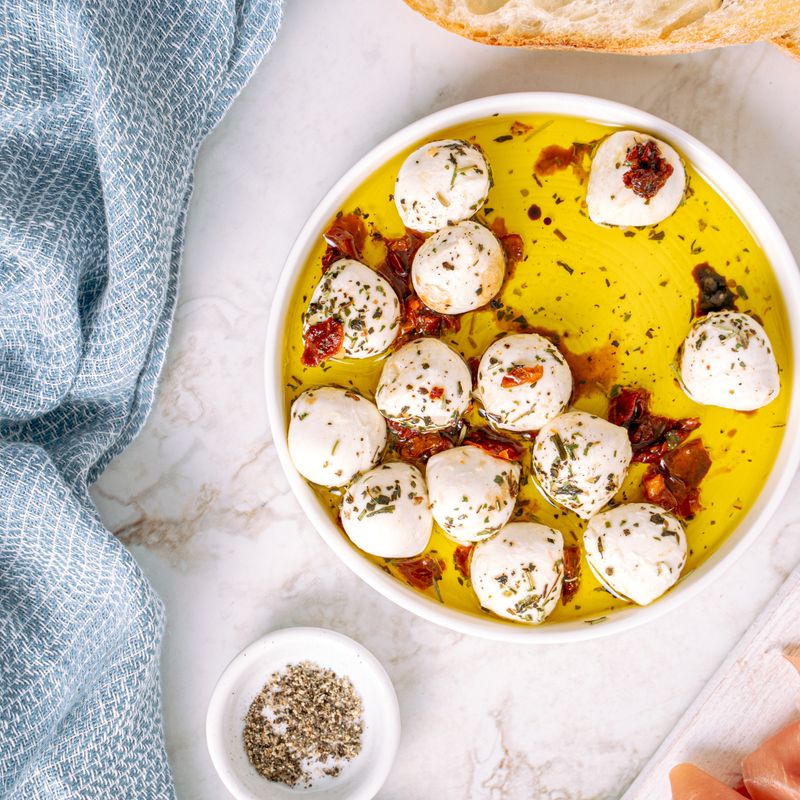
One-Pot Sun-Dried Tomato and Ricotta Breakfast Focaccia
A rustic Italian-inspired breakfast focaccia made in one pot, studded with sun-dried tomatoes and dollops of creamy ricotta. The dough is enriched with olive oil for tenderness, topped with fresh basil, and baked until golden and crispy at the edges. Perfect warm from the oven with morning coffee, or serve alongside a light salad for brunch.
- Prep
- 25 min
- Cook
- 22 min
- Wait
- 1 hr 30 min
- Total
- 2 hr 17 min
- Makes
- 1 focaccia (6 large slices)
Steps
Before you start
- Preheat oven to 425°F (220°C) 15 minutes before baking
- Have all ingredients at room temperature
- Measure flour by spooning into a dry measuring cup, then leveling; do not scoop directly from the bag
- If using oil-packed sun-dried tomatoes, drain well and pat dry with paper towels
Mix dough ingredients
- In a large mixing bowl, combine 2 cups (250 g) all-purpose flour, 1 teaspoon (5 g) instant dry yeast, and 1.25 teaspoons (7 g) fine sea salt.
- Stir with a wooden spoon to distribute the yeast and salt evenly.
- Pour in 0.75 cups (180 ml) lukewarm water (around 110°F / 43°C) and 3 tablespoons (45 ml) of the olive oil.
- Stir vigorously for 2–3 minutes until a shaggy, wet dough forms.
- The dough will be sticky and rough at this stage.
+ Show details− Hide details
Ready when: Shaggy, wet dough with no dry flour visible
Tip: Lukewarm water helps yeast activate without killing it; if water is too hot (above 120°F), the yeast will die. If too cool, rising will be slow.
Fold in sun-dried tomatoes and garlic
- Add 0.75 cup (100 g) drained and chopped sun-dried tomatoes and 3 minced garlic cloves to the dough.
- Using your hand or a spatula, fold the ingredients into the dough for about 2 minutes, rotating the bowl as you go, until the sun-dried tomatoes and garlic are evenly distributed throughout.
+ Show details− Hide details
Ready when: Sun-dried tomatoes and garlic are evenly scattered throughout the dough
Tip: Patting the sun-dried tomatoes dry prevents excess moisture that could make the dough too wet and affect rise.
Oil the skillet and prepare dough
- Pour 3 tablespoons (45 ml) of the remaining olive oil into a 10-inch (25 cm) round cast-iron skillet or ovenproof baking dish.
- Using your oiled hands or a spatula, transfer the dough directly into the oiled skillet.
- Gently stretch and press the dough to fill the bottom of the skillet, leaving it slightly uneven.
- The dough should reach about halfway up the sides.
- Do not overwork it—let it be rustic.
+ Show details− Hide details
Ready when: Dough fills the skillet bottom in an uneven, rustic layer
Tip: Oiling your hands prevents the dough from sticking and makes handling easier. Don't stress about making it perfectly smooth—focaccia looks best with an irregular surface.
First rise (bulk fermentation)
- Cover the skillet loosely with plastic wrap or a damp kitchen towel.
- Place in a warm, draft-free spot (like an unlit oven or a warm corner of your kitchen) for 60 minutes.
- The dough should rise noticeably but not double in size.
- You're aiming for a light, airy texture.
+ Show details− Hide details
Ready when: Dough has risen by about 50–75% and appears light and airy when poked gently
Tip: If your kitchen is cold (below 68°F / 20°C), the rise will take longer. In summer or a warm kitchen, it may finish in 45 minutes. Poke the dough gently—it should spring back slowly, not immediately.
Dimple and top with ricotta
- After the first rise, using your fingertips, gently dimple the entire surface of the dough, creating small indentations all over.
- Be gentle—you want to create texture, not deflate the dough.
- Dollop 1 cup (250 g) of room-temperature ricotta cheese across the focaccia in 6–8 scattered mounds, leaving some of the dimpled dough visible between them.
- Lightly spread each mound with the back of a spoon so they are roughly 0.5 inches (1 cm) thick and slightly flattened.
+ Show details− Hide details
Ready when: Dimples cover the dough surface; ricotta is scattered and slightly spread
Tip: Cold ricotta will be hard to spread. Room-temperature ricotta blends more easily into the dimples. If your ricotta is cold, let it sit on the counter for 15–20 minutes before using.
Second rise (final proof)
- Cover the skillet loosely again with plastic wrap or a damp towel and let rest in the warm spot for 30 minutes.
- During this time, the dough will puff up slightly around and under the ricotta.
- It should not double—you're aiming for a light, pillowy texture, not an overly puffy bread.
+ Show details− Hide details
Ready when: Dough has puffed slightly; dimples and ricotta mounds are still visible and defined
Tip: Overproofing at this stage leads to flat, dense focaccia. Stop the rise while the dough still looks shaped and intentional.
Bake the focacciaOven 425°F / 220°C
- Preheat your oven to 425°F (220°C) if you haven't already.
- Drizzle the remaining 2 tablespoons (30 ml) of olive oil across the top of the focaccia, letting it pool slightly in the dimples.
- Sprinkle with a pinch of freshly ground black pepper and fleur de sel or coarse sea salt if desired.
- Transfer the skillet to the preheated oven (place it on the middle rack) and bake for 20–22 minutes, until the focaccia is golden brown on top and the edges are deeper golden and slightly crispy.
+ Show details− Hide details
Ready when: Top is golden brown; edges are crispy and dark golden; a toothpick inserted into the thickest dough area comes out with no wet batter (ricotta will still be creamy)
Tip: Cast iron retains heat beautifully and helps create a crispy bottom crust. If using a ceramic dish, baking may take 2–3 minutes longer. Tent with foil if the top browns too quickly before the dough sets.
Add fresh basil and rest
- Remove the skillet from the oven and immediately scatter the 0.33 cup (10 g) of torn fresh basil across the warm focaccia.
- Let the focaccia rest in the skillet for 5 minutes.
- The residual heat will lightly wilt the basil and allow the crumb to set slightly, making it easier to slice.
+ Show details− Hide details
Ready when: Basil is scattered; focaccia is warm but not piping hot
Tip: Fresh basil added after baking retains its bright color and aroma. Wilted by residual heat, it flavors the focaccia without burning.
Slice and serve
- Using a sharp bread knife, slice the focaccia into 6 large wedges (like a pie) or into squares, depending on your preference.
- Serve warm or at room temperature.
- The warm focaccia is at its best—the ricotta is still creamy, the crust is crispy, and the basil aroma is strongest.
+ Show details− Hide details
Ready when: Focaccia is sliced cleanly with no crumbling or tearing
Tip: A slightly warm, slightly moist bread knife (dampened with hot water and dried) slices focaccia cleanly without crushing the crumb.
Good to know
Tips
- Cast-iron skillet heat distribution is key: it ensures an evenly crispy bottom while the top bakes gently. If you don't have cast iron, a ceramic or glass baking dish works, but reduce oven temp by 25°F (15°C) and monitor carefully to prevent overbrowning.
- The dough is intentionally wet and sticky—this creates the tender, airy crumb focaccia is known for. Resist the urge to add extra flour; oil your hands instead.
- Sun-dried tomatoes vary in saltiness. Taste the finished focaccia before adding extra salt; you may not need the finishing fleur de sel.
- For a richer flavor, infuse the olive oil: warm it gently with 1–2 garlic cloves and a sprig of rosemary (5 minutes), then strain and cool before using in the dough. Omit the minced garlic in Step 2 if doing this.
Make ahead
Prepare the dough up to the end of Step 3 (after pressing into the skillet). Cover and refrigerate for up to 12 hours. When ready to bake, remove from the fridge, let it come to room temperature for 30–40 minutes, then proceed with the second rise (Step 6) and baking (Step 7). Omit the first 60-minute rise if using chilled dough—the cold fermentation in the fridge replaces it.
Storage & reheating
Store leftovers covered at room temperature for up to 1 day. Reheat by wrapping loosely in foil and warming in a 350°F (175°C) oven for 8–10 minutes to restore crispness. Focaccia does not freeze well due to the ricotta topping; eat fresh or within a day.
Substitutions
- sun-dried tomatoes, oil-packed → roasted red peppers (drained and chopped) or caramelized onions. Use the same amount; drain well if jarred. The flavor will shift from tangy tomato to sweet pepper or umami-rich onion, but the texture and moisture balance remain similar.
- whole-milk ricotta cheese, at room temperature → burrata cheese or fresh mozzarella (torn into small pieces). Burrata will melt slightly and become creamy; mozzarella will soften. Both work beautifully. For mozzarella, add it in the same quantity but as small pieces rather than dollops so it melts evenly.
- fresh basil leaves → fresh oregano, thyme, or a combination of both. Use 1–2 teaspoons of dried herbs (or half the fresh amount if fresh). Add dried herbs in Step 2 (fold into the dough) rather than at the end, so they have time to hydrate and release flavor.
- all-purpose flour → bread flour or a mix of 1.5 cups all-purpose and 0.5 cup whole-wheat flour. Bread flour yields a chewier crust and denser crumb. Whole-wheat adds nuttiness and complexity but makes the crumb slightly denser. Increase water by 1–2 tablespoons if using whole-wheat to account for absorption.
More flatbread doughs
See all →

Find more like this
- Meal
- Breakfast
- Cuisine
- Italian
- Main ingredient
- Cream CheeseTomatoes