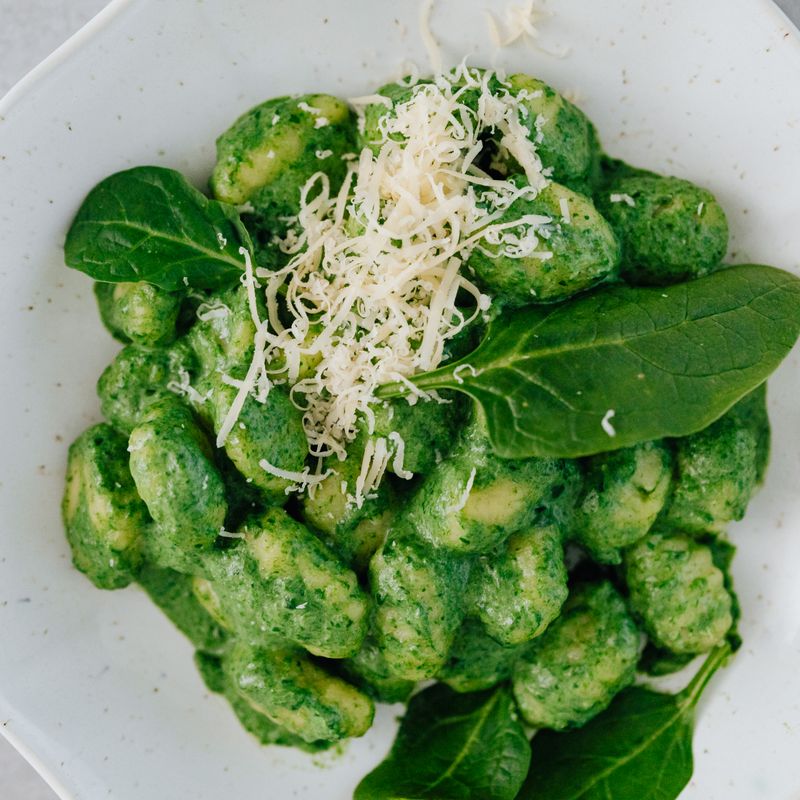
One-Pot Spinach and Ricotta Green Sauce
A silky, herbaceous Italian sauce built on fresh spinach, creamy ricotta, and garlic, finished with Parmesan and a whisper of nutmeg. Ready in under 20 minutes, it coats pasta beautifully and rewards simple ingredients with rich, comforting flavor.
- Prep
- 10 min
- Cook
- 12 min
- Total
- 22 min
- Makes
- About 2 cups sauce (serves 4 over pasta)
Steps
Before you start
- Have ricotta at room temperature for a smoother sauce
- Wash and roughly chop spinach; remove thick stems
- Mince garlic finely so it distributes evenly
- Measure out Parmesan—freshly grated melts better than pre-grated
Bloom the garlic
- Heat the olive oil in a 12-inch skillet or 3-quart saucepan over medium heat.
- Add the minced garlic and cook, stirring constantly, for 60–90 seconds until fragrant but not browned.
- The oil should shimmer around the garlic and smell sweet and toasty.
+ Show details− Hide details
Ready when: Garlic is fragrant and just beginning to turn pale gold
Tip: Don't let garlic brown or it will taste bitter. Keep the heat at medium and watch closely.
Wilt the spinach
- Add the chopped spinach to the pan in two or three batches, stirring with a wooden spoon after each addition until the leaves collapse and release their moisture.
- This will take 3–4 minutes total.
- The spinach should be fully wilted and any excess liquid will begin to evaporate.
+ Show details− Hide details
Ready when: All spinach is wilted, glossy, and clinging to the pan
Tip: Add spinach in batches so the pan doesn't cool down and the leaves wilt evenly.
Incorporate ricotta and broth
- Pour in the broth and then dollop the room-temperature ricotta around the pan.
- Stir gently with a wooden spoon, breaking the ricotta into smaller curds as you fold it into the spinach and broth.
- Don't overmix; the sauce should have creamy flecks of ricotta throughout, not be completely smooth.
- Cook over medium heat, stirring occasionally, for 2 minutes to allow the ricotta to warm through and the flavors to marry.
+ Show details− Hide details
Ready when: Ricotta is warm and incorporated, sauce is creamy but still slightly textured
Tip: Room-temperature ricotta mixes in more smoothly. Cold ricotta will seize and create lumps.
Add cheese and seasoning
- Remove the pan from the heat and stir in the freshly grated Parmesan until fully melted and combined.
- Add a generous pinch of nutmeg (about 1/8 teaspoon freshly grated).
- Taste and season carefully with salt and black pepper—remember that the cheese and ricotta already contain salt, so add a little at a time and taste between additions.
+ Show details− Hide details
Ready when: Parmesan is melted and sauce is creamy and evenly seasoned
Tip: Grate the nutmeg fresh—it makes a noticeable difference in flavor and aroma.
Finish and serve
- If using lemon zest, stir it in now for a bright finish.
- Check the sauce consistency—it should coat a spoon but flow easily.
- If it's too thick, thin it with a splash more warm broth or pasta water.
- Taste one more time and adjust salt and pepper if needed.
- Serve immediately over hot pasta, dividing sauce evenly among bowls.
+ Show details− Hide details
Ready when: Sauce is creamy, well-seasoned, and the right consistency to coat pasta
Tip: Finish with a drizzle of good-quality olive oil for extra richness and flavor.
Good to know
Tips
- Use whole-milk ricotta for the creamiest texture. Lower-fat versions can be grainy or thin.
- Freshly grated nutmeg transforms this sauce—a quarter teaspoon of pre-ground nutmeg won't have nearly the same impact.
- Don't skip the broth; it helps distribute the ricotta evenly and creates a sauce that clings to pasta instead of sitting separately.
- For a protein-rich pasta dish, stir in cooked crumbled sausage, pancetta, or white beans before serving.
Make ahead
This sauce is best served immediately, but you can prepare all ingredients (chop spinach, mince garlic, grate cheese) up to 4 hours ahead and cover them separately. Do not make the finished sauce ahead, as the ricotta texture will change upon refrigeration.
Storage & reheating
Refrigerate leftover sauce in an airtight container for up to 3 days. Reheat gently over medium-low heat with a splash of broth or pasta water, stirring frequently to prevent scorching. Do not freeze, as the ricotta will separate and become grainy upon thawing.
Substitutions
- whole-milk ricotta cheese → Crème fraîche or sour cream (use 3/4 cup / 180 ml). Adds tang and richness. Whisk it in at the end off the heat so it doesn't curdle.
- low-sodium chicken or vegetable broth → Reserved pasta cooking water or heavy cream (1/2 cup / 120 ml). Pasta water adds starch for a silkier sauce; cream makes it richer.
- fresh baby spinach or tender spinach leaves → Frozen spinach, thawed and squeezed dry (6 oz / 170 g). Works well; thaw and wring out excess moisture so the sauce isn't watery.
- Parmigiano-Reggiano cheese → Pecorino Romano or Grana Padano (3/4 cup / 75 g). Pecorino is saltier and more assertive; Grana Padano is milder and slightly sweeter.