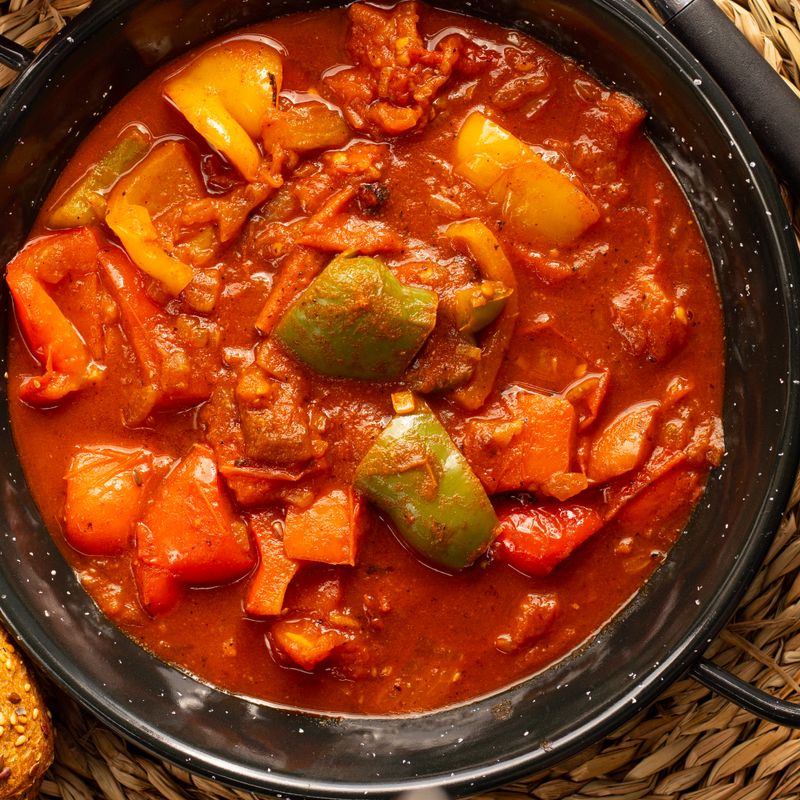
One-Pot Sourdough Lentil Vegetable Stew with Bread Bowls
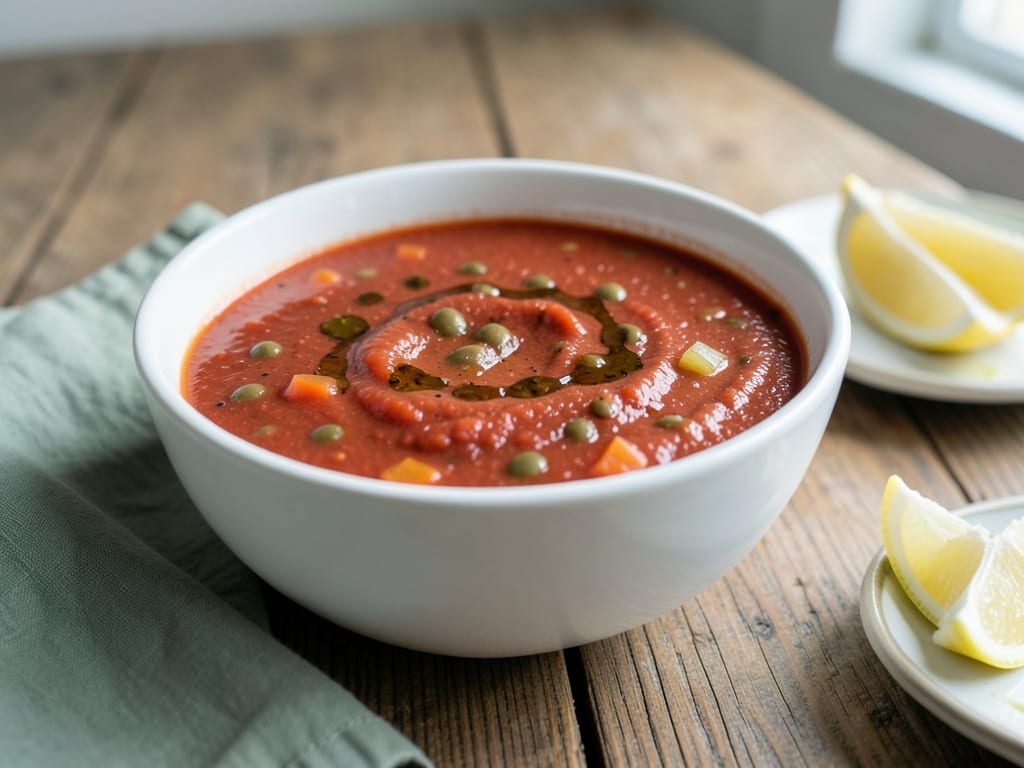
A rustic Mediterranean one-pot meal pairing a deeply flavored lentil and vegetable stew with crusty sourdough bread bowls. The stew simmers vegetables, brown lentils, and herbs in vegetable broth until tender and rich, while the bread bowls are toasted until golden and crisp on the outside. Ladle the warm stew into the hollowed bread bowls for a warming, complete meal. This recipe serves 4 as a hearty main course and can be made ahead.
- Prep
- 25 min
- Cook
- 45 min
- Wait
- 15 min
- Total
- 1 hr 25 min
- Makes
- 4 bread bowls with stew (about 2 cups/480 ml stew per serving)
Steps
Before you start
- Read the full recipe; the stew and bread bowls cook on slightly different timelines.
- Prep all vegetables before you start cooking—the stew cooks quickly once liquid is added.
- If using store-bought sourdough, choose a round loaf about 4 inches (10 cm) in diameter so the bowls hold enough stew.
- Have vegetable broth measured and ready.
Prep vegetables
- While the stew base cooks, dice the carrots, celery, onion, and zucchini into uniform ½-inch (1.3 cm) pieces.
- Mince the garlic.
- Have all vegetables and the broth ready to add.
+ Show details− Hide details
Tip: Consistent dice size ensures even cooking. Zucchini can be diced while the stew simmers since it cooks quickly.
Sauté aromatics
- Heat 3 tablespoons (45 ml) olive oil in a large 5-quart (5-liter) heavy-bottomed pot over medium heat.
- Add the diced onion and cook, stirring occasionally, for 5–6 minutes until softened and translucent.
- Add the minced garlic and cook for 1 minute more until fragrant.
- Do not brown—the goal is a gentle soften.
+ Show details− Hide details
Ready when: Onion is soft and translucent; garlic is fragrant but not brown
Tip: Use medium heat, not high, to prevent burning the garlic. Burned garlic tastes bitter and will ruin the stew.
Add tomato paste
- Stir in 2 tablespoons (30 g) tomato paste.
- Cook, stirring constantly, for 2 minutes.
- This step, called "blooming," deepens the umami flavor and removes any raw edge from the paste.
+ Show details− Hide details
Ready when: Tomato paste has darkened slightly and smells rich and concentrated
Tip: Blooming the tomato paste prevents a chalky, raw taste in the finished stew.
Add lentils and broth
- Pour in 5 cups (1180 ml) vegetable broth and add the 1 cup (200 g) rinsed brown lentils.
- Bring the mixture to a simmer over medium-high heat, stirring occasionally.
- Once simmering, reduce heat to medium and maintain a gentle simmer.
+ Show details− Hide details
Ready when: Small bubbles break the surface regularly; the liquid is steaming but not rolling at a boil
Tip: A gentle simmer prevents the lentils from breaking apart. Hard boiling will make them mushy.
Add herbs and aromatics
- Add 2 bay leaves, 1 teaspoon (1 g) dried oregano, and 1 tablespoon (3 g) fresh thyme leaves (or 1 teaspoon dried thyme).
- Stir well.
- If using red pepper flakes for heat, add a pinch now.
- Simmer for 10 minutes to allow the flavors to meld.
+ Show details− Hide details
Ready when: Broth has taken on a slightly deeper color and smells herbaceous
Tip: Adding herbs early allows their flavors to develop throughout the stew. Don't skip this step.
Add remaining vegetables
- Stir in the diced carrots and celery.
- Simmer for 8 minutes, then add the diced zucchini and the canned diced tomatoes with their juice.
- Stir gently to combine.
+ Show details− Hide details
Ready when: Carrots and celery pieces are tender when pierced with a fork
Tip: Add zucchini and tomatoes after carrots and celery have a head start since zucchini cooks much faster and can become mushy if simmered too long.
Simmer stew to completion
- Continue simmering over medium heat for 12–15 minutes until the lentils are tender but not falling apart, and the vegetables are fully cooked and soft.
- The stew should have reduced slightly and thickened.
- Season generously with sea salt and freshly ground black pepper to taste.
- Remove bay leaves.
- At this point, the stew can rest while you prepare the bread bowls, or be cooled and refrigerated for up to 3 days.
+ Show details− Hide details
Ready when: Lentils are tender and yield to gentle pressure; vegetables are soft; broth has slightly thickened
Tip: Taste and adjust seasoning near the end. Salt brought in early allows it to distribute evenly, but wait until near the finish to avoid over-salting before the liquid has reduced.
Prepare bread bowlsOven 375°F / 190°C
- While the stew finishes, preheat your oven to 375°F (190°C).
- Place 4 round sourdough rolls on a baking sheet.
- Using a serrated bread knife, carefully cut a circle about 2 inches (5 cm) from the top of each roll, angling the knife inward slightly to create a lid.
- Gently scoop out the soft interior, leaving a ½-inch (1.3 cm) thick shell.
- Reserve the removed bread pieces to tear into croutons if desired, or discard.
+ Show details− Hide details
Ready when: Bread bowls are hollowed out with sturdy walls
Tip: Angle your knife inward as you cut so the lid sits securely inside the bowl and doesn't fall through. Don't make the walls too thin or they'll fall apart when filled with hot stew.
Toast bread bowlsOven 375°F / 190°C
- Lightly brush or drizzle the outside and inside of each bread bowl with a small amount of olive oil (about ½ teaspoon per bowl).
- Place them on the baking sheet and bake at 375°F (190°C) for 8–10 minutes until the exterior is golden and crisp, but the interior is still slightly tender.
- The bowls should be warm and structurally sound when you remove them.
+ Show details− Hide details
Ready when: Exterior is golden brown and crisp; bread is warm to the touch
Tip: Watch the bread in the final 2–3 minutes—every oven varies, and you want crispy, not burned. If the bread is browning too fast, lower oven temperature to 350°F (175°C) and add a minute or two.
Assemble and serve
- Working quickly after the bread bowls come out of the oven, gently place each bowl in a shallow serving bowl or on a plate.
- Ladle the warm stew into each bread bowl, filling it generously and allowing a little to spill into the outer bowl.
- Top with a small handful of freshly chopped parsley if desired.
- Serve immediately while the stew is hot and the bread is still crisp on the outside.
+ Show details− Hide details
Ready when: Stew is steaming and bowls are filled
Tip: Assemble just before serving. If assembled too far ahead, the hot stew will soften the bread. The contrast between crispy bread and creamy stew is essential to the dish.
Good to know
Tips
- Day-old sourdough bread works better than fresh for toasting because it has less moisture and will crisp more effectively. If your bread is very fresh, leave it uncovered at room temperature for several hours before preparing the bowls.
- The stew can be made entirely ahead and reheated while the bread toasts, making this a convenient option for entertaining. Reheat the stew over medium heat, stirring gently, for about 10 minutes until it reaches serving temperature.
- For a more substantial meal, stir a handful of fresh spinach or kale into the stew during the final 2 minutes of cooking. It will wilt quickly and add nutritional depth without changing the flavor significantly.
- If you can't source round sourdough rolls, cut thick slices from a larger sourdough loaf, hollow them out in the same way (use two slices if needed to create a stable bowl), and toast as described.
Make ahead
The stew can be made 1–2 days ahead and reheated gently on the stovetop. Prepare the bread bowls on the day of serving, no more than 1 hour before you plan to eat, or they will lose their crispness. You may also toast the bread bowls and keep them in an airtight container for up to 8 hours; reheat in a 300°F (150°C) oven for 3–4 minutes before assembling.
Storage & reheating
Stew stores in an airtight container in the refrigerator for up to 4 days. Freeze for up to 2 months. Reheat on the stovetop over medium heat, stirring occasionally and adding a splash of broth or water if it has thickened too much. Bread bowls are best eaten fresh; store leftover toasted bread in an airtight container at room temperature for up to 1 day, then refresh in a 300°F (150°C) oven for 3 minutes. Day-old sourdough bread stores well, but fresh bread will not crisp as effectively.
Substitutions
- brown lentils, picked over and rinsed → Green lentils (also called French lentils) or red lentils (reduce simmering time by 5 minutes, as red lentils break down faster). Brown lentils hold their shape best for a hearty stew and have an earthy flavor. Green lentils are slightly firmer; red lentils will create a softer, almost soup-like consistency.
- vegetable broth → Chicken or beef broth for a richer, more savory stew. This shifts the flavor toward meat-based comfort food rather than Mediterranean vegetarian. The quantity remains the same.
- medium zucchini → Diced bell pepper (red, yellow, or green), diced eggplant, or extra carrots. Bell pepper adds sweetness; eggplant adds earthiness. Cook eggplant the same way as zucchini. More carrots will make the stew slightly sweeter.
- round sourdough bread rolls or small loaf (4-inch/10 cm diameter), day-old → Rustic white or whole-wheat bread bowls, or even thick slices of toasted bread served on the side. The sourdough adds a gentle tang that pairs beautifully with the lentil stew, but any crusty artisanal bread works. Soft sandwich bread will fall apart and is not recommended.
More lentil soups
See all →


Find more like this
- Meal
- Dinner
- Cuisine
- Mediterranean
- Quick & Easy
- One-PotMake Ahead