
Instant Pot Sourdough Ramadan Vegetable Lentil Soup in Bread Bowls
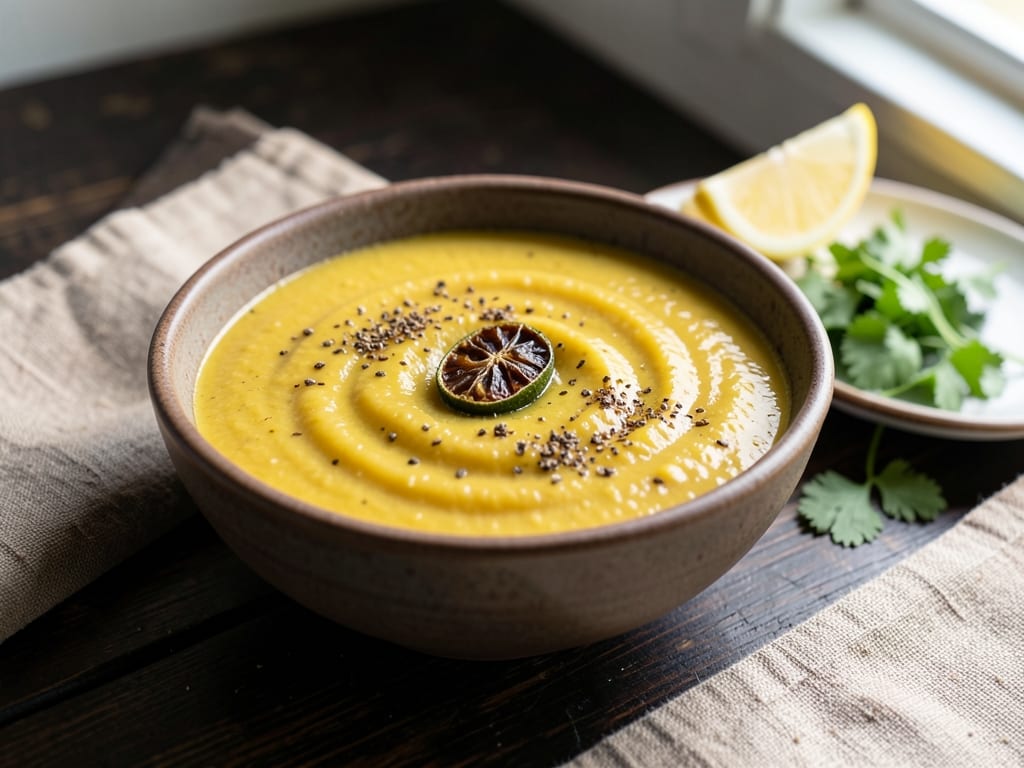
Rustic sourdough bread bowls filled with a fragrant Middle Eastern-spiced red lentil and vegetable soup, cooked quickly in an Instant Pot. The bread provides a delicious, edible vessel for a hearty, warming soup that's perfect for breaking fast during Ramadan or any special meal. The sourdough ferments overnight for convenience, and the soup comes together while the bread bakes. This recipe balances traditional slow-fermented bread with modern pressure-cooking efficiency.
- Prep
- 25 min
- Cook
- 45 min
- Wait
- 10 hr
- Total
- 11 hr 10 min
- Makes
- 4 bread bowls with soup
Steps
Before you start
- Feed your sourdough starter 4–8 hours before mixing, until it's active, bubbly, and at peak (at least doubled in volume).
- This recipe works best with overnight cold fermentation: mix the dough in the evening, refrigerate overnight, then shape and bake the next day. For same-day fermentation (4–5 hours bulk + 1–2 hours proof), allow 6–7 hours total.
- Have your Instant Pot and bread baking setup ready: banneton or proofing bowl, Dutch oven or baking vessel (optional but recommended for steam).
- Read through the full recipe first—you'll be making both bread and soup, though much can overlap.
- The Instant Pot soup is quick, so it's best made while the bread bakes and cools.
Mix the sourdough dough
- In a large mixing bowl or stand mixer, combine the active sourdough starter, bread flour, and room-temperature water.
- Mix with a wooden spoon or stand mixer on low speed until all the flour is incorporated and you have a shaggy, rough dough with no dry flour remaining, about 5 minutes.
- Cover the bowl with a damp kitchen towel and let it rest for 30 minutes at room temperature to allow the flour to fully hydrate—this is called an autolyse.
- After 30 minutes, add the sea salt and incorporate it thoroughly by hand or with the stand mixer on medium speed for about 2 minutes until the salt is evenly distributed throughout the dough.
+ Show details− Hide details
Ready when: Dough is rough and shaggy initially, then becomes more cohesive after autolyse; salt is evenly incorporated
Tip: Don't skip the autolyse—it improves dough strength and rise. Your starter should be bubbly and at least doubled before mixing; if not, feed it again and wait 2–4 more hours.
Bulk ferment the dough
- Cover the bowl with a damp towel or plastic wrap and let the dough rise at room temperature (68–75°F / 20–24°C is ideal).
- For overnight fermentation (recommended), place in an unheated oven or cool spot at 38–40°F (3–4°C) for 8–12 hours.
- For same-day fermentation, let it rise on the counter for 4–5 hours.
- The dough is ready when it has increased 50–75% in volume, feels airy when gently poked, and shows visible bubbles on the surface and sides.
+ Show details− Hide details
Ready when: Dough increased 50–75% in volume, airy feel when poked gently, visible bubbles on surface and sides
Tip: If your kitchen is cold, same-day fermentation will take longer. If warm, watch it closely—it may be ready in 3–4 hours. Cold overnight fermentation is more convenient and develops deeper flavor.
Divide and pre-shape
- Once bulk fermentation is complete, turn the dough onto a lightly floured work surface.
- It will be soft and sticky—this is normal for well-fermented sourdough.
- Divide it into 4 equal pieces using a bench scraper or knife, each weighing about 160–180g.
- Gently pre-shape each piece into a loose round by folding the edges toward the center, then flip seam-side down.
- Place pre-shaped pieces on a lightly floured surface, seam-side up, and cover with a damp towel.
- Let them rest for 20 minutes to allow the gluten to relax.
+ Show details− Hide details
Ready when: Pieces are relaxed and hold a round shape without immediate spring-back
Tip: Wet your bench scraper with a little water to prevent sticking—avoid using excessive flour, which dries out the dough.
Final shape and proof
- After the 20-minute rest, shape each piece into a tight round by folding the edges down and under, building surface tension.
- Place each shaped round seam-side up in a floured banneton proofing basket or a bowl lined with a well-floured damp kitchen towel.
- If you don't have a banneton, improvise with a small mixing bowl lined with a flour-dusted tea towel.
- Cover the baskets loosely with plastic wrap or a damp towel to prevent a crust from forming.
- Let them proof at room temperature for 1–2 hours until they have increased 25–50% in size and a gentle poke with your finger leaves a slight indentation that springs back slowly (not immediately, but not permanently—this is the "poke test").
- Alternatively, for overnight cold proof, wrap and refrigerate 8–12 hours, then allow them to come to room temperature for 30–60 minutes before baking.
+ Show details− Hide details
Ready when: Dough increased 25–50%, poke test shows slow spring-back (indentation doesn't spring back instantly, but slowly returns)
Tip: The poke test is critical for judging readiness. If the dough springs back instantly, it needs more time. If it doesn't spring back at all, it's overproofed. Good bowls show moderate proofing and excellent oven spring.
Prepare soup vegetables and preheat ovenOven 475°F / 245°C
- While the dough's final proof is underway, prepare the soup ingredients.
- Rinse the red lentils in a fine-mesh strainer under cool running water until the water runs clear; set aside.
- Dice the onion and celery into small ½-inch pieces.
- Dice the carrots the same size.
- Mince the garlic finely.
- Have the canned tomatoes, broth, and all spices measured out and ready in small bowls.
- About 30 minutes before you're ready to bake the bread, preheat your oven to 475°F (245°C).
- If you have a Dutch oven or bread cloche, place it inside the oven to preheat as well—this creates steam and helps the bowls expand beautifully.
+ Show details− Hide details
Ready when: All vegetables diced uniformly, lentils rinsed, oven preheated to 475°F (245°C)
Tip: Mise en place (prep everything before cooking) ensures the soup comes together smoothly. This can be done while the dough's final proof is underway.
Score and bake the bread bowlsOven 475°F / 245°C
- Once your dough has passed the poke test and the oven is fully preheated, carefully turn one proofed dough round onto a sheet of parchment paper, seam-side down.
- Using a bread lame (a long, sharp blade) or a very sharp knife, score the top of the bowl with a single deep slash or an X pattern about ¼ inch (6mm) deep.
- This guides the dough's expansion in the oven.
- Repeat with remaining bowls, spacing them on the parchment.
- Using the parchment as handles, carefully transfer the dough into the preheated Dutch oven or onto a baking vessel in the oven.
- If using a Dutch oven, cover it with its lid; if baking on a baking sheet, mist the oven walls with water using a spray bottle 2–3 times during the first 5 minutes to create steam.
- Bake at 475°F (245°C) for 30–35 minutes.
- After 20 minutes, if using a Dutch oven, carefully remove the lid to allow browning.
- The bowls are done when they are deep golden brown on top and sound hollow when tapped on the bottom.
+ Show details− Hide details
Ready when: Deep golden brown on top, hollow sound when tapped on the bottom, crispy exterior
Tip: Every oven is different—if browning too fast, lower the heat to 450°F (232°C). Don't open the oven door during the first 20 minutes to avoid losing steam and deflating the dough.
Cool bread and start the soup base
- Remove the bowls from the oven and place them on a wire cooling rack.
- Let them cool for 15–20 minutes until they are warm but cool enough to handle.
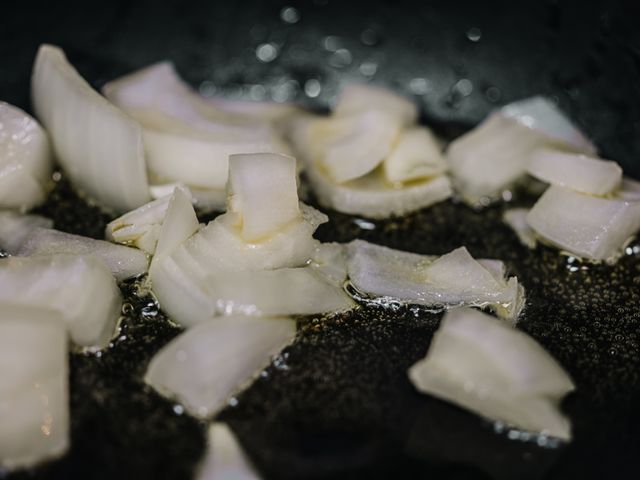
- While they cool, begin the soup: Place your Instant Pot on the sauté function and heat the olive oil for about 1 minute until shimmering.
- Add the diced onion and celery, and cook for 3–4 minutes, stirring occasionally, until softened and fragrant (they should be translucent and tender, not browned).
- Add the minced garlic and cook for another 30 seconds until very fragrant.
+ Show details− Hide details
Ready when: Onion and celery are softened and translucent, garlic is fragrant
Tip: Medium heat prevents the garlic from burning. Don't skip the sautéing—it builds a rich flavor foundation for the soup.
Toast spices and build the soup
- Add the ground cumin, coriander, paprika, turmeric, and cinnamon (if using) to the Instant Pot.
- Stir constantly for 30–40 seconds to toast the spices and release their essential oils—you'll smell a fragrant, toasty aroma.
- Immediately add the rinsed lentils, diced carrots, canned tomatoes (with their juice), and vegetable broth.
- Stir well to combine all ingredients and ensure nothing is stuck to the bottom of the pot.
- The pot may be quite full—this is normal.
- Turn off the sauté function.
+ Show details− Hide details
Ready when: Spices smell fragrant and toasty, all ingredients are mixed together evenly
Tip: Blooming the spices intensifies their flavor and warmth—this step is essential. If ingredients start to stick, add a splash of broth to deglaze.
Pressure cook the soup
- Seal the Instant Pot lid and set the valve to 'sealing.' Select high pressure and set the timer for 10 minutes.
- The pot will take 2–3 minutes to come to pressure; this time is included in the 10-minute cook time.
- Once 10 minutes have elapsed, turn off the heat and allow the pressure to release naturally for 10 minutes.
- After 10 minutes of natural release, if pressure is still remaining, carefully open the valve to quick-release any excess steam.
- Carefully remove the lid, standing back from the steam.
+ Show details− Hide details
Ready when: Lentils are completely soft and creamy, broth is rich and thick
Tip: Natural pressure release is gentler on ingredients and allows more flavor development than quick release. The red lentils will have largely broken down into a creamy texture.
Finish the soup and hollow the bowls
- Stir the soup thoroughly—the red lentils should have largely broken down into a thick, creamy soup (don't overstir, or it becomes mushy).
- Add the fresh lemon juice and stir.
- Taste the soup and add salt and black pepper to your preference.
- If the soup seems too thin, let it simmer on the sauté function for a few minutes to reduce; if it's too thick, stir in a splash more broth.
- The soup should be creamy and pourable, not watery.
- Meanwhile, once the bread is cool enough to handle (warm to the touch but not hot), carefully cut a circle around the top of each bowl about 1–1.5 inches (2.5–4 cm) from the edge using a serrated knife or bread knife.
- Lift off the lid, then gently scoop out some of the soft interior crumb using a small serrated knife or your fingers, leaving a ½-inch to 1-inch (1.25–2.5 cm) thick shell.
- Don't remove too much or the bowl will collapse.
- Save the scooped-out bread for croutons or breadcrumbs if desired.
+ Show details− Hide details
Ready when: Soup is creamy, well-seasoned, and at desired consistency; each bread bowl has a hollow interior with sturdy ½- to 1-inch walls
Tip: The bread should still be slightly warm when you hollow it out—this makes scooping easier and keeps the interior softer. Work gently to avoid tearing the walls.
Serve in bread bowls
- Place each warm bread bowl on a serving plate or shallow bowl.
- Ladle the hot lentil soup generously into the center of each bread bowl, filling until the soup nearly reaches the rim.
- Garnish each serving with a sprinkle of fresh cilantro and an optional drizzle of olive oil.
- Serve immediately while the bread is still warm and the soup is steaming hot.
+ Show details− Hide details
Tip: Serve right away—the longer the soup sits in the bread, the more the bread absorbs it and softens. If serving at Iftar (Ramadan), time it so the bread is hot and fresh when guests arrive.
Good to know
Tips
- Peak sourdough starter is crucial for success—it should be bubbly, at least doubled in volume, and pass the "float test" (a spoonful of starter floats in a cup of water when active). If your starter isn't ready, feed it again and wait another 2–4 hours.
- Red lentils naturally break down into a creamy texture; don't over-stir them in the Instant Pot or the soup becomes too mushy and loses its pleasant texture. Stir just enough to combine ingredients.
- The bread should still be warm when you hollow it out—this makes scooping easier and helps the soup stay hot longer when plated.
- Overnight cold fermentation is the most convenient approach and develops superior flavor. Simply mix the dough in the evening, cover, and refrigerate 8–12 hours. The next morning, shape, proof 1–2 hours at room temperature, and bake.
Make ahead
Sourdough dough can be mixed and cold-fermented overnight in the refrigerator (8–12 hours), then shaped and proofed the next morning for a convenient two-day process. The soup can be made completely 1 day ahead and reheated on the stovetop or in the Instant Pot before serving. Bread bowls can be made 1–2 days ahead and stored in an airtight container; reheat in a 350°F (175°C) oven for 10 minutes before serving.
Storage & reheating
Bread bowls: Store at room temperature in an airtight container for 2–3 days, or freeze in a freezer bag for up to 2 months. To reheat from frozen, place in a 350°F (175°C) oven for 15–20 minutes. Soup: Refrigerate in an airtight container for up to 4 days. Freeze for up to 3 months. Reheat on the stovetop over medium heat, stirring occasionally, or in the Instant Pot on sauté mode until hot throughout.
Substitutions
- Red lentils, dried → Green or brown lentils. Increase the Instant Pot high-pressure cooking time to 15 minutes, as these varieties are denser and take longer to soften than red lentils.
- Vegetable or chicken broth → Chicken or beef broth. Use chicken or beef broth for a richer, more savory flavor. The soup will be slightly less vegetarian-friendly but equally delicious.
- Fresh cilantro, leaves and tender stems → Fresh parsley or mint. Parsley provides a fresher, milder herb note; mint adds an unexpected cool brightness. Use one or a combination of both.
- Active sourdough starter, fed 4–8 hours prior, at peak → All-purpose flour (20g) + instant yeast (1g). Mix the yeast with a little warm water (1 tbsp) before adding to the dough. This method sacrifices some sourdough's complex flavor but yields bread that rises more quickly.
More lentil soups
See all →



Find more like this
- Meal
- Dinner
- Cuisine
- Middle Eastern
- Main ingredient
- Lentils
- Method
- OvenInstant Pot
- Occasion
- Ramadan