
One-Pot Lentil and Rice Pilaf
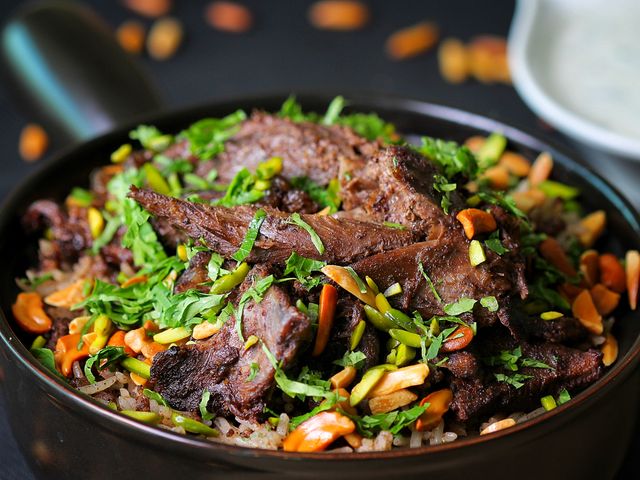
A warm, satisfying Middle Eastern-inspired pilaf combining brown lentils and long-grain rice cooked together in vegetable broth with aromatic spices. The lentils stay intact while the rice absorbs all the flavors, creating a wholesome one-dish meal that's naturally vegetarian and deeply flavored with cumin, cinnamon, and caramelized onions.
- Prep
- 15 min
- Cook
- 35 min
- Wait
- 10 min
- Total
- 1 hr
- Makes
- 4 servings (about 1½ cups each)
Steps
Before you start
- Measure out the rice and lentils and set aside separately
- Have the vegetable broth ready—you may need it warm to help cook evenly
- Rinse the rice under cold water until the water runs mostly clear to remove excess starch
Caramelize the onions
- Heat the olive oil in a large heavy-bottomed pot (3–4 quarts) over medium heat.
- Add the sliced onion and cook for 8–10 minutes, stirring occasionally, until the onion is deep golden brown and very soft.
- The edges should caramelize and darken slightly, which builds flavor for the whole dish.
+ Show details− Hide details
Ready when: Onion is deep golden brown and soft with caramelized edges
Tip: Don't rush this step—the deeper the color, the richer the flavor. Stir often to prevent burning on the bottom.
Bloom the spices
- Add the minced garlic, ground cumin, and ground cinnamon to the caramelized onion.
- Stir continuously for about 1 minute until fragrant.
- This blooming process releases the essential oils in the spices and distributes their flavors throughout the oil.
+ Show details− Hide details
Ready when: Mixture becomes very fragrant and slightly darker
Tip: Don't let the spices burn—keep stirring and watch the heat. If it seems too hot, lower it slightly.
Add lentils and rice
- Add the rinsed brown lentils and rinsed white rice to the pot.
- Stir well for about 1 minute to coat all the grains and lentils with the spiced oil.
- This ensures even flavor distribution.
+ Show details− Hide details
Ready when: Lentils and rice are evenly coated and glistening with oil
Tip: Stir well to make sure no dry lentils or rice get stuck to the bottom.
Pour in broth and season
- Add the vegetable broth, salt, and black pepper.
- Stir once to combine, then increase the heat to medium-high.
- Bring the mixture to a boil, which should take about 3–4 minutes.
- You'll see steam rising and bubbles forming.
+ Show details− Hide details
Ready when: Mixture reaches a rolling boil with visible steam
Tip: Don't cover the pot yet—you want to see when it comes to a full boil.
Reduce heat and cover
- Once boiling, reduce the heat to low and cover the pot with a lid.
- Simmer gently for 20–22 minutes.
- The liquid should bubble gently at the edges—not a vigorous boil, which would cook the rice unevenly and make it mushy.
+ Show details− Hide details
Ready when: Rice grains are tender and most of the liquid is absorbed
Tip: Resist the urge to stir or lift the lid frequently—this releases steam and can lead to uneven cooking. Check once near the end if you hear sizzling or smell burning.
Rest off the heat
- Remove the pot from the heat and let it sit, covered, for 10 minutes.
- This allows the rice to finish cooking gently in the residual heat and allows all flavors to meld together.
+ Show details− Hide details
Ready when: Steam settles and pilaf becomes fluffy
Tip: Keep the lid on—don't peek, or you'll lose the steam needed for the final cooking stage.
Fluff and serve
- Remove the lid and fluff the pilaf gently with a wooden spoon or fork, breaking up any clumps.
- The rice and lentils should separate easily.
- Taste and adjust salt or pepper if needed.
- Divide into bowls and garnish with fresh chopped parsley if desired.
+ Show details− Hide details
Ready when: Pilaf is fluffy with distinct rice grains and tender lentils
Tip: Fluff gently to keep the lentils intact—avoid aggressive stirring that can break them apart.
Good to know
Tips
- To ensure fluffy rice, never skip the rinsing step—it removes excess starch that can make the pilaf gluey.
- For extra richness, use a combination of vegetable and chicken broth, or add a small knob of butter when you fluff the pilaf.
- This pilaf pairs beautifully with a dollop of plain yogurt, a crisp salad, or roasted vegetables on the side.
- If your pot doesn't distribute heat evenly, rotate it 180 degrees halfway through the simmer to ensure even cooking.
Make ahead
Prepare the pilaf up to 2 days ahead. Reheat gently on the stovetop over low heat, covered, stirring occasionally and adding a splash of water or broth if needed to restore moisture. The flavors deepen as it sits overnight.
Storage & reheating
Store leftovers in an airtight container in the refrigerator for up to 4 days. The pilaf can be reheated on the stovetop over low heat or in the microwave (cover loosely and heat in 30-second intervals, stirring between each). The pilaf does not freeze well because the rice texture changes, but it keeps beautifully in the fridge for several days.
Substitutions
- long-grain white rice → brown rice or jasmine rice. Brown rice will take 5–7 minutes longer to cook; jasmine rice will cook in the same time but will be slightly softer.
- brown lentils, picked through and rinsed → green (French) lentils or red lentils. Green lentils hold their shape better; red lentils will soften more and break down, creating a creamier texture.
- vegetable broth, low-sodium → chicken broth or water. Chicken broth adds more savory depth; water will result in a milder pilaf, so taste and adjust salt.
- ground cumin → ground coriander or a mixture of cumin and coriander. Coriander is lighter and slightly citrusy; use the same amount. A 1:1 blend of both spices gives complexity.
More pilaf
See all →

Find more like this
- Meal
- Dinner
- Cuisine
- Middle Eastern
- Method
- Stovetop