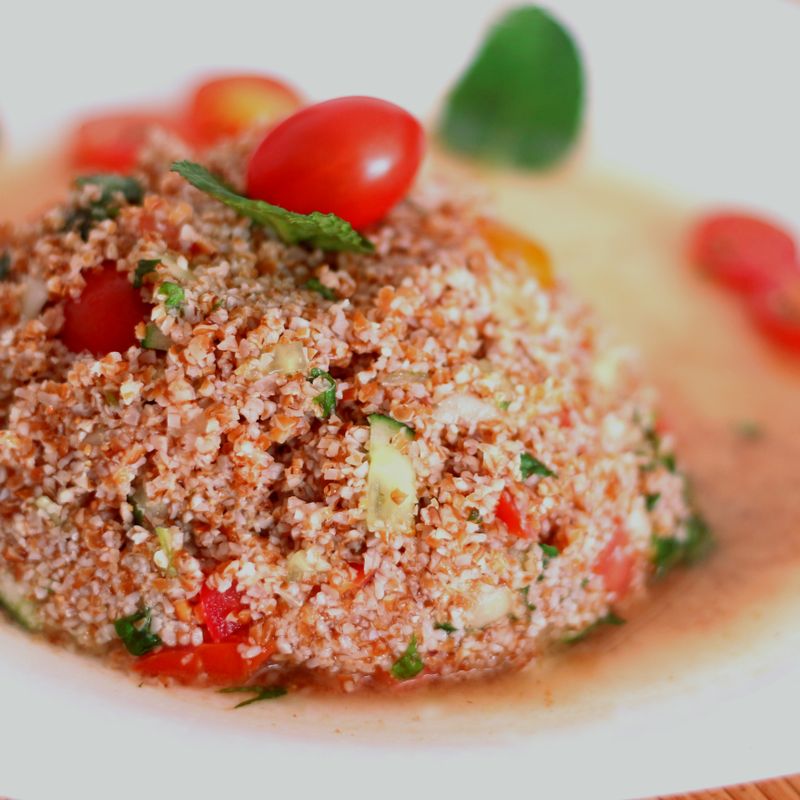
Turkish Lentil and Bulgur Pilaf
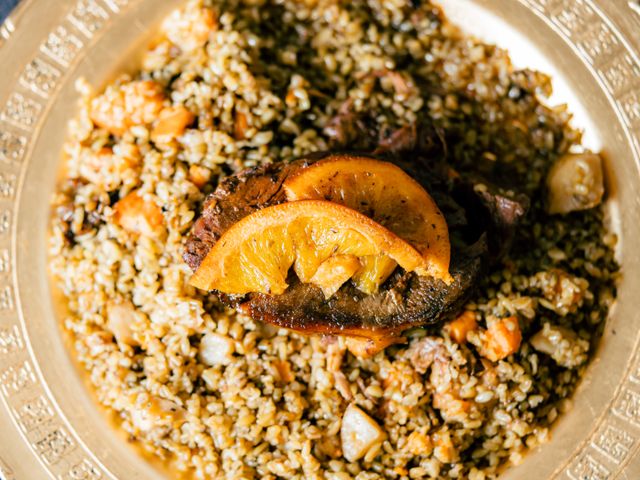
This Turkish lentil and bulgur pilaf is a warm, savory side dish combining protein-rich lentils with nutty bulgur wheat, aromatic onions, garlic, and cumin. A traditional Middle Eastern classic that's naturally vegetarian and vegan-friendly (without butter), it's perfect alongside grilled meats, roasted vegetables, or as a hearty plant-based main.
- Prep
- 10 min
- Cook
- 45 min
- Wait
- 10 min
- Total
- 1 hr 5 min
- Makes
- Serves 4 as a generous side, or 2–3 as a vegetarian main (makes about 4 cups / 950 ml)
Steps
Before you start
- Rinse the lentils in a sieve under cool water and pick through them for any debris.
- Measure the broth in advance; you'll need it quickly after toasting the lentils and aromatics.
- Dice the onion and mince the garlic ahead of time so you can focus on cooking without rushing during the sauté step.
Toast the Lentils
- Rinse the dried lentils in a fine-mesh sieve under cool running water, shaking gently, until the water runs clear.
- Drain well.
- Heat a large heavy-bottomed pot or Dutch oven (3–4 quart / 3–4 liter) over medium heat for about 1 minute.
- Add the drained lentils and stir occasionally for 2 minutes.
- You'll hear a soft crackling sound, and the lentils will smell toasted and slightly nutty.
- Don't let them scorch—stay near the pot.
+ Show details− Hide details
Ready when: Lentils are fragrant and dry-sounding; no longer visibly wet
Tip: Toasting deepens the lentils' nutty flavor significantly—don't skip it.
Sauté Onion and Garlic
- Add 3 tablespoons (45 ml) olive oil to the pot, swirling to coat the bottom.
- Add the diced yellow onion and cook over medium heat, stirring occasionally, for about 5 minutes.
- The onion should soften and the edges should turn light golden.
- Add the minced garlic and ½ teaspoon (2 g) ground cumin if using, and stir constantly for 1 minute, until very fragrant.
+ Show details− Hide details
Ready when: Onion is soft with light golden-brown edges; garlic and cumin are fragrant
Tip: Don't rush this step—caramelizing the onions builds deep flavor. Stir frequently to avoid burning.
Add Broth and Bring to Boil
- Pour 3 cups (720 ml) vegetable broth into the pot and stir well to combine with the lentils and aromatics.
- Increase heat to medium-high and bring to a boil, which should take 2–3 minutes.
- You'll see large bubbles rapidly breaking the surface.
+ Show details− Hide details
Ready when: Broth is at a rolling boil with large, rapid bubbles
Simmer Lentils
- Once the broth boils, reduce heat to medium-low.
- Partially cover the pot with a lid (leave it slightly ajar).
- Simmer gently for about 20 minutes, stirring every 4–5 minutes.
- The lentils should be mostly tender—a fork should pierce them easily without much pressure, but they should still hold their shape and not be mushy.
- The mixture should still look soupy, with about 1.5 to 2 cups of broth visible.
+ Show details− Hide details
Ready when: Lentils are mostly tender; the mixture is still soupy with about 1.5 to 2 cups of broth remaining
Tip: If the liquid is evaporating too quickly (depending on your pot and stove), lower the heat slightly or cover the pot more. You need enough liquid for the bulgur to absorb.
Add Bulgur and Finish
- Stir ¾ cup (150 g) medium-grain bulgur into the pot, making sure all grains are submerged in the liquid.
- Return the pot to medium heat and cook, uncovered or partially covered, for 10–12 minutes, stirring gently every 2–3 minutes.
- The bulgur will absorb the liquid and become tender and fluffy.
- When done, there should be almost no free liquid at the bottom of the pot, and the bulgur should be fully cooked but not mushy.
+ Show details− Hide details
Ready when: Bulgur is tender and fluffy; almost all liquid is absorbed; the bottom of the pot may be slightly moist but not soupy
Tip: Stir gently to avoid breaking the delicate grains. If liquid is being absorbed too quickly, lower the heat slightly to prevent drying out.
Season and Rest
- Remove the pot from heat.
- Stir in 2 tablespoons (30 g) butter if desired—it adds richness typical of Turkish pilafs, though the dish is also delicious without it.
- Season to taste with about 1 teaspoon (6 g) salt and ½ teaspoon (1 g) freshly ground black pepper, adjusting as needed.
- Cover loosely with a lid or clean kitchen towel and let the pilaf rest, off the heat, for 10 minutes.
- The residual heat and steam will complete the cooking and ensure the texture is perfect.
+ Show details− Hide details
Tip: Don't skip the resting period—it ensures the pilaf has the right texture and the grains are fully set.
Garnish and Serve
- Fluff the pilaf gently with a fork, breaking up any clumps that may have formed.
- Stir in ¼ cup (15 g) chopped fresh parsley.
- If desired, sprinkle a small pinch of red pepper flakes on top for subtle warmth.
- Taste and adjust seasoning if needed.
- Serve warm as a side dish with grilled meats, roasted vegetables, or kebabs; or as a hearty vegetarian main course with a simple salad and plain yogurt on the side.
+ Show details− Hide details
Ready when: Pilaf is fluffed, garnished, and ready to serve
Good to know
Tips
- Rinsing the lentils is important—it removes excess starch and prevents a gluey, mushy texture. Don't skip this step.
- Toasting the lentils in a dry pan first deeply enhances their earthy, nutty flavor. This simple technique makes a significant difference in the final dish.
- Stir occasionally during simmering to ensure even cooking and prevent the bottom from scorching. But don't over-stir, or you'll break up the delicate grains and lentils.
- The final butter isn't strictly necessary, but it's traditional in Turkish pilafs and adds richness. Omit it for a lighter version or a fully vegan pilaf.
Make ahead
The pilaf can be made up to 2 days ahead. Cool completely and store in an airtight container in the refrigerator. To reheat, add a splash of water or broth and warm over medium heat on the stovetop, stirring occasionally, until heated through (about 5 minutes). Alternatively, reheat covered in the microwave with a splash of water, stirring halfway through.
Storage & reheating
Room temperature: up to 2 hours in an airtight container. Refrigerator: up to 4 days in an airtight container. Freezer: up to 3 months in a freezer-safe container (freeze in portions for easy reheating). To reheat from frozen: thaw in the refrigerator overnight and reheat as directed above, or reheat directly from frozen in a covered pot over medium-low heat with extra broth, stirring occasionally, for 10–12 minutes.
Substitutions
- brown or green lentils, dried → French green lentils (Puy lentils) or regular green lentils. These hold their shape slightly better. Avoid red lentils unless you prefer a creamy texture; they'll cook faster (about 15 minutes) and break down more easily.
- bulgur wheat, medium-grain → Farro, spelt, wheat berries, or long-grain white rice. Farro and spelt will need 10–15 minutes more cooking time. White rice cooks in about the same time as bulgur.
- vegetable broth or stock → Chicken broth, beef broth, or water with vegetable bouillon. Each will give a different flavor profile. Vegetable broth keeps the pilaf vegan-friendly.
- fresh parsley, flat-leaf → Fresh mint, cilantro, or dill. Mint is especially traditional in some Turkish pilafs and adds a bright, refreshing note.