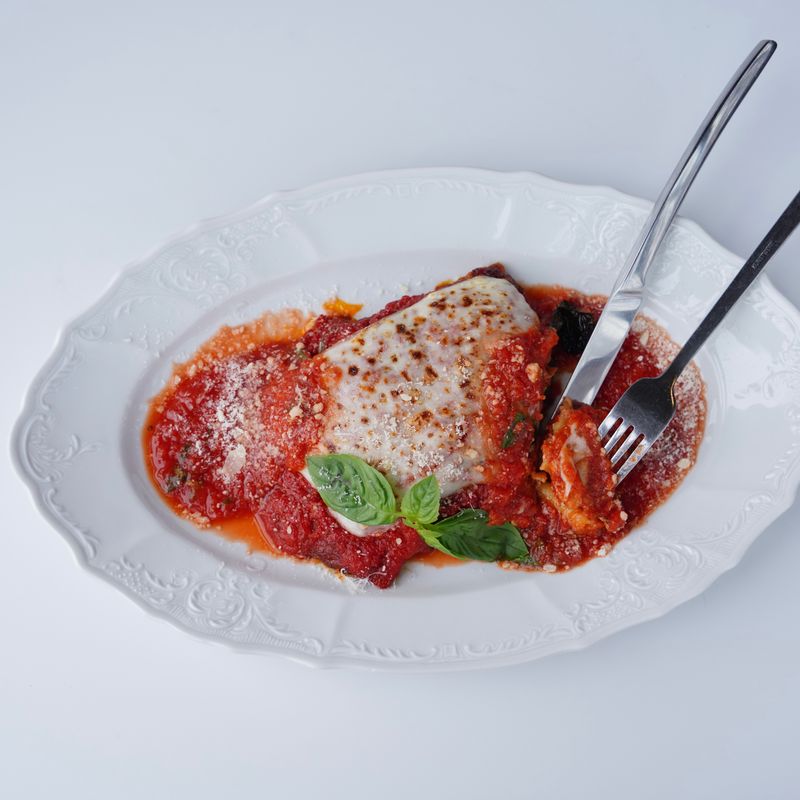
One-Pot Eggplant and Tomato Lasagna
A streamlined Mediterranean lasagna where eggplant, zucchini, and tomatoes cook together in one pot with ricotta layers and melted mozzarella. No need to assemble in a baking dish—everything cooks in a large Dutch oven or wide heavy pot, making this a hassle-free weeknight dinner with authentic Italian flavors.
- Prep
- 25 min
- Cook
- 45 min
- Wait
- 15 min
- Total
- 1 hr 25 min
- Makes
- One 5½-quart pot (6 servings)
Steps
Before you start
- Preheat your oven to 375°F (190°C)
- Have all vegetables prepped and measured before you start cooking
- Combine ricotta mixture in a small bowl while the pot heats
- Use a 5½-quart (5.2 L) Dutch oven or wide heavy pot with a tight-fitting lid
Sauté aromatics
- Place the Dutch oven over medium heat and add 1 tablespoon (15 ml) of olive oil.
- Once shimmering, add the diced onion and cook, stirring occasionally, for 3–4 minutes until softened and translucent.
- Add the minced garlic and cook for 30 seconds until fragrant.
+ Show details− Hide details
Ready when: Onion is softened and translucent; garlic is fragrant
Tip: Don't let the garlic brown—add it at the last moment to preserve its fresh flavor.
Build the sauce base
- Stir in the tomato paste and cook for 1–2 minutes, coating the onion and garlic well.
- Add the crushed canned tomatoes (including juice) and 1½ cups (360 ml) of vegetable broth.
- Stir in the dried oregano and season with a pinch of salt and pepper.
- Bring the mixture to a gentle simmer.
+ Show details− Hide details
Ready when: Sauce is simmering with small bubbles breaking the surface
Tip: Crush the canned tomatoes by hand for a rustic, chunky sauce; don't purée them.
Add eggplant and zucchini
- Add the cubed eggplant and zucchini to the simmering sauce.
- Drizzle with the remaining 2 tablespoons (30 ml) of olive oil and stir gently to coat.
- Simmer, uncovered, for 8–10 minutes, stirring occasionally, until the vegetables begin to soften and release their moisture.
+ Show details− Hide details
Ready when: Eggplant cubes are tender; vegetables are partially cooked
Tip: Stir gently to prevent the eggplant from breaking apart—it should soften but hold its shape.
Mix ricotta filling
- While the vegetables cook, combine the ricotta, egg, half the grated Parmigiano-Reggiano (¼ cup / 25 g), ½ teaspoon salt, and ¼ teaspoon pepper in a small bowl.
- Stir until smooth and well combined.
+ Show details− Hide details
Ready when: Mixture is smooth and uniform
Tip: Use whole-milk ricotta for creamier layers; low-fat versions can become grainy when heated.
Layer noodles and ricotta
- Once the vegetables have softened, sprinkle the broken lasagna noodles over the sauce, stirring them in gently so they are mostly submerged.
- Drop spoonfuls of the ricotta mixture (about 8–10 spoonfuls scattered across the surface) over the noodles.
- Do not stir; leave the ricotta in distinct pockets.
+ Show details− Hide details
Ready when: Noodles are partially submerged; ricotta is in distinct dollops on top
Tip: Breaking the noodles into 2–3 inch pieces lets them cook evenly in the liquid without pre-boiling.
Top with cheese and oven-braiseOven 375°F / 190°C
- Scatter the shredded mozzarella and the remaining Parmigiano-Reggiano (¼ cup / 25 g) evenly over the top.
- Cover the pot with its lid (or a piece of heavy-duty foil if the lid doesn't fit snugly) and transfer to a preheated 375°F (190°C) oven.
- Braise for 20–22 minutes until the cheese is melted, the sauce bubbles around the edges, and the noodles are tender.
+ Show details− Hide details
Ready when: Cheese is fully melted and bubbly; sauce bubbles at the edges; noodles are tender when pierced with a fork
Tip: A tight-fitting lid traps steam, which helps the noodles cook through without drying out the top layer.
Rest and finish
- Remove the pot from the oven (use an oven mitt—the handle is hot) and let it rest, uncovered, for 10–12 minutes.
- This allows the noodles to fully absorb remaining liquid and the layers to set slightly, making them easier to serve.
- Scatter the fresh basil over the top just before serving.
+ Show details− Hide details
Ready when: Liquid is mostly absorbed; the dish is still steaming but set enough to scoop cleanly
Tip: Resting is crucial—if you serve immediately, the lasagna will be soupy. The rest allows the starch to absorb the sauce.
Good to know
Tips
- Do not peel the eggplant—the skin holds the cubes together during cooking and adds a subtle bitterness that balances the sweet tomato sauce.
- For a Mediterranean twist, add 1 tablespoon of balsamic vinegar to the sauce base in step 2; it deepens the tomato flavor without making the dish sweet.
- If your Dutch oven does not have a glass lid, use heavy-duty aluminum foil to cover it; make sure it seals at the edges so steam doesn't escape.
- Leftovers taste even better the next day as the flavors continue to meld—the lasagna becomes slightly firmer and easier to serve cleanly.
Storage & reheating
Store in an airtight container in the refrigerator for up to 3 days. Reheat gently in a 350°F (175°C) oven, covered with foil, for 12–15 minutes until warmed through. Do not freeze—the texture of the noodles and ricotta will degrade after thawing.
Substitutions
- whole-milk ricotta cheese → Whole-milk Greek yogurt or cottage cheese (blended smooth). Both provide similar creaminess and protein; Greek yogurt is tangier, cottage cheese is slightly grainier even when blended. Adjust liquid accordingly—they are wetter than ricotta.
- low-moisture mozzarella cheese → Fontina or Gruyère cheese, shredded. Fontina melts beautifully and adds nuttiness; Gruyère is more complex. Both will create a firmer, less stretchy top than mozzarella.
- canned whole tomatoes (14.5 oz / 411 g can) → 1½ cups (360 ml) fresh tomato sauce or passata. Use only in summer when fresh tomatoes are at peak ripeness. Fresh sauce is lighter; adjust the vegetable broth downward to 1¼ cups (300 ml) to avoid excess liquid.
- lasagna noodles (dried, broken into large pieces) → Short pasta such as penne or rigatoni, broken into smaller pieces. The cooking time will be similar; short pasta may cook faster, so start checking at 18 minutes. Reduce amount to 7 oz (200 g) since small pasta is denser.


