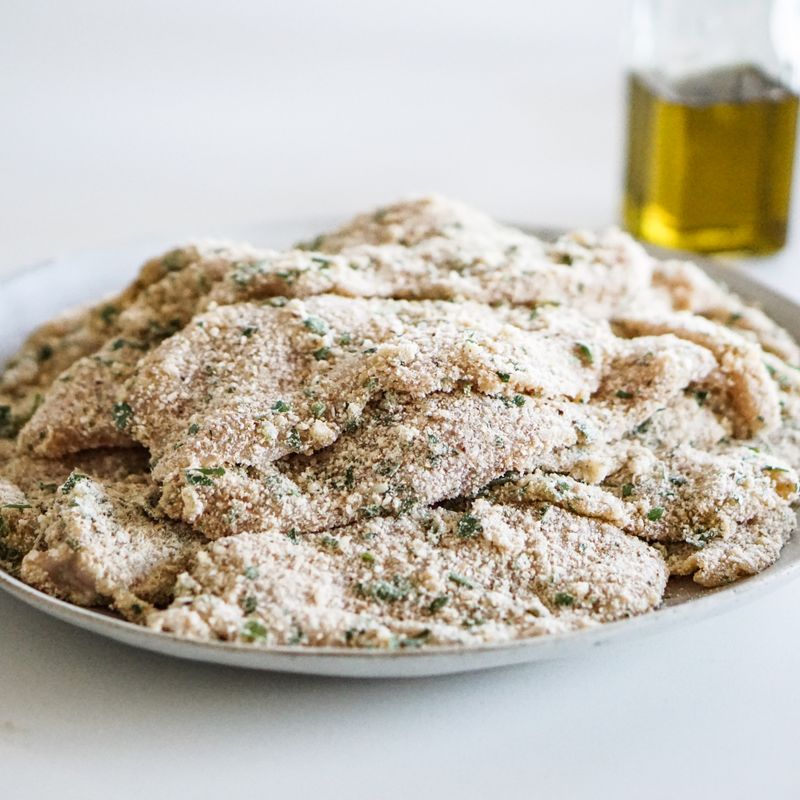
Mediterranean Olive Oil Herb Chicken Marinade
A bright, herbaceous marinade built on quality olive oil, fresh lemon juice, and a blend of oregano, thyme, and garlic. This marinade infuses chicken with Mediterranean flavors while keeping the meat tender and moist, whether you grill or roast it. The acid from the lemon begins to gently tenderize the protein within minutes, while the herbs and garlic develop deeper flavor over a few hours.
- Prep
- 10 min
- Cook
- —
- Wait
- 3 hr 30 min
- Total
- 3 hr 40 min
- Makes
- About ¾ cup (180 ml) marinade, enough for 1½ to 2 lbs (680–900 g) chicken
Steps
Before you start
- Remove chicken from the fridge 15 minutes before marinating so it's closer to room temperature (helps the marinade penetrate more evenly)
- Use fresh lemon juice—bottled juice tastes flat and won't give you the bright acidity this marinade needs
- Pat your chicken pieces dry with paper towels before marinating to prevent excess moisture from diluting the marinade
Combine the wet base
- Pour the extra-virgin olive oil and fresh lemon juice into a small mixing bowl.
- Whisk together briskly for about 30 seconds until they're well combined and start to emulsify slightly.
- The mixture should look smooth and cohesive, not separated.
+ Show details− Hide details
Ready when: Oil and lemon juice are well combined and slightly emulsified
Tip: Don't use a blender or food processor—you want gentle mixing, not a fully homogenized emulsion that will separate too quickly.
Add garlic and seasonings
- Add the minced garlic, dried oregano, dried thyme, kosher salt, and freshly ground black pepper to the oil and lemon mixture.
- Stir well with a fork or whisk to distribute the garlic and herbs evenly throughout.
- If using red pepper flakes for heat, add them now and stir.
+ Show details− Hide details
Ready when: All ingredients are evenly distributed and no dry herbs are sitting at the bottom
Tip: Make sure to scrape the bottom of the bowl a few times—dried herbs tend to settle, and you want uniform seasoning throughout the marinade.
Let flavors meld
- Set the marinade aside at room temperature for 15–30 minutes.
- During this time, the dried herbs will soften and rehydrate, the garlic will begin to infuse the oil, and all the flavors will come together.
- You can make this marinade up to 2 hours ahead and keep it at room temperature before using.
+ Show details− Hide details
Ready when: Herbs are slightly softened and the mixture smells fragrant and well-integrated
Tip: You'll see the dried herbs slowly rehydrate and the overall aroma become more aromatic—this is a good sign the marinade is ready.
Prepare chicken for marinating
- Pat your chicken pieces (1½ to 2 lbs / 680–900 g total) thoroughly dry with paper towels.
- Remove any excess moisture from the surface of the chicken—this step is crucial because wet chicken will dilute the marinade and prevent good browning when you cook it.
- Lay the chicken pieces in a shallow dish or large zip-top bag.
+ Show details− Hide details
Ready when: Chicken pieces are completely dry and arranged in a single layer
Tip: If using a zip-top bag, lay the chicken flat so it has even contact with the marinade and takes up less fridge space.
Add chicken to marinade
- Pour the prepared marinade evenly over the chicken pieces, making sure each piece is well coated.
- If using a shallow dish, rotate the pieces once or twice so the marinade contacts all surfaces.
- If using a zip-top bag, seal it and gently squeeze and massage the bag to coat all the chicken and release air.
+ Show details− Hide details
Ready when: All chicken pieces are coated with marinade with no dry spots
Tip: Don't skip the coating step—even coverage ensures the marinade flavors penetrate all the meat uniformly.
Marinate in the refrigerator
- Cover the shallow dish or seal the zip-top bag and refrigerate for at least 30 minutes, but ideally 2–4 hours for maximum flavor.
- The longer the chicken sits, the more the lemon juice tenderizes the meat and the herbs infuse it.
- Do not marinate longer than 12 hours, or the lemon juice will over-tenderize the exterior and make it mushy.
- Turn or flip the chicken pieces halfway through the marinating time if using a shallow dish.
+ Show details− Hide details
Ready when: Chicken has absorbed the marinade (you'll see some liquid reduction) and smells strongly of garlic and herbs
Tip: If marinating longer than 2 hours, flip or rotate the chicken pieces halfway through so every side gets equal marinating time.
Good to know
Tips
- This marinade works best on chicken pieces (breasts, thighs, drumsticks) rather than a whole bird, since the liquid needs contact with the meat. For a 1½ lb (680 g) batch of chicken pieces, use at least half of this recipe; for 2 lbs (900 g), use the full amount.
- Pat the chicken dry with paper towels before marinating—excess surface moisture dilutes the marinade and prevents good browning during cooking.
- Marinate for at least 30 minutes (you'll taste a noticeable difference), but ideally 2–4 hours. Beyond 12 hours, the lemon juice over-tenderizes the exterior and can make it mushy.
- Reserve a few tablespoons of marinade before adding raw chicken, then use it as a finishing drizzle or sauce for the cooked chicken—it adds fresh, bright flavor without the raw-chicken risk.
Make ahead
Yes. Make the marinade up to 2 days ahead and store it in an airtight container in the refrigerator. Let it come to room temperature and stir well before using. You can also marinate your chicken up to 12 hours ahead (any longer and the lemon juice begins to "cook" the exterior, making it mushy).
Storage & reheating
Store the unused marinade in an airtight container in the refrigerator for up to 5 days. The olive oil may solidify slightly when cold—this is normal and won't affect the flavor. Bring to room temperature and stir before using. Do not freeze; the oil will separate from the other ingredients when thawed.
Substitutions
- fresh lemon juice → fresh lime juice or white wine vinegar (use the same amount). Lime brings a slightly tropical note; vinegar adds sharpness. Both work beautifully, though lime tastes less sharp than lemon.
- dried oregano → 2 teaspoons (2 g) fresh oregano leaves, finely chopped. Fresh oregano is more delicate; add it just before marinating the chicken. If added much earlier, it can develop a slightly bitter taste.
- dried thyme → 1 teaspoon (1 g) fresh thyme leaves or ½ teaspoon dried rosemary. Fresh thyme is milder, so use slightly more. Rosemary is stronger and woodier—reduce the amount to avoid overpowering the dish.
- extra-virgin olive oil → light olive oil or vegetable oil. You'll lose some of the fruity, grassy notes that make this marinade special, but it will work. Avoid avocado oil, which has a strong flavor that competes with the herbs.
More marinades
See all →


Find more like this
- Meal
- Dinner
- Cuisine
- Mediterranean
- Method
- Grill & BBQ
- Quick & Easy
- 5 Ingredients or LessEasyBeginner