Matcha Green Tea Marinade for Delicate Vegetables
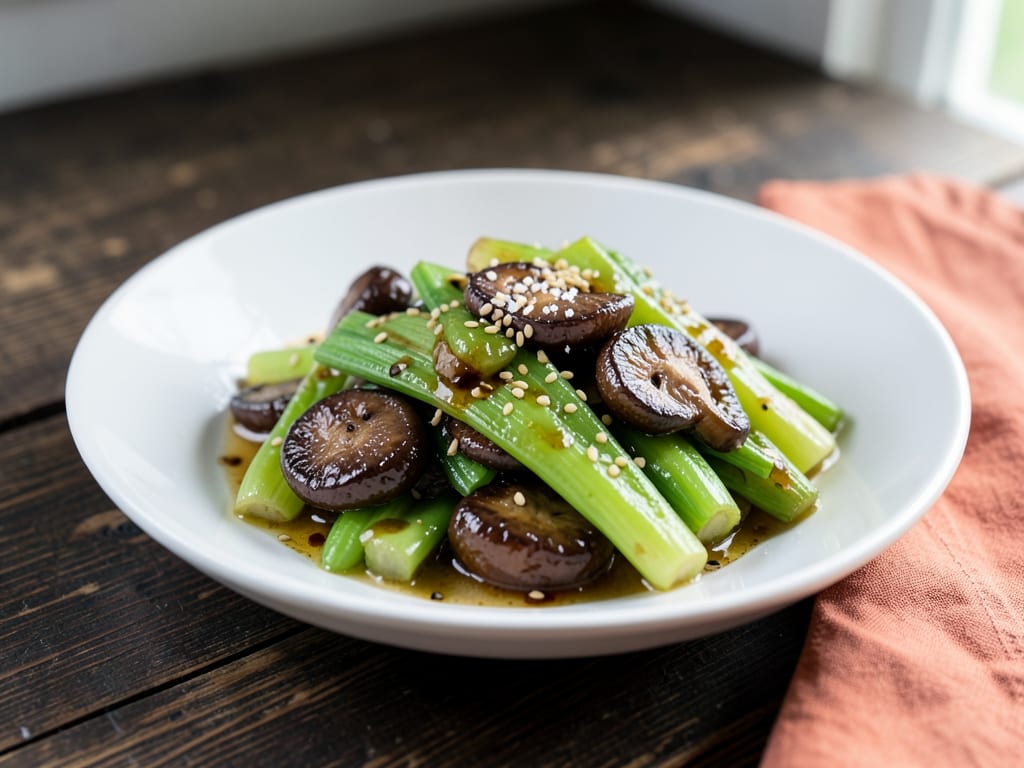
A delicate Japanese-inspired cold marinade combining umami-rich matcha green tea with bright lemon juice, aromatic ginger, and toasted sesame oil. Paper-thin cucumber, daikon, and mushroom slices absorb the grassy, vegetal flavors while maintaining a silky texture. Serve chilled as a side dish, palate cleanser, or elegant accompaniment to sushi and grilled fish.
- Prep
- 14 min
- Cook
- —
- Wait
- 30 min
- Total
- 44 min
- Makes
- About ¾ cup (180 ml) marinade with 4 cups sliced vegetables (4 servings)
Steps
Before you start
- Measure all ingredients and finely grate the ginger and juice the lemon fresh before you begin.
- Use filtered water heated to about 180°F (80°C) for the most delicate tea flavor—avoid boiling water, which can damage the tea's delicate notes.
- Slice vegetables only just before marinating to keep them crisp and bright.
- Use a non-reactive mixing bowl (glass or stainless steel) to prevent any interaction with acidic ingredients.
Brew and Cool TeaOven 180°F / 80°C
- Pour ¼ cup hot water (about 180°F / 80°C, not boiling) over the green tea bag or 1 tsp loose leaves in a small bowl.
- Let steep for 4–5 minutes until fragrant and well-brewed.
- Transfer the tea to a medium mixing bowl and set aside to cool to room temperature, about 5–8 minutes.
- The tea should be cool enough to touch comfortably before moving to the next step.
+ Show details− Hide details
Ready when: Tea is cool to touch and displays a pale jade color
Tip: Don't skip the cooling step—adding matcha powder to hot liquid creates clumps. Use filtered water for the clearest, most delicate flavor.
Whisk Matcha into Tea
- Sprinkle 1½ tablespoons (9 g) matcha powder over the cooled tea slowly while whisking constantly.
- Whisk vigorously for about 2 minutes, breaking up any lumps against the side of the bowl until the mixture is completely smooth.
+ Show details− Hide details
Ready when: Smooth, bright jade-colored mixture with no visible matcha powder specks
Tip: A matcha whisk (chasen) is traditional and excellent if you have one, but a regular whisk works perfectly well too.
Build the Marinade
- Add 3 tablespoons sesame oil, 2½ tablespoons fresh lemon juice, 1 tablespoon rice vinegar, 1½ tablespoons soy sauce, 1 tablespoon finely grated fresh ginger, 1 teaspoon mirin (if using), and ¼ teaspoon sea salt.
- Whisk until all ingredients are fully combined and the oil is evenly distributed.
- Taste and adjust: add more lemon juice if you want more brightness, more soy sauce for deeper umami, or more salt to taste.
- The marinade should taste balanced with matcha earthiness, citrus brightness, and umami depth.
+ Show details− Hide details
Ready when: Fully combined marinade with balanced, aromatic flavor
Tip: Taste and adjust seasoning now, before adding vegetables. Once vegetables are in, it's harder to fine-tune. Remember that the vegetables will dilute and soften the flavors slightly, so the marinade should taste slightly more intense than you want the final dish to taste.
Prepare Vegetables
- Trim the ends off the English cucumber, then slice lengthwise into quarters.
- Cut the quarters diagonally into thin pieces about ⅛-inch (3 mm) thick.
- Peel the daikon radish and, using a mandoline or sharp knife, slice into thin rounds or half-moons (about ⅛-inch / 3 mm thick).
- Remove the stems from shiitake mushrooms, then slice the caps thinly (about ⅛-inch / 3 mm thick).
- Place all sliced vegetables in a large bowl.
+ Show details− Hide details
Ready when: All vegetables are uniformly thin, ready to absorb marinade
Tip: Thinly sliced vegetables are essential—they absorb the marinade quickly and have a delicate, silky texture. Use a mandoline very carefully (watch your fingers!), or a very sharp knife. Dull knives crush vegetables and cause browning.
Combine and Marinate
- Add the prepared vegetables to the marinade.
- Toss gently but thoroughly to coat all pieces evenly, taking care not to break delicate cucumber or mushroom slices.
- Transfer to a glass container or cover the bowl with plastic wrap and refrigerate.
- Let marinate for 15–20 minutes so the flavors meld and the vegetables soften slightly.
+ Show details− Hide details
Ready when: Vegetables have softened slightly and absorbed the marinade's jade color and flavor
Tip: Don't marinate longer than 2 hours, or vegetables will become too soft and release excess water, diluting the marinade. The cool refrigerator temperature keeps the matcha flavor bright and prevents oxidation.
Serve Cold
- Remove from the refrigerator and give a gentle stir.
- Taste and adjust seasoning if needed with a squeeze of fresh lemon juice or a small pinch of salt.
- Serve immediately and chilled as a delicate side dish, palate cleanser between courses, or alongside sushi and sashimi.
+ Show details− Hide details
Tip: Best served within a few hours of marinating while vegetables are still crisp with a slight give. This dish pairs beautifully with rich grilled fish, warm rice, or as part of a light Japanese meal.
Good to know
Tips
- Matcha powder clumps easily, so whisk it gradually into cool liquid (never hot) and whisk vigorously until completely smooth. A traditional matcha whisk (chasen) is lovely if you have one, but a regular whisk works perfectly.
- The delicate texture of thinly sliced vegetables is crucial to this dish. Use a mandoline if you have one (with care!), or a very sharp knife. Dull knives crush vegetables and cause them to brown and lose their crispness.
- Don't marinate longer than 2 hours total—the vegetables will become mushy and release excess water that dilutes the delicate flavor. If serving later, prepare the vegetables just before marinating.
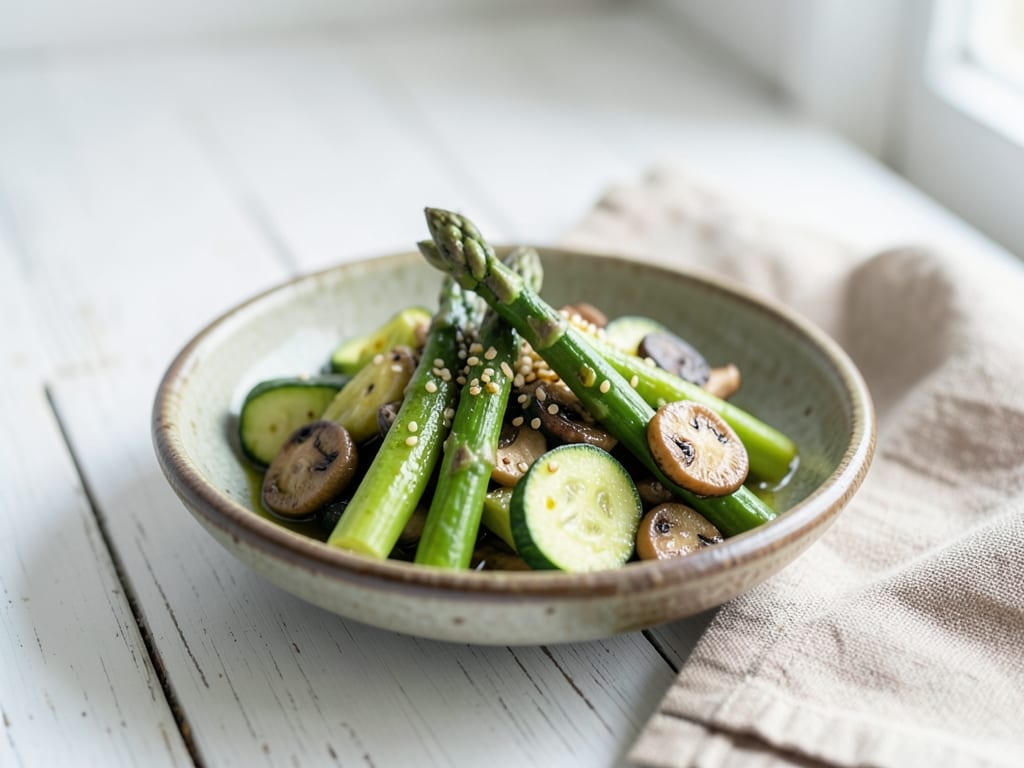
- This elegant marinade also works wonderfully with blanched and shocked vegetables: try green beans, asparagus, or snap peas dressed just before serving to keep them vibrant.
Make ahead
The marinade can be made up to 2 days ahead and stored in the refrigerator. The sliced vegetables can be prepared and marinated up to 2 hours before serving for best texture. The combined dish is best served within 1–2 hours of marinating.
Storage & reheating
Refrigerate in an airtight glass container up to 1 day. After 2 hours, vegetables will continue to soften and release water. Do not freeze; the vegetable texture will be destroyed. Serve cold; reheating is not recommended.
Substitutions
- Toasted sesame oil → Grapeseed oil, avocado oil, or mild olive oil. The dish will be lighter and less nutty without the toasty sesame flavor. Adjust quantities as sesame oil is more flavorful than neutral oils.
- Rice vinegar → Sherry vinegar, white wine vinegar, or unseasoned rice vinegar. Avoid balsamic vinegar, which is too heavy and sweet for this delicate marinade.
- Green tea → Sencha, gyokuro, or any delicate Japanese green tea. Avoid black tea, oolong, or heavily roasted tea varieties, which overpower the subtle matcha flavor.
- Fresh shiitake mushrooms → Oyster mushrooms, enoki mushrooms, thinly shaved zucchini, blanched asparagus, snap peas, or radish sprouts. Avoid tougher vegetables like broccoli or cabbage, which don't soften properly in this light marinade. Microgreens also work beautifully for a peppery note.