Lemon Scones
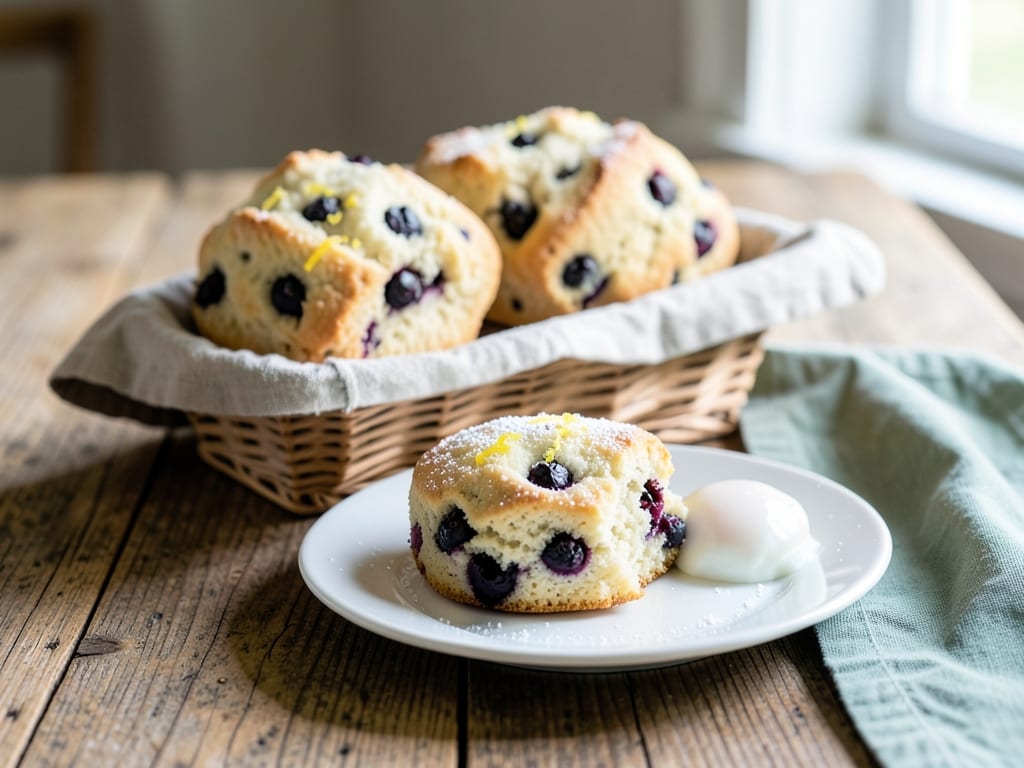
Tender, buttery scones brightened with fresh lemon zest and juice. The dough comes together quickly with cold butter cut into flour, then is baked until golden. Perfect for breakfast or afternoon tea, with optional lemon glaze.
Steps
Before you start
- Preheat your oven to 400°F (200°C)
- Keep all ingredients except the lemon juice cold until mixing
- Line a baking sheet with parchment paper
- Zest the lemons before juicing them
Mix dry ingredients
- In a large bowl, whisk together flour, sugar, baking powder, salt, and lemon zest until evenly combined.
- The mixture should be light and uniform, with the lemon zest distributed throughout.
+ Show details− Hide details
Ready when: mixture is homogeneous with visible lemon zest
Tip: Zesting the lemon before juicing prevents the juice from making your zester wet.
Cut in cold butter
- Add cold butter cubes to the dry mixture.
- Using a pastry cutter, two forks, or your fingertips, work the butter into the flour until the texture resembles coarse breadcrumbs or cornmeal.
- Some pea-sized butter pieces should still be visible; do not overmix.
+ Show details− Hide details
Ready when: mixture looks like coarse breadcrumbs with pea-sized butter pieces visible
Tip: Keep butter cold throughout this step—warm butter will prevent scones from rising and becoming flaky.
Add liquid
- Make a well in the center of the mixture.
- Pour lemon juice and cold heavy cream into the well.
- Using a fork, gently stir, pulling in flour from the sides, until a shaggy dough just comes together.
- Stop stirring as soon as there are no dry flour pockets visible—do not overwork the dough.
+ Show details− Hide details
Ready when: dough is just combined with no dry flour visible; texture is shaggy and moist
Tip: Overmixing develops gluten and toughens the scones. Stop as soon as the dough comes together.
Shape dough
- Turn the dough out onto a lightly floured surface.
- Gently press and shape it into a disk about ¾ inch (2 cm) thick, approximately 8 inches (20 cm) in diameter.
- Do not knead or overwork.
- Lightly flour your hands if needed to prevent sticking.
+ Show details− Hide details
Ready when: dough is evenly shaped into a ¾-inch-thick disk
Tip: Handle the dough as little as possible to maintain flakiness. A gentle touch is key.
Cut scones
- Using a sharp knife or pastry cutter dipped in flour, cut the disk into 8 equal wedges, like cutting a pizza.
- Or use a 2-inch (5 cm) round cutter, then cut any remaining dough and press scraps together gently for additional scones.
- Place scones 2 inches (5 cm) apart on the prepared baking sheet.
+ Show details− Hide details
Ready when: 8 equal scones are on the baking sheet, spaced apart
Tip: A sharp knife or cutter creates clean edges, which helps scones rise evenly. Avoid dragging or twisting the cutter.
Apply egg wash (optional)
- If using, whisk the egg yolk with 1 tablespoon (15 ml) of water.
- Lightly brush the top and sides of each scone with the egg wash, then sprinkle with coarse sugar if desired.
- This adds shine and a subtle sparkle.
+ Show details− Hide details
Ready when: scones are lightly brushed and topped with sugar
Tip: Don't overbrush—a thin, even coat is all you need. Too much egg wash can make the surface glossy.
Bake sconesOven 400°F / 205°C
- Place the baking sheet in a preheated 400°F (200°C) oven.
- Bake for 16–18 minutes, until the scones are puffed, golden brown on top, and lightly golden on the bottom.
- A toothpick inserted into the center should emerge clean or with a few moist crumbs.
+ Show details− Hide details
Ready when: scones are puffed and golden brown on top, clean or almost-clean toothpick in the center
Tip: Rotate the baking sheet halfway through if your oven has hot spots. Don't overbake or the scones will be dry.
Cool and glaze (optional)
- Remove the baking sheet from the oven and let scones cool on the pan for 2–3 minutes, just until they can be handled safely.
- If making lemon glaze, whisk together powdered sugar, melted butter, and lemon juice until smooth.
- Brush or drizzle glaze over warm scones.
- Serve warm or at room temperature.
+ Show details− Hide details
Ready when: glaze is smooth and scones are cool enough to handle
Tip: Glazing warm scones helps it set nicely and adds a professional finish, but it's optional.
Good to know
Tips
- Keep all ingredients cold: use a chilled bowl and chilled liquids. Cold butter stays distinct in the dough, creating steam pockets that make scones fluffy and layered.
- Do not overwork the dough. Mix just until combined; some lumps are fine. Overworking develops gluten and makes scones tough instead of tender.
- For extra-moist scones, brush with melted butter or lemon glaze while they're still warm from the oven.
- If your oven runs hot or cold, adjust temperature in 25°F (14°C) increments and watch the first batch closely to ensure even baking.
Make ahead
Shaped, unbaked scones can be refrigerated for up to 24 hours or frozen for up to 3 months. Bake directly from the refrigerator or freezer (add 2–3 extra minutes if frozen) with no thawing needed.
Storage & reheating
Store cooled scones in an airtight container at room temperature for up to 2 days. Refrigerate for up to 4 days or freeze for up to 3 months. Reheat in a 350°F (175°C) oven for 5–8 minutes until warmed through, or microwave a single scone for 20–30 seconds.
Substitutions
- cold heavy cream → whole milk or Greek yogurt. Use the same amount of whole milk, or reduce to ⅓ cup (80 ml) if using Greek yogurt for a slightly tangier, denser scone.
- fresh lemon zest → orange or lime zest. Substitute 1:1 for a different citrus flavor. Lime zest makes a more tart scone; orange is slightly sweeter.
- fresh lemon juice → buttermilk. Use ¼ cup (60 ml) buttermilk for a tangier scone with a slightly different crumb structure.
- coarse sugar → sparkling sugar or demerara sugar. Any coarse-grain sugar works; use the same amount for a similar crunch and sparkle.