Lebanese Grape and Pomegranate Salad with Sumac
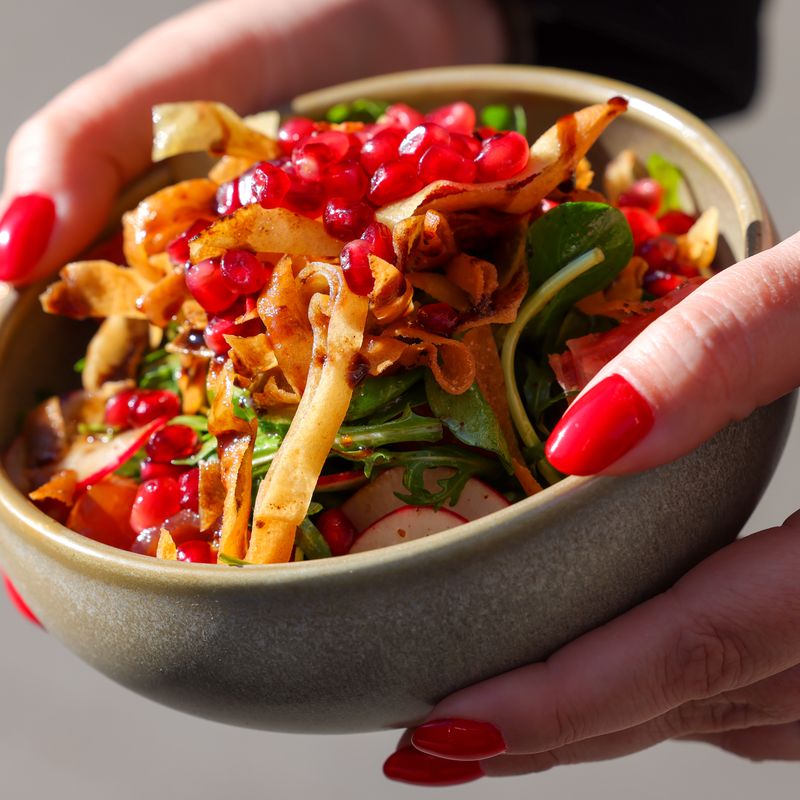
A vibrant, refreshing Middle Eastern salad that celebrates the bright flavors of fresh fruit and herbs. Sweet grapes and jewel-like pomegranate seeds are dressed simply with tangy lemon juice, fragrant mint, and tart sumac—a combination that's both light enough for a palate cleanser and substantial enough to accompany grilled meats or creamy cheeses.
- Prep
- 15 min
- Cook
- —
- Wait
- 5 min
- Total
- 20 min
- Makes
- 4 servings (about 3 cups)
Steps
Before you start
- Choose pomegranates that feel heavy for their size and have deep red skin
- Have all ingredients prepped and ready before assembling so the salad doesn't sit too long
- Use fresh mint—dried mint changes the character of the salad
Make the dressing
- In a small bowl, whisk together the lemon juice, olive oil, and ¼ teaspoon of sea salt until emulsified.
- The mixture will turn slightly creamy and pale.
- Taste and adjust salt as needed.
+ Show details− Hide details
Ready when: Dressing is pale and slightly creamy
Tip: Whisking vigorously helps the lemon juice and oil emulsify without vinegar
Combine fruit
- Place the halved red grapes, halved green grapes, and pomegranate seeds in a medium bowl.
- Toss gently to combine, being careful not to crush the pomegranate seeds.
+ Show details− Hide details
Tip: Handle pomegranate seeds gently—they'll burst and release their juice if roughly stirred
Dress the salad
- Pour the dressing over the fruit and gently toss to coat evenly, using a light hand so the pomegranate seeds stay intact.
- Let sit for 3–5 minutes so the flavors meld and the fruit releases a light juice.
+ Show details− Hide details
Tip: Don't over-toss or refrigerate for hours—the fruits will soften and the dressing will become watery
Finish with mint and sumac
- Just before serving, scatter the torn mint over the salad.
- Sprinkle the sumac evenly across the top, then add a few grinds of freshly ground black pepper.
- Gently toss to distribute the herbs and spice throughout.
+ Show details− Hide details
Ready when: Mint and sumac are evenly distributed
Tip: Add mint and sumac just before serving so they stay bright and aromatic rather than browning or losing potency
Good to know
Tips
- Extracting pomegranate seeds: Score the pomegranate into quarters, then hold each quarter over a bowl and tap the skin with a wooden spoon so the seeds fall out into the bowl. This is faster and keeps your hands cleaner than trying to dig out individual seeds.
- Sumac adds the signature tart, slightly floral note that defines this salad—don't skip it. If you can't find it at your local supermarket, look in Middle Eastern grocers or buy it online; a jar lasts months stored in a cool, dark cupboard.
- This salad is at its best within 30 minutes of assembly. If you must make it ahead, keep the dressing and fruit separate and combine just before serving.
- Serve chilled or at room temperature alongside grilled lamb, roasted chicken, creamy labneh, or fresh cheese. It also pairs beautifully with warm flatbread or pita.
Storage & reheating
Best served fresh, but leftovers can be refrigerated in an airtight container for up to 4 hours. The salad will gradually release more liquid as it sits. Do not freeze. Before serving leftovers, drain excess liquid and add fresh mint and a light sprinkle of sumac to restore brightness.
Substitutions
- fresh mint leaves → fresh parsley (flat-leaf) or a mix of both. Parsley is slightly more herbaceous and less sweet, so use the same amount but adjust to taste; mint and parsley together echo traditional Levantine flavoring
- ground sumac → zest of ½ small lemon, finely grated. Zest adds tartness and brightness but lacks sumac's floral, herbal edge; use about half the amount of zest by volume, or adjust to taste
- pomegranate → 1½ cups (about 200 g) fresh red currants or a mix of red currants and raspberries. Currants are smaller and less juicy but offer tartness; raspberries are softer and more delicate, so add them gently at the end
- red grapes → 1½ cups (225 g) red or black seedless grapes, halved, or use 2 cups (300 g) red grapes whole if they are small. Larger red grapes can be quartered; black grapes work well but offer less visual contrast