Korean Pajeon with Gochujang Dip
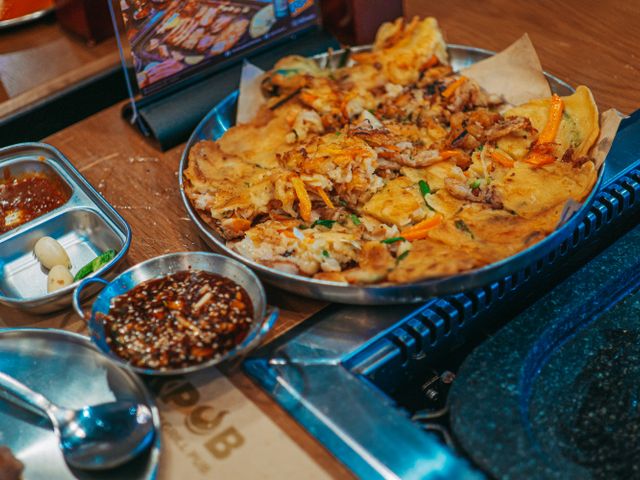
Crispy-edged Korean vegetable and seafood pancakes, golden and lacy on the outside, tender within. Rice flour creates a delicate, shatteringly crisp texture that sets Korean pajeon apart from other savory pancakes. Topped with tender squid rings, sweet scallions, and sesame seeds, then dipped in a spicy-tangy gochujang sauce spiked with vinegar and garlic. Serve hot and fresh from the pan—they're best enjoyed immediately at the table with friends.
- Prep
- 20 min
- Cook
- 20 min
- Wait
- 5 min
- Total
- 45 min
- Makes
- 12 to 14 pancakes (4 servings as an appetizer or side)
Steps
Before you start
- Have all ingredients prepped and within arm's reach before you start cooking—pajeon cook fast and you'll be working the pan continuously
- Pat the squid dry with paper towels to remove excess moisture, which prevents splattering and helps it cook evenly
- Make the dip first and set it aside so it's ready to serve
- Set up a wire rack or paper towel-lined plate next to your stovetop for draining finished pancakes
Make the dip
- In a medium bowl, whisk together gochujang, rice vinegar, water, toasted sesame oil, and minced garlic until completely smooth and no lumps remain.
- The mixture should be pourable but still thick enough to cling to the pancakes.
- Taste and adjust—add more vinegar if you want tanginess, more gochujang if you want heat.
- Stir in sliced scallion greens and sesame seeds if using.
- Set aside at room temperature while you prepare the batter.
+ Show details− Hide details
Ready when: Dip is smooth, well combined, and pourable
Tip: Whisk vigorously to break down the gochujang and prevent lumps in the final dip
Combine dry ingredients
- In a large mixing bowl, whisk together rice flour, all-purpose flour, salt, and black pepper.
- These dry ingredients form the base of the batter and the small amount of all-purpose flour helps bind the rice flour without making the pajeon tough.
+ Show details− Hide details
Ready when: Flours are evenly combined with salt and pepper
Tip: Whisk the dry ingredients thoroughly to distribute the salt and pepper evenly throughout the batter
Make the wet mixture
- In a small bowl or measuring cup, whisk together the lightly beaten egg, water, soy sauce, and toasted sesame oil until well combined.
+ Show details− Hide details
Ready when: Egg is fully incorporated and no streaks remain
Build the batter
- Pour the wet mixture into the dry ingredients and stir with a wooden spoon or spatula just until the dry ingredients are moistened.
- The batter should be slightly lumpy—overmixing develops gluten and makes the pajeon tough and chewy instead of tender.
- Fold in the squeezed zucchini, scallions, squid, and sesame seeds gently until just distributed throughout.
+ Show details− Hide details
Ready when: Batter is thick and chunky with visible vegetable and squid pieces throughout
Tip: Do not overmix; a few visible lumps of dry ingredient are better than a smooth, overmixed batter that will yield tough pajeon
Heat the skillet
- Place a 9 to 10-inch (23 to 25 cm) nonstick or well-seasoned cast iron skillet over medium-high heat.
- Add about 1.5 tablespoons of vegetable oil and let it heat for 1 to 2 minutes until shimmering and just beginning to smoke slightly.
- The oil must be hot enough to create that signature lacy, crispy edge when the batter hits the pan.
+ Show details− Hide details
Ready when: Oil shimmers and moves freely, with barely visible wisps of smoke
Tip: Do not skip the heating step or the pajeon will be greasy instead of crispy; test the oil temperature by dropping a tiny piece of batter into it—it should sizzle immediately
Cook first batch of pajeon
- Gently pour about ⅓ cup (80 ml) of batter into the center of the hot oil, then tilt the skillet in a circular motion to spread the batter into a thin 5 to 6-inch (13 to 15 cm) pancake.
- Work quickly—the batter sets fast.
- You can cook 2 pajeon at a time if your skillet is large enough, positioning them side by side but not touching.
- Cook for 2 to 3 minutes on the first side without moving them.
- The bottom should turn golden brown with crispy, lacy edges.
- Do not stir or flip early.
+ Show details− Hide details
Ready when: First side is golden brown and crispy around the edges, and the edges are starting to pull away from the pan
Tip: Resist the urge to move the pajeon before the bottom sets—undisturbed cooking creates the delicate, crispy laciness that makes pajeon special
Flip and finish cooking
- Using a metal fish spatula or thin spatula, slide underneath each pajeon and flip it carefully.
- Cook for another 1 to 2 minutes on the second side until that side is also golden brown and the squid is opaque throughout.
- The pajeon should be cooked through but still tender inside.
+ Show details− Hide details
Ready when: Second side is golden brown; squid rings are opaque and firm, no translucent spots remain
Tip: If the second side is browning too quickly before the squid is cooked through, lower the heat slightly or move the pajeon to a cooler part of the skillet
Drain and keep warmOven 200°F / 95°C
- Transfer the cooked pajeon to a wire rack set over a baking sheet or to a paper towel-lined plate.
- This allows air to circulate and prevents them from becoming soggy.
- If not serving immediately, you can keep them warm in a 200°F (93°C) oven for up to 10 minutes while you cook the remaining batter.
+ Show details− Hide details
Tip: Avoid stacking the pajeon while hot, as this traps steam and softens the crispy exterior
Cook remaining batchesOven 200°F / 95°C
- Add another 1.5 tablespoons of fresh oil to the skillet and let it heat for 1 minute.
- Repeat the process with the remaining batter, cooking 2 pajeon at a time.
- You should be able to make 12 to 14 pajeon total from this amount of batter.
- Between batches, let the skillet heat back up to medium-high before adding more batter.
+ Show details− Hide details
Ready when: All remaining pajeon are cooked through and golden brown on both sides
Tip: Do not reuse oil without refreshing it; strained oil from multiple batches will accumulate burnt particles and make subsequent pajeon taste off
Serve immediately
- Arrange the hot pajeon on a serving platter and pour the gochujang dip into a small bowl, or drizzle the dip directly over the pajeon.
- Serve right away while the exterior is still crispy and the interior is warm.
- Pajeon are at their very best in the first 5 to 10 minutes after cooking.
+ Show details− Hide details
Ready when: Pajeon are hot and ready to eat
Tip: Do not let pajeon sit under a warming light or covered, as moisture will soften the crispy exterior
Good to know
Tips
- Squeezing the zucchini of excess moisture is essential—wet vegetables will release steam when cooking and create soggy pajeon instead of crispy ones. Use paper towels and press firmly.
- Rice flour is non-negotiable for authentic pajeon texture; it creates a lighter, crispier crust than all-purpose flour alone. Use the highest-quality rice flour you can find, as some cheaper brands have a slightly gritty texture.
- The skillet must be hot enough when you add the batter to create that signature lacy, crispy edge. If the pajeon come out greasy or thick, the oil was not hot enough. If they brown too fast on the outside while the inside is still wet, lower the heat slightly.
- Squid cooks very quickly and can become rubbery if overcooked. Ensure pieces are thin (¼ inch / 6 mm) and watch for them to turn from translucent to opaque white—the moment they're opaque, they're done.
Storage & reheating
Cooked pajeon will keep in an airtight container in the refrigerator for up to 2 days. Reheat in a 350°F (175°C) oven for 5 to 8 minutes until warmed through and the exterior has regained some crispness (they will not be quite as crispy as freshly cooked). The gochujang dip keeps refrigerated for up to 1 week; serve at room temperature or gently warmed. Do not freeze pajeon, as they become soggy upon thawing.
Substitutions
- cleaned squid (calamari) → shrimp, chopped into ½-inch (1 cm) pieces. Shrimp cook at the same rate as squid and have a similar sweet, mild seafood flavor. Adjust cooking time slightly if using very small shrimp.
- medium zucchini → a mix of zucchini and sliced fresh mushrooms (cremini or oyster), squeezed of excess moisture. Mushrooms add an earthy depth to the pajeon. Keep the total weight of vegetables at 200 g.
- gochujang (Korean red chili paste) → sambal oelek (Indonesian chili paste) mixed with 1 teaspoon of miso paste. This creates a similar heat and depth, though the flavor profile will be slightly different. Adjust seasoning to taste.
- rice flour → potato starch or tapioca starch. Both create an even crispier, lacier crust, though the texture will be slightly more delicate. Do not use all-purpose flour alone, as it will make tough pajeon.