Korean Shrimp Pajeon
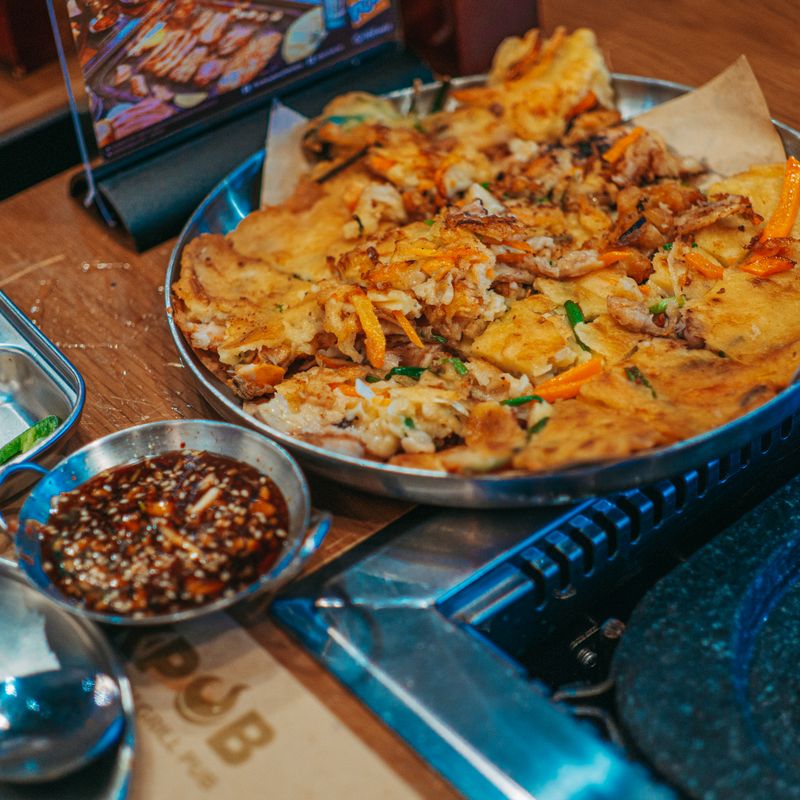
A crispy-edged Korean savory pancake studded with plump shrimp and fresh scallions, bound with a simple batter and pan-fried until golden. Served with a soy-vinegar dipping sauce, it's tender and delicate inside with irresistible crispy lace edges. Perfect as an appetizer, light lunch, or snack with drinks.
- Prep
- 15 min
- Cook
- 12 min
- Total
- 27 min
- Makes
- 2 pancakes (8 slices total)
Steps
Before you start
- Pat shrimp completely dry with paper towels before slicing to ensure they cook properly
- Have all ingredients measured and scallions sliced before you start frying—the batter must be used immediately
- Use medium heat; too high will burn the outside before the inside cooks through
Mix the dry ingredients
- In a large mixing bowl, whisk together the all-purpose flour, cornstarch, salt, and white pepper until evenly combined.
- These dry ingredients form the base of the batter and should be lump-free.
+ Show details− Hide details
Ready when: Dry ingredients are evenly mixed with no visible lumps
Tip: Whisking the dry ingredients separately prevents lumps from forming when you add the wet mixture.
Make the batter
- Create a well in the center of the dry mixture.
- Pour in the beaten egg, soy sauce, and cold water.
- Whisk from the center outward, gradually incorporating the dry ingredients, until just combined.
- The batter should be thin and slightly lumpy—do not overmix.
- It should be the consistency of thin cream, flowing easily but not watery.
+ Show details− Hide details
Ready when: Batter is thin and pourable with some lumps visible
Tip: Overmixing develops gluten, making the pajeon tough. A few lumps are fine and actually desirable for tender results.
Fold in shrimp and scallions
- Gently fold the halved shrimp and the sliced scallion pieces (white and light green parts) into the batter using a spatula.
- Be careful not to break the shrimp pieces.
- The batter should now be studded with shrimp throughout.
+ Show details− Hide details
Ready when: Shrimp and scallions are evenly distributed throughout the batter
Tip: Fold gently to keep shrimp intact; broken pieces will be harder to see and enjoy in each bite.
Heat the pan and oil
- Place a 10-inch (25 cm) nonstick skillet or cast-iron pan over medium heat.
- Add 1.5 tablespoons (22 ml) of vegetable oil and heat for 2 minutes until shimmering and just beginning to smoke lightly.
- The pan should be hot enough that a drop of batter sizzles immediately on contact.
+ Show details− Hide details
Ready when: Oil shimmers and moves easily in the pan; a small drop of batter sizzles immediately
Tip: If the pan isn't hot enough, the pajeon will absorb oil instead of frying, becoming greasy. Let it heat fully.
Fry the first pajeon
- Pour half the batter (about 1 cup or 240 ml) into the hot pan, quickly spreading it into a thin, even round about ¼ inch (6 mm) thick using the back of a spoon or a spatula.
- You want it relatively thin so it cooks through while the edges crisp.
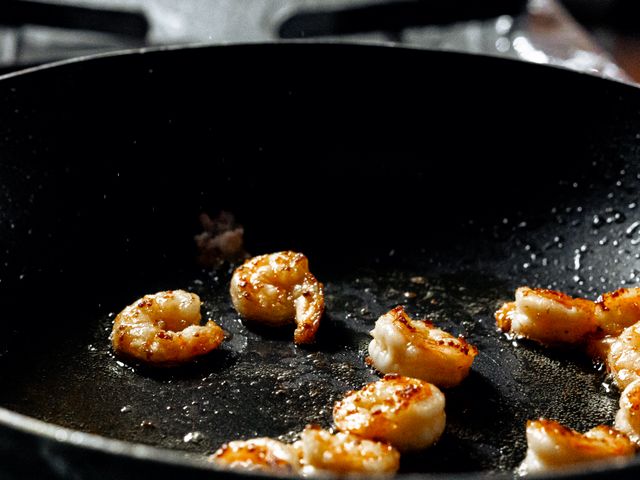
- Fry for 5–6 minutes over medium heat, undisturbed, until the bottom is golden brown and crispy.
+ Show details− Hide details
Ready when: Bottom is golden brown and crispy; edges look lacy and light brown
Tip: Don't flip too early. The bottom needs time to develop the signature crispy texture. A dark golden color is desirable.
Flip and finish cooking
- Using a wide spatula, flip the pajeon carefully in one motion.
- Fry the second side for 3–4 minutes over medium heat until it is also golden brown and the edges are crispy.
- The shrimp should be cooked through and pink throughout, and the interior should feel just set when gently pressed.
+ Show details− Hide details
Ready when: Second side is golden brown; shrimp are opaque and pink; interior springs back lightly when pressed
Tip: If the second side isn't browning as quickly, the pan may have cooled. Increase heat slightly but watch closely to avoid burning.
Transfer the first pajeon
- Slide the cooked pajeon onto a cutting board and cut into 4 equal slices or wedges.
- Transfer to a serving plate and keep warm while you prepare the second pajeon.
+ Show details− Hide details
Ready when: Pajeon is sliced into clean, even pieces
Tip: Cutting while still warm is easier; the pajeon firms up as it cools. A sharp knife prevents breaking the edges.
Fry the second pajeon
- Add the remaining 1.5 tablespoons (22 ml) of oil to the pan and let it heat for 1 minute until shimmering.
- Pour the remaining batter into the hot pan, spread it into a thin round, and fry for 5–6 minutes until the bottom is golden and crispy.
- Flip and fry the second side for 3–4 minutes until golden brown and cooked through.
+ Show details− Hide details
Ready when: Bottom is golden brown and crispy; second side is also golden brown; shrimp are opaque pink
Tip: The second pajeon may cook slightly faster if the pan is already well-seasoned. Watch the second side carefully.
Transfer and slice
- Slide the second pajeon onto the cutting board, cut into 4 equal slices, and add to the serving plate with the first pajeon.
+ Show details− Hide details
Ready when: Both pajeons are sliced and on the serving plate
Make the dipping sauce
- While the pajeons are cooking or resting, combine the soy sauce, rice vinegar, and sugar in a small bowl, stirring until the sugar dissolves.
- The sauce should taste balanced—salty, slightly sour, and just a touch sweet.
- Adjust any flavoring to your preference.
+ Show details− Hide details
Ready when: Sugar is fully dissolved; sauce is smooth and homogeneous
Tip: Make this sauce while the pajeon is frying so it's ready to serve immediately. The balance of salty and sour is key to the dish.
Garnish and serve
- Arrange the warm pajeon slices on a serving plate.
- Drizzle lightly with the soy-vinegar dipping sauce or serve it alongside in a small dipping bowl.
- Scatter the dark green sliced scallions and toasted sesame seeds (if using) over the top.
- Serve immediately while the pajeon is still warm and crispy.
+ Show details− Hide details
Ready when: Pajeon is plated and garnished, ready to serve
Tip: Fresh scallion greens add a bright, peppery finish. Toasted sesame seeds add nutty flavor and visual appeal.
Good to know
Tips
- For the crispiest edges, spread the batter thin (about ¼ inch or 6 mm), not thick. Thick pajeon will be soft inside and won't develop the signature lacy, crispy edges. The shallower batter also cooks more evenly.
- Pat the shrimp completely dry before slicing; any moisture on them will release steam and soften the nearby batter. Moisture is the enemy of crispiness.
- Don't walk away while frying. The line between golden and burnt is quick. Stay near the pan and watch the color and aroma.
- For a restaurant-quality finish, tilt and swirl the pan gently during the first few seconds after pouring the batter to ensure it spreads into an even circle and adheres to the hot pan.
Storage & reheating
Store cooled pajeon in an airtight container in the refrigerator for up to 2 days. Reheat in a 350°F (175°C) oven for 5–7 minutes until heated through and edges crisp up, or pan-fry over medium heat for 2–3 minutes per side. Do not microwave, as this makes the texture soggy. Pajeon does not freeze well because the interior texture deteriorates.
Substitutions
- large shrimp (21–25 count), peeled, deveined, and patted dry → Medium (31–40 count) shrimp, left whole or halved if very large, or small squid rings, or diced white fish. Adjust cooking time slightly if using squid (add 1–2 minutes) or fish (reduce by 1 minute as it's more delicate). All are traditional pajeon variations.
- scallions → Diced onion, fresh chives, or thinly sliced leeks. Onion will be slightly milder, chives more delicate. Both work well; use the same total amount. Leeks need to be rinsed thoroughly and sliced thin.
- cold water → Sparkling water or club soda, or ice-cold broth. Sparkling water makes the pajeon even crispier. Broth adds depth but may make edges less lacy. Use the same volume.
- vegetable oil or other neutral-flavored oil → Sesame oil (use half the amount, as it's more pungent), or any neutral oil such as canola or peanut oil. Sesame oil adds authentic Korean flavor but burns easily, so use only half the amount and medium or slightly lower heat.