Korean Gochujang Salmon and Kelp Chowder
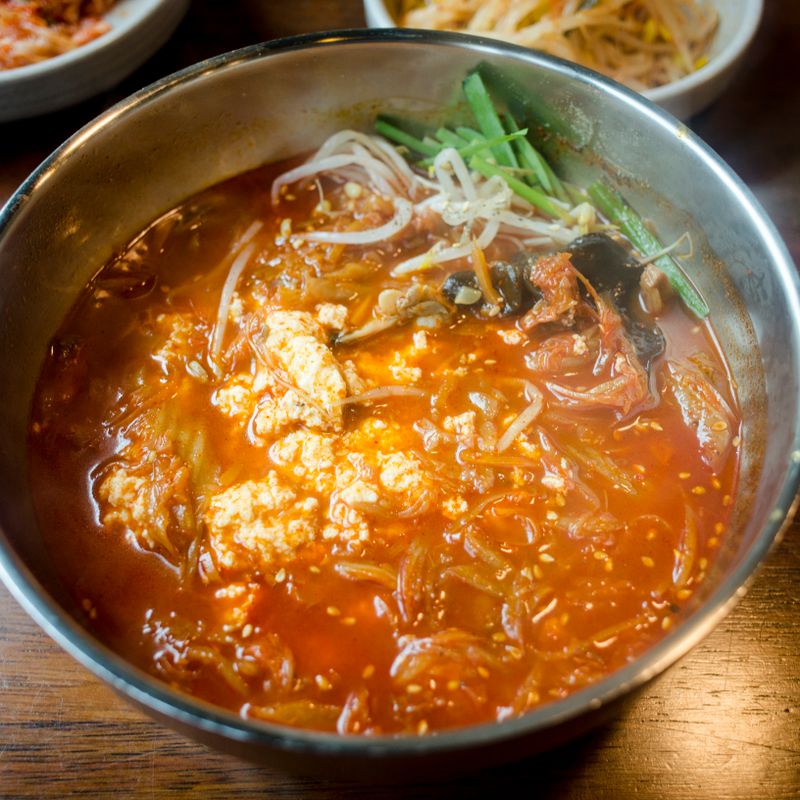
A warming, spiced chowder featuring tender salmon, umami-rich kombu kelp, and the bold heat of gochujang. Mirin and rice wine round out the flavors with a subtle sweetness, while diced potato, onion, and garlic build a hearty base. Finished with a touch of sesame oil and topped with fresh scallions and sesame seeds, this dish bridges the gap between a traditional Korean soup and a creamy chowder—rich, deeply savory, and comforting.
- Prep
- 20 min
- Cook
- 35 min
- Wait
- 5 min
- Total
- 1 hr
- Makes
- 4 servings (about 2 cups each)
Steps
Before you start
- Pat salmon dry with paper towels to ensure it cooks evenly
- Measure out gochujang and mirin ahead of time—they can be sticky to scoop
- Have all ingredients prepped and within arm's reach; the cooking moves quickly once the broth comes to a boil
- If kombu is very thick, soak it in cold water for 10 minutes to soften slightly before cutting
Build the kombu broth
- In a large heavy-bottomed pot (5–6 quart / 5–6 L), combine chicken broth, water, and kombu pieces.
- Bring to a boil over medium-high heat, then reduce to medium and simmer gently for 8–10 minutes.
- The kombu will soften and infuse the broth with umami.
- The broth will smell deeply savory and may take on a subtle olive-green tint.
+ Show details− Hide details
Ready when: Kombu softens and broth becomes fragrant and darker
Tip: Do not boil kombu rapidly or it will cloud the broth; a gentle simmer keeps it clear.
Add vegetables and aromatics
- Add the diced potato, onion, and minced garlic to the simmering broth.
- Stir well, then increase heat to medium-high and bring back to a gentle boil.
- Cook uncovered for 8–10 minutes, stirring occasionally, until the potato cubes are just beginning to soften on the edges but are still firm in the center.
+ Show details− Hide details
Ready when: Potato edges show slight translucence; onion is soft but not falling apart
Tip: Keep potatoes at a consistent size so they cook evenly; smaller pieces will disintegrate before the salmon is done.
Prepare the gochujang paste
- While the vegetables cook, whisk the gochujang in a small bowl with the rice wine and mirin until smooth, breaking up any lumps.
- This paste will incorporate into the broth evenly without creating clumps.
+ Show details− Hide details
Ready when: Mixture is smooth and pourable, with no visible lumps of gochujang
Tip: Use a small whisk or fork to smooth the paste thoroughly; lumps will not dissolve in the broth and will make for an uneven texture.
Add the gochujang and seasonings
- Pour the gochujang mixture into the pot and stir well to incorporate.
- Add soy sauce and a pinch of sea salt.
- Bring to a simmer over medium heat, stirring occasionally.
- The broth will turn a rich reddish-brown and smell intensely spicy and savory.
- Taste and adjust seasoning with more salt or a small pinch of gochujang if you want more heat.
+ Show details− Hide details
Ready when: Broth is uniform in color and taste, aromatic and balanced
Tip: Taste cautiously—gochujang heat builds slightly as the broth simmers. You can always add more, but you cannot remove it.
Add salmon and simmer gently
- Reduce heat to medium-low.
- Gently slide the salmon chunks into the simmering broth.
- Do not stir aggressively; instead, give the pot a gentle shake or use a wooden spoon to carefully turn the salmon pieces once, about 1 minute after adding them.
- Simmer uncovered for 6–8 minutes until the salmon is just cooked through.
+ Show details− Hide details
Ready when: Salmon flakes easily when pressed gently with a spoon; interior is opaque and no translucent raw flesh remains
Tip: Keep the heat low; boiling vigorously will break apart the delicate salmon and make the broth cloudy. The salmon will continue cooking slightly even after you remove the pot from heat.
Finish with sesame oil and rest
- Remove the pot from heat.
- Drizzle in the toasted sesame oil and stir gently to combine.
- Let the chowder rest, covered, for 3–5 minutes.
- This allows the flavors to meld and the heat to distribute evenly.
+ Show details− Hide details
Ready when: Sesame aroma is apparent; broth is glossy and fragrant
Tip: Do not skip the rest period—it ensures the chowder is uniformly hot and the flavors are fully developed.
Serve and garnish
- Ladle the chowder into deep bowls, ensuring each serving gets salmon, potato, and plenty of broth.
- Top each bowl with sliced scallions and a sprinkle of toasted sesame seeds.
- Serve immediately while steaming hot.
+ Show details− Hide details
Tip: Scallions and sesame seeds add freshness and nutty aroma; add them just before serving so they don't wilt or absorb broth flavor.
Good to know
Tips
- If you do not have toasted sesame seeds on hand, toast raw sesame seeds in a dry skillet over medium heat for 2–3 minutes, shaking frequently, until fragrant and lightly golden. Set aside to cool before sprinkling.
- For a creamier, richer chowder, add ½ cup (120 ml) heavy cream or coconut milk after the salmon is cooked and before the final rest. Stir well to distribute.
- This chowder is best served in bowls with a spoon and is ideal alongside warm rice or with crusty bread to soak up the spiced broth.
- To adjust the heat level, reduce gochujang to 2 tbsp (36 g) for a milder chowder, or increase it to 4 tbsp (72 g) for extra spice. Taste before serving and adjust.
Make ahead
Prepare the kombu, vegetables, and gochujang-wine paste up to 4 hours ahead. Store the kombu and vegetables separately in the refrigerator in an airtight container, and keep the gochujang paste in a small bowl covered with plastic wrap. Do not make the broth itself ahead; cook the chowder fresh on the day you serve it for the best texture and flavor.
Storage & reheating
Refrigerate leftover chowder in an airtight container for up to 2 days. The salmon will continue to firm as it cools. Reheat gently on the stovetop over medium-low heat, stirring occasionally, until warmed through (about 10 minutes); do not boil. Do not freeze, as the texture of the salmon will degrade significantly upon thawing.
Substitutions
- skinless salmon fillet, center-cut → halibut or cod fillet, cut into the same size chunks. Both white fish work well, though they are more delicate. Reduce the cooking time by 1–2 minutes to avoid overcooking.
- kombu (dried kelp), wiped clean of sand → dashi powder or kelp stock base (1 tbsp / 10 g), stirred directly into the broth instead of steeping. This will skip the steeping step and speed up the broth, but will not impart quite the same depth of umami flavor.
- gochujang (Korean red chili paste) → Korean red chili flakes (gochugaru), 2 tbsp (12 g), whisked into the rice wine and mirin as described. The texture will be slightly grainier and the flavor more purely spicy without the gochujang's underlying sweetness.
- mirin (sweet rice wine) → honey or sugar, 1.5 tbsp (23 g). Use honey or sugar if mirin is unavailable. Honey will add slight floral notes; sugar is more neutral. Adjust to taste.