Korean Gochujang Beef and Vegetable Chowder
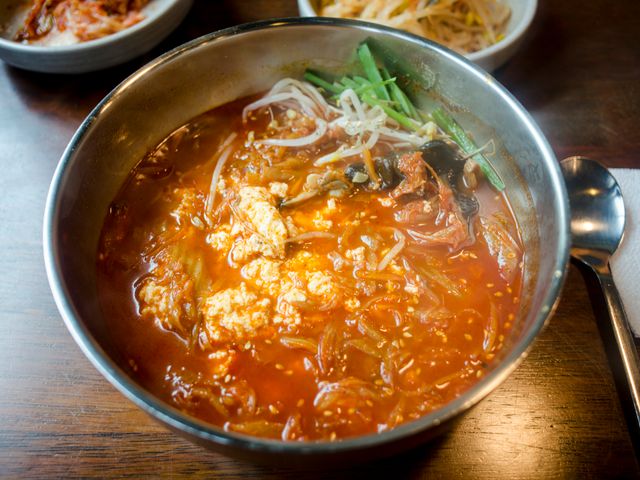
A warming, deeply flavored Korean-inspired chowder built on beef chuck braised in a rich gochujang broth with potatoes, Korean radish, and mushrooms. The gochujang provides complex spice with fermented depth, balanced by sesame oil and a touch of sweetness. The beef becomes tender and vegetables soften into the broth, creating a hearty soup with layers of umami and heat.
- Prep
- 20 min
- Cook
- 1 hr 40 min
- Total
- 2 hr
- Makes
- 6 servings (about 10 cups total)
Steps
Before you start
- Pat the beef chuck dry with paper towels so it browns properly
- Have all vegetables prepped and ready before you begin cooking
- Use a heavy-bottomed pot or Dutch oven at least 5 quarts; the braise needs room for liquid and vegetables
- Read through the timing: the beef needs 60 minutes to become tender; vegetables go in during the last 20 minutes
Brown the beefOven 375°F / 190°C
- Heat 2 tbsp vegetable oil in a 5-quart Dutch oven over medium-high heat (about 375°F/190°C).
- Working in two batches so as not to crowd the pan, add the beef chuck cubes and sear for 3–4 minutes per side, until deeply browned on at least two sides.
- Transfer to a clean plate.
- The beef does not need to be cooked through; you are building color and flavor.
+ Show details− Hide details
Ready when: Beef is dark brown on all exposed sides, with a thin crust
Tip: Don't stir the beef immediately; let each side sit for 2 minutes to develop color. A dry surface browns much faster than a wet one.
Cook aromatics and gochujang
- Reduce heat to medium.
- Add the diced onion to the pot and cook for 3–4 minutes, stirring occasionally, until it begins to soften and a few edges turn golden.
- Add the minced garlic and cook for 1 minute more, stirring constantly, until fragrant.
- Stir in the 3 tbsp gochujang, breaking it up with a wooden spoon and coating the vegetables for about 1 minute.
- The paste will darken slightly and smell rich.
+ Show details− Hide details
Ready when: Gochujang is fully incorporated and coats the vegetables; garlic is fragrant and no longer raw-smelling
Tip: Toasting the gochujang for 1 minute mellows its raw spice and deepens its fermented flavor; don't skip this step.
Deglaze and add broth
- Pour in 6 cups beef stock and 2 cups water, scraping the bottom of the pot with a wooden spoon to lift any browned bits.
- Add 2 tbsp soy sauce and 1 tbsp mirin.
- Stir well to combine.
- Return the browned beef and any accumulated juices to the pot.
+ Show details− Hide details
Ready when: All liquid is combined and beef is submerged
Tip: Scraping the fond (browned bits) adds tremendous depth; use the side of a wooden spoon and take your time.
Simmer the beef
- Bring the pot to a gentle simmer over medium-high heat, then reduce to medium-low and partially cover with the lid (leave it slightly ajar).
- Simmer for 60 minutes, stirring occasionally, until the beef is fork-tender and the liquid has reduced slightly.
- The beef should shred easily when poked with a fork.
+ Show details− Hide details
Ready when: Beef breaks apart easily when pressed with a spoon; broth is slightly reduced but still covers the meat
Tip: A gentle simmer prevents the meat from becoming tough and stringy. If bubbles are rolling rapidly, lower the heat.
Add vegetables
- After 60 minutes of simmering, add the 340g Korean radish cubes, 565g Yukon Gold potato cubes, and 225g mushrooms (halved or quartered).
- Stir to combine.
- Increase heat slightly to medium and bring back to a gentle simmer.
- Cook uncovered for 18–22 minutes, until the potatoes and radish are completely tender when pierced with a fork, and the mushrooms have released their liquid and begun to darken.
+ Show details− Hide details
Ready when: Potatoes are easily pierced with a fork; radish is tender; mushroom pieces are dark and tender
Tip: Don't overcrowd the pot when adding vegetables; if needed, work in two stages, adding mushrooms last so they don't fall apart.
Finish with sesame oil
- Remove the pot from heat.
- Drizzle in 1 tbsp toasted sesame oil and stir gently to distribute.
- Taste the broth and adjust seasoning: add soy sauce for saltiness, a pinch of sugar if the gochujang tastes too sharp, or gochugaru for extra heat.
- The chowder should taste savory, slightly spicy, and balanced.
+ Show details− Hide details
Tip: Sesame oil burns easily, so add it off heat. Start with less and taste before adding more; its flavor is intense.
Serve and garnish
- Ladle the chowder into bowls, ensuring each serving has plenty of beef and vegetables.
- Top each bowl with sliced green onions and a sprinkle of toasted sesame seeds if using.
- Serve hot.
- A small bowl of gochugaru on the side lets each diner adjust the heat to their preference.
+ Show details− Hide details
Tip: Green onions lose their delicate flavor if cooked, so always add them as a garnish just before serving.
Good to know
Tips
- To deepen the umami, add 1 tsp soy sauce-based fish sauce or anchovy paste in step 3—it won't taste fishy, only richer.
- For a creamier chowder, use 1 cup full-fat coconut milk or heavy cream in place of 1 cup of the water; add it in step 5 just before the vegetables.
- Korean radish has a peppery, slightly sweet flavor that is essential to this dish's character. If you cannot find it, the chowder will still be good but less authentically Korean.
- This recipe scales easily: double all ingredients except the salt and seasonings, and increase the final simmer time for beef to 70 minutes.
Make ahead
The chowder can be made up to 3 days ahead. Prepare through step 5 (vegetables fully cooked), then cool and refrigerate in an airtight container. Reheat gently over medium-low heat on the stovetop, stirring occasionally. Do not add sesame oil or garnishes until just before serving, as they are best fresh.
Storage & reheating
Room temperature: Store covered for no more than 2 hours. Refrigerator: Keep in an airtight container for up to 3 days. Freezer: The chowder freezes well for up to 2 months; thaw overnight in the refrigerator and reheat gently on the stovetop over medium-low heat, adding a splash of water or broth if it seems too thick. The texture of the potato will soften slightly upon freezing, which is acceptable for a chowder.
Substitutions
- Korean radish (daikon) → regular daikon radish or turnip. These have a milder, slightly sweeter flavor than Korean radish, but will cook to a similar tender texture. Use the same weight.
- gochujang (Korean red chili paste) → mix of 2 tbsp tomato paste + 1 tbsp sambal oelek + ½ tsp sugar. This approximates gochujang's fermented spice. The flavor will be slightly sharper and less funky, but still delicious.
- mirin (sweet rice wine) → honey or brown sugar (½ tbsp). Mirin adds sweetness and body. Honey or sugar will provide sweetness, though you lose the subtle rice wine note.
- beef chuck, cut into 1½-inch cubes → beef short ribs or pork shoulder. Both have enough collagen to become tender during braising. Short ribs will cook slightly faster (55 minutes); pork shoulder may need 70 minutes. Adjust cook time accordingly.