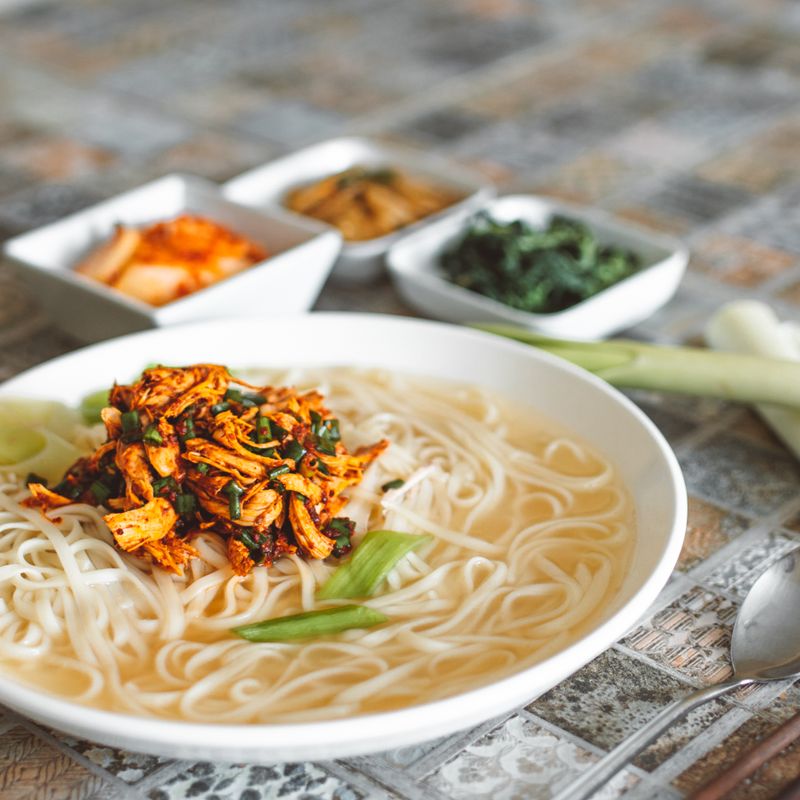
Korean Ginseng Chicken Broth
A traditional Korean wellness broth that's restorative, mineral-rich, and deeply flavorful. Whole chicken simmered slowly with ginseng, ginger, and jujubes creates a broth that's believed to nourish and balance the body. Served hot, often with the solids—especially the ginseng and jujubes—which are considered beneficial to consume. This broth stands alone as a dish or pairs beautifully with rice.
- Prep
- 10 min
- Cook
- 2 hr 15 min
- Total
- 2 hr 25 min
- Makes
- 6 cups (1400 ml broth plus solids)
Steps
Before you start
- Procure a fresh, preferably organic or free-range whole chicken and gather all aromatics (ginseng, ginger, jujubes) before you begin
- Clear about 2.5 hours from your schedule for the broth to simmer and develop flavor
- Use filtered or spring water for the cleanest, most refined broth
- Read through the full recipe so you understand the blanching step is traditional and creates superior clarity
Clean and dry the chicken
- Remove the whole chicken from packaging and rinse it inside and out under cool running water.
- Remove any excess fat, loose skin, and giblets from the cavity.
- Pat thoroughly dry with paper towels.
- This removes surface bacteria and any remaining blood, ensuring the cleanest-tasting broth.
+ Show details− Hide details
Ready when: Chicken is clean, dry, and ready to cook
Tip: Thorough drying prevents splattering when the chicken enters hot water during blanching
Prepare aromatics and seasonings
- Rinse the ginseng and jujubes briefly under cool water.
- If using fresh ginseng, leave the skin on.
- Slice the ginger into 3–4 thick pieces without peeling—the skin adds vital nutrients and flavor.
- Lightly rinse the jujubes and set all ingredients aside on a clean surface.
+ Show details− Hide details
Ready when: All aromatics are rinsed and ginger is sliced into 3–4 pieces
Tip: Keep ginger and ginseng skins on to preserve minerals and nutrients that infuse the broth
Blanch chicken to remove impurities
- Fill the large pot three-quarters full with water and bring to a rolling boil over high heat.
- Carefully place the whole chicken into the boiling water.
- Allow it to boil for 2–3 minutes, then remove the chicken with tongs.
- Rinse it thoroughly under cool running water, rubbing gently with your fingers until the water runs clear.
- This traditional step removes scum and blood impurities, creating a much clearer, more refined broth.
+ Show details− Hide details
Ready when: Chicken has been blanched and rinsed until water runs clear
Tip: Don't skip blanching—it is essential in Korean cooking for creating a pristine, elegant broth
Start fresh broth with clean water
- Discard the blanching water.
- Fill the same large pot with 8 cups (1900 ml) of fresh filtered or spring water.
- Place over high heat and bring to a rolling boil, which takes about 10–12 minutes.
+ Show details− Hide details
Ready when: Water is at a rolling boil with large, vigorous bubbles
Tip: Using fresh water instead of the blanching water ensures clean, clear flavor without any off-notes
Add chicken and aromatics, simmer gently
- Once the water is boiling, carefully add the blanched chicken to the center of the pot.
- Scatter the ginseng pieces, ginger slices, and jujubes around and throughout.
- Reduce heat to low or medium-low, adjusting the flame so the broth surface barely simmers with tiny bubbles—never a rolling boil.
- Cover the pot with its lid (you may leave it slightly ajar or close it fully).
- Maintain this gentle simmer for 1.5–2 hours.
- The chicken is done when it is extremely tender and the thigh meat falls off the bone with minimal effort.
+ Show details− Hide details
Ready when: After 1.5–2 hours, chicken is very tender and falls from bone easily; broth smells deeply fragrant and appears golden or light amber
Tip: A steady, gentle simmer is crucial—vigorous boiling clouds the broth and results in uneven flavor extraction
Check doneness and adjust seasoning
- After 1.5 hours, test the chicken by piercing the thigh with a fork—it should pierce very easily.
- The broth should smell fragrant and look golden or light amber.
- Taste a small spoonful of broth.
- Season with salt, adding gradually—about 1/4 teaspoon at a time—until you reach your preferred saltiness.
- If using goji berries, add them now and let them infuse for 10 minutes while the broth simmers gently.
+ Show details− Hide details
Ready when: Chicken is extremely tender; broth is well-seasoned and flavorful; goji berries are plumped and softened
Tip: Taste as you season—it is much easier to add salt than to remove it
Finish broth and serve hot
- Remove the pot from heat.
- Carefully remove the chicken with tongs and transfer it to a cutting board (shred the meat for other dishes, freeze it, or compost it—don't waste this nutrient-rich protein).
- You may now either strain the broth through a fine mesh strainer for a clear, refined presentation, or serve it as-is with the ginseng, ginger, and jujubes remaining in the bowls (these are edible and traditionally consumed for their nutritional value).
- Ladle 1–1.5 cups of hot broth into each serving bowl.
- If desired, drizzle with a few drops of sesame oil for richness and aroma.
+ Show details− Hide details
Ready when: Broth is poured and ready to serve
Tip: The chicken meat is excellent shredded for chicken salad, fried rice, soups, or frozen for later—it's nutrient-rich from simmering in the broth
Good to know
Tips
- The blanching step is non-negotiable for a clear, refined broth—this is traditional Korean technique that separates elegant broths from cloudy ones
- A gentle, steady simmer is key: the surface should barely bubble, not roll. Vigorous boiling clouds the broth and causes flavors to extract unevenly
- Red ginseng (홍삼), which is steamed and dried, is more shelf-stable and readily available than fresh ginseng, and imparts a slightly earthy sweetness that's traditional
- The solids—chicken, ginseng, jujubes, and ginger—are all edible and considered nourishing in Korean wellness tradition; many people serve them in the bowl for both nutrition and tradition
Make ahead
Yes, this broth can be made 2–3 days in advance and stored in the refrigerator, or frozen for up to 3 months. It also tastes excellent as leftovers and may deepen in flavor after a day of rest.
Storage & reheating
Room temperature: Not recommended; refrigerate within 2 hours of cooking. Refrigerator: 3–4 days in airtight containers. Freezer: Up to 3 months in freezer bags or containers. Thaw overnight in the refrigerator before reheating. Reheat gently on the stovetop over medium heat (3–5 minutes) or in the microwave until steaming.
Substitutions
- Fresh ginseng root or Korean red ginseng (홍삼 hongsam) → American ginseng or ginseng powder. Red ginseng (홍삼) is traditional and shelf-stable; American ginseng offers a milder flavor. If using powder, stir in at the end after seasoning, as heat may diminish delicate flavors.
- Dried red jujubes (대추 daechu) → Dried apricots or dried dates. The sweetness profile will shift; use 2/3 the amount of apricots or dates to avoid over-sweetening the broth.
- Whole chicken, preferably organic or free-range → Chicken parts (wings, thighs, backs, or drumsticks). Reduce simmering time to 60–90 minutes. Dark meat creates a more flavorful, richer broth than white meat alone.
- Filtered or spring water → Unsalted store-bought chicken stock. Traditional recipes use water to let the chicken and herbs shine. Stock creates a richer but different broth; use low-sodium to control final saltiness.
More broths
See all →


Find more like this
- Meal
- Lunch
- Cuisine
- Korean
- Main ingredient
- Whole Chicken
- Method
- Stovetop
- Quick & Easy
- EasyOne-PotMake AheadFreezer Friendly