
Korean BBQ Beef Gyro with Gochujang Aioli
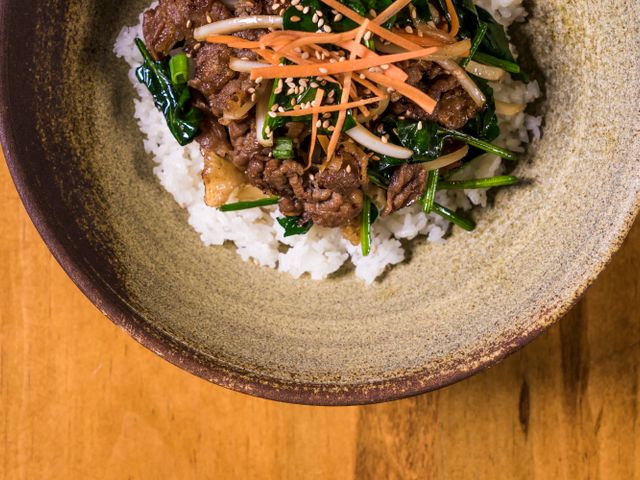
Thinly sliced grilled ribeye marinated in soy, sesame, and Korean aromatics, wrapped in warm flatbread with crispy edges, pickled vegetables, and a creamy gochujang-garlic aioli. The beef gets a charred crust while staying tender inside—all the umami intensity of Korean BBQ in a portable gyro format.
- Prep
- 25 min
- Cook
- 20 min
- Wait
- 2 hr
- Total
- 2 hr 45 min
- Makes
- 4 gyros (serves 4)
Steps
Before you start
- Marinate beef at least 2 hours (or up to 8 hours) ahead—plan accordingly.
- Have all toppings prepped before you start grilling: vegetables sliced, aioli made, flatbread ready to warm.
- Partially freeze the ribeye for 30–45 minutes before slicing so you can cut thin, even pieces without it crumbling.
Prepare the marinade
- In a large shallow dish or resealable bag, combine 0.25 cup (60 ml) soy sauce, 3 tbsp (45 ml) sesame oil, 2 tbsp (30 g) packed brown sugar, 5 minced garlic cloves, 1 tbsp (15 g) minced ginger, 1 tbsp (15 ml) rice vinegar, and 0.5 tsp (2 g) freshly ground black pepper.
- Stir until the sugar dissolves completely.
- Taste and adjust seasoning if needed.
+ Show details− Hide details
Ready when: Marinade is smooth with no sugar crystals visible
Tip: Don't skip dissolving the sugar—it helps the marinade coat the beef evenly.
Slice and marinate beef
- Partially freeze the 1.5 lb (680 g) ribeye for 30–45 minutes so it firms up enough to slice cleanly.
- Using a sharp knife, slice it against the grain into pieces about ⅛ inch (3 mm) thick—this thickness allows the beef to marinate quickly while staying tender.
- Add the beef slices to the marinade, turning gently to coat all pieces.
- Cover and refrigerate for at least 2 hours, or up to 8 hours.
- Stir once or twice during marinating to keep everything evenly covered.
+ Show details− Hide details
Ready when: Beef is fully submerged and has taken on a dark color
Tip: Freezing the ribeye partially prevents it from shredding when you slice it—a game changer for thin, even pieces.
Make the gochujang aioli
- In a medium bowl, whisk together 0.75 cup (180 ml) mayonnaise, 3 tbsp (50 g) gochujang, 2 minced garlic cloves, 1 tbsp (15 ml) fresh lime juice, and 0.5 tsp (7 ml) honey.
- Whisk until smooth and completely combined.
- Fold in 1 tsp (5 g) toasted sesame seeds.
- Taste and adjust seasoning—add more lime for brightness or a pinch of salt if needed.
- Set aside until ready to assemble.
+ Show details− Hide details
Ready when: Aioli is smooth, creamy, and a deep coral-red color
Tip: Make the aioli while the beef marinates so everything is ready to go when you start grilling.
Quick-pickle the vegetables
- In a small bowl, combine 3 tbsp (45 ml) rice vinegar, 0.5 tsp (3 g) salt, and 2 tbsp (30 ml) water.
- Add the thinly sliced red onion and cucumber ribbons.
- Toss gently and let sit for at least 15 minutes at room temperature to soften slightly and take on the vinegar flavor.
- You can pickle these while the beef is marinating if you want to get ahead.
+ Show details− Hide details
Ready when: Onions and cucumber have softened and turned slightly translucent at the edges
Tip: Don't skip this step—pickled vegetables cut through the richness of the beef and aioli beautifully.
Set up the grillOven 400°F / 205°C
- Preheat a grill (charcoal or gas) to medium-high heat (about 400°F/204°C).
- If using a grill pan indoors, preheat it over medium-high heat for 2–3 minutes until just smoking.
- Pat the marinated beef slices dry with paper towels—this is crucial for getting a good sear.
- Lightly brush or rub the grill grates with 1 tbsp (15 ml) neutral oil on a folded paper towel to prevent sticking.
+ Show details− Hide details
Ready when: Grill is very hot and grates are clean and oiled
Tip: Dry the beef thoroughly—moisture prevents browning and creates steam instead of a crust.
Grill the beef in batches
- Working in batches so you don't crowd the grill, place the beef slices directly on the oiled grates.
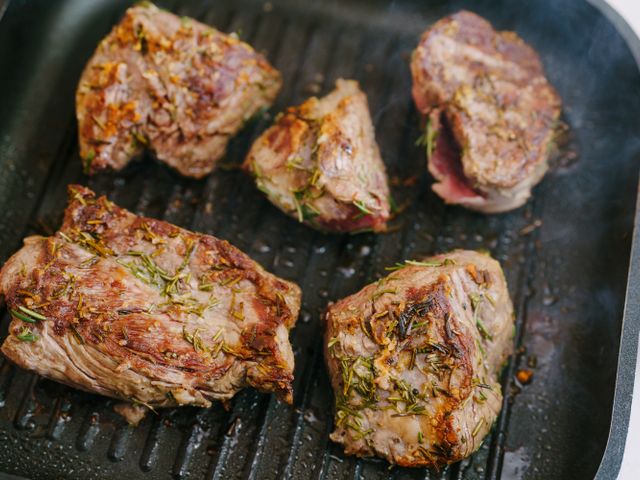
- Grill for 60–90 seconds per side until the edges are charred and crispy but the interior stays medium-rare (the thin slices cook very quickly).
- Don't move the meat around—let it develop a crust.
- Using tongs, flip each piece once and cook the second side.
- Transfer cooked beef to a clean plate and loosely tent with foil to keep warm.
- Repeat with remaining beef, adjusting heat if the grill gets too hot.
+ Show details− Hide details
Ready when: Beef edges are charred and crispy; interior is warm and barely pink
Tip: Don't flip constantly—let the beef sit for the full 60 seconds to develop color, then flip once.
Warm the flatbreadOven 350°F / 175°C
- While the last batch of beef finishes cooking, warm the 4 pieces of flatbread.
- Place them on the grill grates directly or on the cooler edge of the grill for 30–45 seconds per side until they are soft and pliable with light char marks.
- Alternatively, wrap them in a damp towel and warm in a toaster oven at 350°F (175°C) for 2–3 minutes.
- Keep the warm bread wrapped in a clean kitchen towel to stay soft.
+ Show details− Hide details
Ready when: Flatbread is soft, warm, and has light char marks
Tip: Warm flatbread right before serving—cold bread won't showcase the grilled beef.
Assemble the gyros
- Lay a warm piece of flatbread on a clean cutting board.
- Spread about 3 tbsp (45 ml) gochujang aioli over the lower half of the bread.
- Top with a generous handful (about 0.25 cup/60 ml) of grilled beef slices, arranging them so they overlap slightly.
- Drain the pickled cucumbers and onions and add about 0.25 cup (60 ml) to the top of the beef.
- Scatter with fresh cilantro and sliced scallions if using.
- Fold the bottom of the flatbread up and over the filling, then roll or fold the sides inward to create a compact bundle.
- Repeat with remaining flatbread and fillings.
+ Show details− Hide details
Ready when: Each gyro is tightly rolled with filling visible at the ends
Tip: Don't overfill—a tightly wrapped gyro is easier to eat and tastes better than one bursting open.
Serve immediately
- Serve each gyro wrapped in foil or parchment paper to catch any drips, or place on a plate seam-side down.
- Optionally, brush the top of each gyro with a little extra gochujang aioli or garnish with a light drizzle of sesame oil and a sprinkle of toasted sesame seeds.
- Serve right away while the bread is warm and the beef still has its char.
+ Show details− Hide details
Tip: Wrapping in parchment keeps hands clean and the bread steams slightly, softening the exterior while staying intact.
Good to know
Tips
- Slice the ribeye partially frozen and against the grain for thin, tender pieces that won't shred. This is the secret to restaurant-quality beef gyros at home.
- Pat the marinated beef completely dry before grilling—damp meat steams instead of searing. This step takes 30 seconds and transforms the crust.
- Gochujang aioli is the flavor anchor here. Don't dilute it too much with mayo; 3 tbsp paste to 0.75 cup mayo hits the right balance of spice and richness.
- Make the pickled vegetables at least 15 minutes ahead. The acidity brightens everything and prevents the gyro from feeling too heavy.
Make ahead
"Marinate beef up to 8 hours in advance. Make the gochujang aioli and quick-pickle the vegetables up to 4 hours ahead and refrigerate. Bring beef to room temperature for 15 minutes before grilling so it cooks evenly."
Storage & reheating
"Leftover grilled beef can be stored in an airtight container in the refrigerator for up to 2 days. Reheat gently in a skillet over medium heat for 1–2 minutes. Store gochujang aioli separately in the fridge for up to 5 days. Pickle will keep for up to 1 week. Assemble fresh gyros to order; wrapped leftovers get soggy."
Substitutions
- beef ribeye steak, about 1 inch thick → beef sirloin or short ribs (kalbi-style cut into thin strips). Sirloin is leaner; short ribs (if cut thin) are fattier and equally delicious. Both work beautifully in Korean marinades.
- gochujang (Korean red chili paste) → sriracha mixed with a little mayo, or red chili flakes mixed with garlic and mayo. Gochujang has a unique fermented depth, but sriracha works in a pinch. Use half the amount and adjust to taste.
- flatbread (pita, naan, or lavash) → grilled or warmed tortillas (flour or corn), or crispy lettuce cups. Flour tortillas mimic the bread structure; lettuce cups are low-carb and add fresh crunch.
- sesame oil (toasted) → regular vegetable oil or avocado oil (omit brown sugar to reduce sweetness slightly). You'll lose the toasted sesame aroma, but the dish will still work. Add a pinch of toasted sesame seeds to the marinade for depth.
More shawarma & gyros
See all →


Find more like this
- Meal
- Lunch
- Cuisine
- Korean
- Main ingredient
- Steak
- Diet
- Dairy-FreeHalal
- Method
- Grill & BBQ