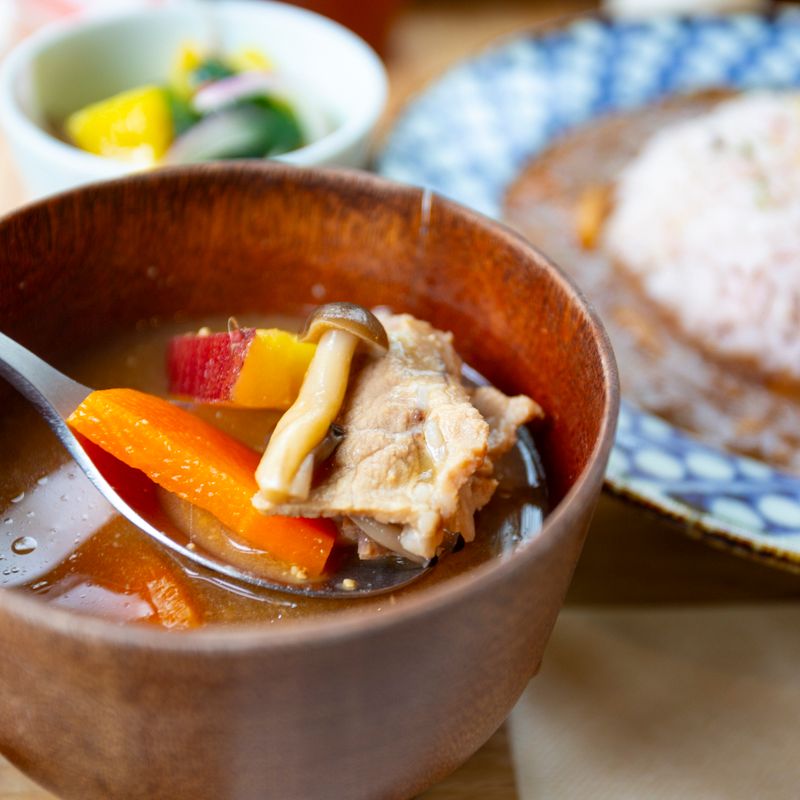
Japanese Dashi Shiitake Fried Rice
A Japanese-inspired fried rice built on umami-rich dashi broth and earthy shiitake mushrooms. Day-old rice is stir-fried with ginger, garlic, and green onions, then finished with a light soy glaze and sesame oil for a savory side dish that pairs beautifully with grilled fish, chicken, or vegetables.
- Prep
- 15 min
- Cook
- 12 min
- Total
- 27 min
- Makes
- 4 servings (about 1 cup each)
Steps
Before you start
- Use day-old cooked rice, chilled, so each grain stays separate during frying
- Have all ingredients prepped and within arm's reach before you start cooking
- Slice shiitake mushrooms no thicker than ¼ inch so they cook quickly
Mix dashi sauce
- In a small bowl, whisk together the dashi broth (¼ cup / 60 ml), soy sauce (1.5 tablespoons / 23 ml), and mirin (1 tablespoon / 15 ml).
- Set aside.
+ Show details− Hide details
Ready when: mixture is well combined and homogeneous
Tip: Mixing the sauce ahead prevents lumps from forming when it hits the hot rice.
Heat oil and cook mushrooms
- Set a large wok or 12-inch skillet over medium-high heat.
- Add 3 tablespoons (45 ml) neutral oil.
- Once shimmering, add the sliced shiitake mushrooms (6 oz / 170 g) and cook, stirring occasionally, for 4–5 minutes until they soften and release their moisture and begin to brown at the edges.
+ Show details− Hide details
Ready when: mushrooms are tender with light golden edges and have released their liquid
Tip: Do not stir constantly; let mushrooms sit briefly to develop color and deepen umami flavor.
Add aromatics
- Add the minced ginger (1 tablespoon / 15 g) and minced garlic (2 cloves / 10 g) and cook, stirring constantly, for 30 seconds until fragrant.
+ Show details− Hide details
Ready when: ginger and garlic are fragrant and just beginning to brown
Tip: Keep the heat high and move quickly so the aromatics don't burn.
Add rice and break up clumps
- Add the chilled day-old rice (3 cups / 600 g), breaking it apart as you add it.
- Stir and toss continuously for 2 minutes, pressing the rice against the sides of the wok to separate any clumped grains.
- The rice should become lighter in color and each grain distinct.
+ Show details− Hide details
Ready when: rice grains are separated, heated through, and lighter in color
Tip: Pressing the rice against the wok sides helps break up compacted clumps. Don't let it stick.
Add green onion whites and toss
- Add the sliced white and light green parts of the green onions (about 2 tablespoons / 15 g) and toss to combine for 30 seconds.
+ Show details− Hide details
Ready when: green onion pieces are scattered throughout the rice and softened slightly
Tip: Save the dark green tops for garnishing at the end for brightness and color.
Pour sauce and toss to coat
- Reduce heat to medium.
- Pour the dashi sauce mixture over the rice and immediately begin tossing and stirring, making sure the liquid reaches all the rice.
- Continue for 2 minutes until the sauce is evenly distributed and absorbed, and the rice takes on a light, glossy finish.
+ Show details− Hide details
Ready when: sauce is fully absorbed, rice is glossy and no liquid pools at the bottom of the wok
Tip: Keep stirring to prevent sticking and ensure even seasoning. Lower heat so the sauce clings rather than sputters away.
Finish with sesame oil and season
- Remove from heat and drizzle with sesame oil (1 teaspoon / 5 ml).
- Toss gently to distribute.
- Taste and adjust with kosher salt and white pepper as needed.
+ Show details− Hide details
Ready when: sesame oil is evenly distributed and seasoning is balanced
Tip: Add sesame oil off the heat so its delicate aroma isn't cooked away.
Garnish and serve
- Transfer to a serving bowl or individual plates.
- Garnish with the reserved dark green sliced green onion tops.
- Serve immediately while warm.
+ Show details− Hide details
Tip: The dark green garnish adds a fresh, oniony bite that contrasts with the rich, savory rice.
Good to know
Tips
- Day-old rice is essential: freshly cooked rice is too moist and will clump. If you only have warm rice, spread it on a sheet pan, refrigerate for at least 2 hours, and break it apart before using.
- Do not rush the mushroom cooking step. Letting shiitake brown and caramelize develops their natural umami compounds and creates deeper flavor.
- If your rice seems too dry after adding the sauce, it may have been stored uncovered in the fridge. In that case, increase the dashi to ⅓ cup (80 ml) and adjust soy sauce and mirin proportionally.
- Serve immediately after finishing. Fried rice waits for no one—it firms up and becomes less appealing as it cools.
Storage & reheating
Store in an airtight container in the refrigerator for up to 3 days. Reheat in a wok or skillet over medium heat, stirring occasionally and adding a splash of dashi or water if the rice seems dry, until warmed through (3–4 minutes). Do not freeze; reheating fried rice that has been frozen and thawed can result in mushy texture.
Substitutions
- dashi broth, instant or homemade → vegetable or chicken broth. Use the same amount. The umami depth will be less pronounced, but the dish will still be flavorful. Instant dashi powder mixed with water is an easy alternative.
- fresh shiitake mushrooms → cremini or oyster mushrooms. Use the same weight. Shiitake offers the most umami, but cremini are milder and oyster mushrooms cook quickly. Avoid button mushrooms, which lack depth.
- mirin (sweet rice wine) → 1 teaspoon honey or agave syrup. Mirin adds mild sweetness and body. Honey or agave are acceptable but will not provide the same subtle richness; reduce to ¾ teaspoon if substituting.
- green onions (scallions) → fresh chives or the white parts of a leek, finely sliced. Green onions are traditional, but chives add a gentler onion flavor. Leeks provide more sweetness and body if cooked briefly in the rice.
More fried rice
See all →


Find more like this
- Meal
- Dinner
- Cuisine
- Japanese
- Main ingredient
- Leftover Rice
- Method
- Stovetop