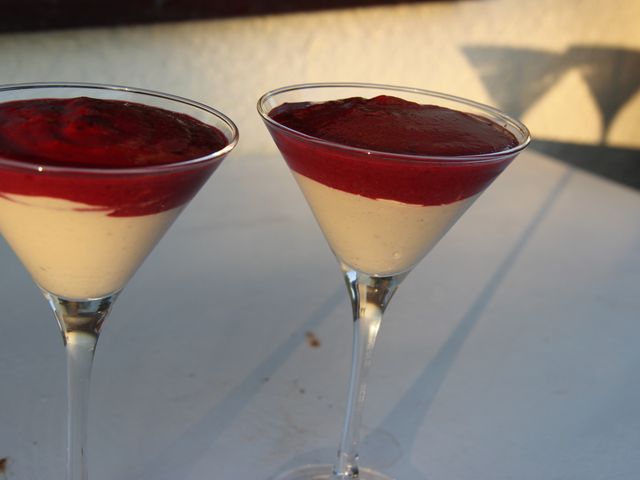
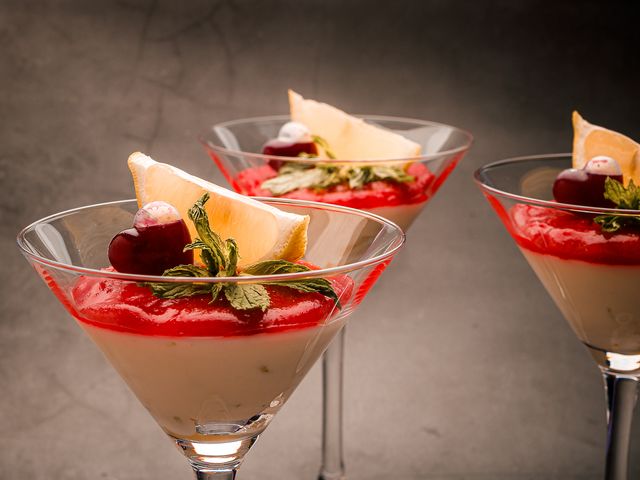
Italian Zabaglione with Candied Orange and Pistachio
A light, luxurious Italian egg mousse flavored with sweet Marsala wine, whisked until thick and pale over gentle heat. Studded with jewel-bright candied orange peel and toasted pistachios for bright citrus notes and nutty crunch. This silky dessert is best served warm and fluffy, within an hour of making.
- Prep
- 10 min
- Cook
- 10 min
- Wait
- 5 min
- Total
- 25 min
- Makes
- 4 servings (about 2/3 cup each)
Steps
Before you start
- Bring egg yolks to room temperature for best emulsification—set out 30–60 minutes ahead if chilled
- Measure and chop all ingredients (mise en place) before you start heating
- Set up your double boiler so the water doesn't touch the bottom of the upper bowl
- Have an instant-read thermometer nearby (optional but recommended for food safety verification)
Set up double boiler
- Pour 1–2 inches (2.5–5 cm) of water into the bottom pot of your double boiler and bring to a gentle simmer over medium-high heat.
- The water should not touch the bottom of the upper bowl once it's in place.
- If you don't have a double boiler, create one by setting a heatproof bowl on top of a pot of simmering water, making sure the bowl rim sits safely above the water level.
+ Show details− Hide details
Ready when: Gentle steam rising from water; occasional bubbles around the edges
Tip: Never let the water boil hard—too much heat will cause the egg yolks to scramble rather than emulsify into a mousse.
Combine base ingredients
- Place the upper bowl of the double boiler over the simmering water.
- Add the 6 large egg yolks, 1/4 cup (50g) granulated sugar, and 1/4 cup (60ml) Marsala wine to the bowl.
+ Show details− Hide details
Ready when: All ingredients combined in the bowl over gently simmering water
Whisk until thick and paleOven 160°F / 70°C
- Using a whisk or electric mixer on medium speed, whisk the egg mixture continuously for 6–8 minutes.
- The texture will transform from pale yellow to a much lighter, fluffier mousse.
- You'll see the volume increase noticeably—it should roughly double or triple.
- The mixture should become thick, creamy, and ribbony when you lift the whisk.
- If using a thermometer, the mixture should reach 160°F (71°C) for food safety.
- Adjust the heat to maintain a gentle, steady simmer; reduce to medium if the water boils hard.
+ Show details− Hide details
Ready when: Pale, thick, and fluffy; roughly doubled in volume; reaches 160°F (71°C) internal temperature; mixture holds ribbons when dripped from whisk
Tip: If whisking by hand, keep a steady, firm rhythm to incorporate air evenly. If using a mixer, avoid the highest speed to prevent splashing. Don't rush—the volume increase comes from air incorporation, which takes time.
Cool slightly off heat
- Remove the bowl from the double boiler and set it on the counter.
- Continue whisking gently for 1–2 minutes as the mixture cools slightly.
- The zabaglione will thicken further and become even fluffier as the temperature drops.
+ Show details− Hide details
Ready when: Slightly cooler to the touch but still thick, fluffy, and mousse-like
Fold in candied orange and pistachios
- Using a rubber spatula, gently fold half of the chopped candied orange peel (about 3 tablespoons or 25g) and half of the chopped pistachios (about 2 tablespoons or 15g) into the zabaglione.
- Use gentle folding motions—cut down through the center, slide the spatula across the bottom, and fold over—to keep the airy texture intact.
- Stop as soon as the pieces are evenly distributed throughout.
+ Show details− Hide details
Ready when: Candied orange and pistachios evenly distributed; mousse remains light and fluffy
Tip: Avoid overmixing—use a spatula, not a whisk, and fold gently so you don't deflate the mousse.
Spoon into glasses and serve
- Divide the zabaglione evenly among 4 serving glasses or bowls (about 2/3 cup or 160 ml per serving).
- Top each serving with the remaining candied orange peel (about 1 tablespoon or 12g) and chopped pistachios (about 2 teaspoons or 8g).
- Serve immediately while warm and fluffy.
+ Show details− Hide details
Ready when: Zabaglione portioned into glasses and garnished with candied orange and pistachios
Tip: For best texture, serve within 5–10 minutes of making. If you prefer a chilled version, cover and refrigerate for up to 2 hours before serving (the mousse will gradually deflate but remains delicious).
Good to know
Tips
- Zabaglione depends on reaching 160°F (71°C) to ensure food safety. If you have an instant-read thermometer, check at the end of whisking. If not, the texture cues—pale, thick, ribbony, noticeably increased volume—are reliable indicators that the temperature has been reached after 6–8 minutes of steady whisking.
- The mousse's success relies on continuous air incorporation. Keep your whisking rhythm steady and firm if doing it by hand; an electric mixer does this more easily and consistently.
- Serve zabaglione in chilled glasses or bowls for a beautiful temperature and texture contrast between the warm, fluffy mousse and the cool glass.
- Marsala wine is traditional and has a distinctive warm, nutty flavor. If you substitute another wine, don't skip the Marsala entirely—it's part of what makes zabaglione special. If you must skip it, try dry sherry or port for similar depth.
Make ahead
Zabaglione is best served fresh within 1–2 hours. You may prepare the candied orange peel and pistachios earlier in the day and store them separately in airtight containers. Make the zabaglione itself just before serving for optimal fluffy texture.
Storage & reheating
Room temperature: Serve immediately or within 1 hour while still warm. Do not leave at room temperature beyond 2 hours. | Refrigerator: Cover with plastic wrap and refrigerate for up to 8 hours. The mousse will gradually deflate, but is still tasty served cold. Do not reheat. | Freezer: Not recommended; freezing damages the mousse structure irreparably.
Substitutions
- sweet Marsala wine → Dry sherry, port wine, or sweet white wine (Sauternes or Moscato). Use the same amount; flavor will differ but the technique remains the same. Marsala has a distinctive nutty quality that's hard to replicate, but any sweet fortified wine works.
- candied orange peel → Candied lemon peel, candied ginger, or candied citron. Use the same amount. Lemon peel gives more tartness, ginger adds spice, and citron is milder. Adjust garnish according to taste.
- shelled pistachios → Toasted hazelnuts, blanched almonds, or roasted walnuts, roughly chopped. Use the same amount. Each nut brings a different flavor: hazelnuts are rich, almonds are mild, walnuts are earthy.
- large egg yolks → Pasteurized egg yolks (liquid or powder, reconstituted). Use if concerned about raw or undercooked eggs. Note: the warm double-boiler method reaches 160°F and eliminates food safety concerns with fresh eggs from reliable sources.