Italian Calabrian Nduja and Ricotta Pizza
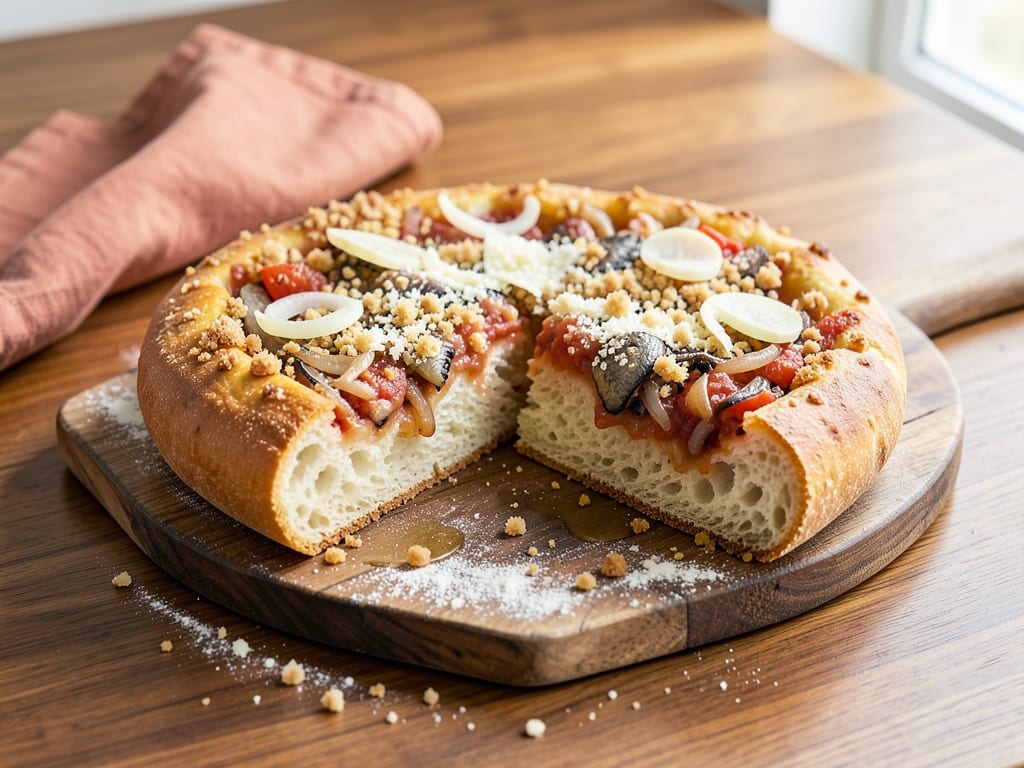
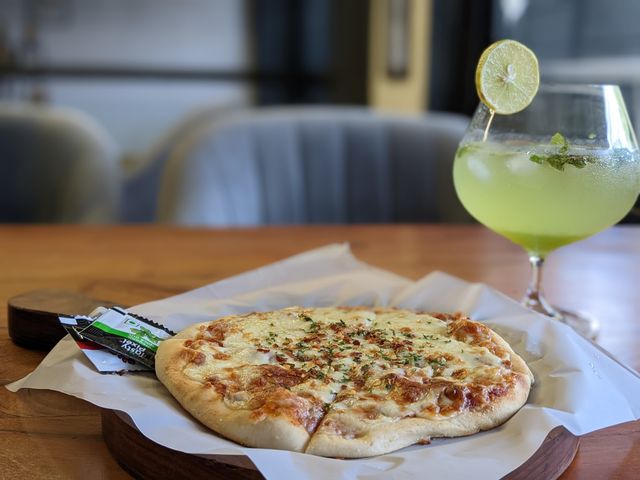
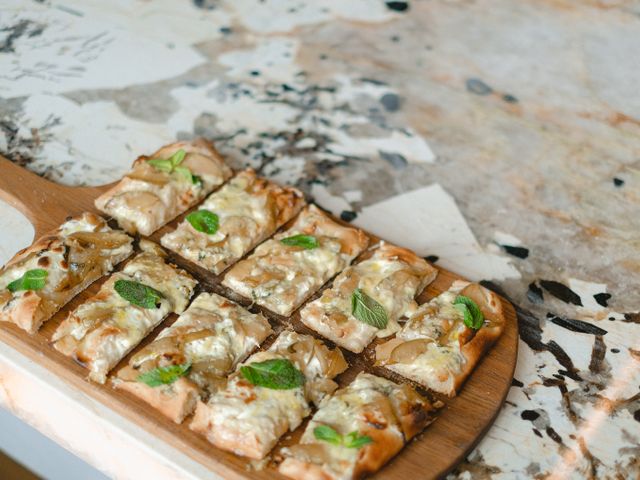
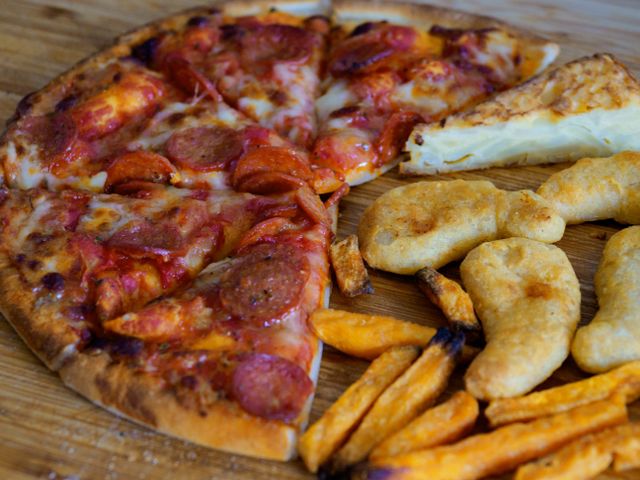
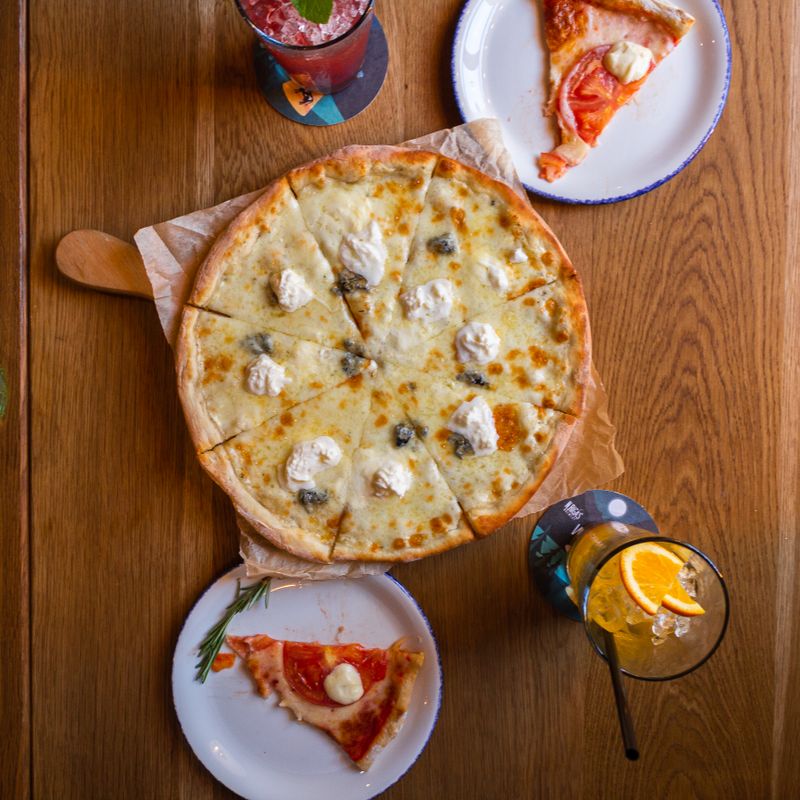
A Calabrian-inspired pizza featuring spicy, aromatic nduja spread over a tomato base, finished with dollops of creamy ricotta and a drizzle of hot chili oil. Wood-fired or home-oven friendly, this pizza balances the rich funk of nduja with cool, tangy ricotta and just enough heat to make your lips tingle.
- Prep
- 30 min
- Cook
- 15 min
- Wait
- 1 hr 30 min
- Total
- 2 hr 15 min
- Makes
- 4 pizzas (one 12-inch / 30 cm pie each)
Steps
Before you start
- Preheat wood-fired oven to 900°F (480°C) or home oven to 500°F (260°C) for 30 minutes before baking
- Bring ricotta to room temperature 30 minutes before assembly
- Have all components prepped and within arm's reach—pizza comes together quickly at high heat
Mix dough
- In a large mixing bowl, whisk together 440 g bread flour, 3 g instant yeast, and 9 g fine sea salt.
- Create a well in the center and pour in 300 ml warm water (90°F / 32°C) and 30 ml olive oil.
- Using a wooden spoon or dough hook, mix until a shaggy dough forms, 1–2 minutes.
+ Show details− Hide details
Ready when: Dough is shaggy and all flour is moistened
Tip: Add water slowly—dough should be slightly sticky but hold together; you may not need all 300 ml depending on flour hydration.
Knead dough (if by hand)
- Turn dough onto a lightly floured work surface.
- Knead for 8–10 minutes by hand until smooth and elastic, or use a stand mixer with dough hook for 5–6 minutes on medium speed.
- Dough should be tacky but not sticky to the touch.
+ Show details− Hide details
Ready when: Dough springs back slowly when poked and feels smooth and slightly elastic
Tip: Don't overwork—stop when dough is smooth; overworking develops too much gluten and makes crust tough.
First rise
- Lightly oil the mixing bowl and return dough to it, turning to coat.
- Cover with a damp kitchen towel or plastic wrap.
- Let rise at room temperature (68–72°F / 20–22°C) for 60–90 minutes until nearly doubled in size.
+ Show details− Hide details
Ready when: Dough has increased in volume by about 60–80% and feels airy when poked
Tip: Faster rise in a warm kitchen, slower in a cool one. Poke the dough gently; it should not spring back immediately.
Divide and shape
- Turn dough onto a lightly floured surface and divide into 4 equal pieces (about 200 g each).
- Gently form each into a tight ball, tucking edges under.
- Place on a floured sheet pan, cover loosely with plastic wrap, and let rest for 15 minutes at room temperature.
+ Show details− Hide details
Ready when: Balls are plump and slightly jiggly when moved
Tip: Don't skip the rest—it makes shaping much easier. Handle dough gently to preserve air pockets.
Make tomato base
- In a small bowl, combine 240 ml drained crushed San Marzano tomatoes, 2 minced garlic cloves, and 1 g dried oregano.
- Season very lightly with fine sea salt.
- Mix gently.
- Set aside.
+ Show details− Hide details
Ready when: Tomatoes are evenly mixed with garlic and oregano
Tip: Don't over-salt the sauce; nduja and ricotta will add saltiness. Drain tomatoes well so the crust isn't soggy.
Prepare chili oil
- In a small bowl, combine 45 ml extra-virgin olive oil and 2 g Calabrian chili flakes (or Aleppo pepper).
- Stir to combine and set aside.
- The oil will infuse as it sits.
+ Show details− Hide details
Ready when: Chili flakes are evenly distributed in oil
Tip: Warm oil slightly before serving for better flavor extraction, but don't overheat or chili flakes will turn bitter.
Preheat ovenOven 500°F / 260°C
- Place a pizza stone or steel on the middle or lower rack of your oven.
- For wood-fired oven: preheat to 900°F (480°C).
- For home oven: preheat to 500°F (260°C).
- Allow at least 30 minutes for the stone to heat through.
+ Show details− Hide details
Ready when: Stone is very hot (carefully hold your hand 2 inches above it—you should feel intense heat immediately)
Tip: A properly heated stone is crucial for a crispy crust. Don't skip this step or your pizza will be doughy.
Stretch first pizza
- Lightly dust a pizza peel or baking sheet with flour.
- Take the first dough ball and gently stretch it into a thin 12-inch (30 cm) round, about ¼ inch (6 mm) thick, leaving the edges slightly thicker for crust.
- Place on the peel.
+ Show details− Hide details
Ready when: Dough is stretched thin and even with a slightly thicker rim
Tip: Work quickly and gently. If dough springs back, let it rest 2–3 minutes and try again. Don't use a rolling pin—you'll deflate the air.
Top first pizza
- Spread about 4 tbsp (60 ml) of the tomato base evenly over the dough, leaving ½ inch (1.3 cm) border.
- Dollop about 1.25 oz (35 g) of room-temperature nduja in scattered spoonfuls over the sauce.
- Dollop about 3 oz (85 g) of ricotta in spoonfuls between the nduja.
- Don't press down—let toppings sit on the surface.
+ Show details− Hide details
Ready when: Toppings are evenly distributed; dough border is visible
Tip: Resist the urge to load toppings—less is more for an authentic Calabrian pizza. Overloading makes the crust soggy.
Bake first pizzaOven 500°F / 260°C
- Carefully transfer the stretched dough with toppings from peel to hot stone by sliding it off in one quick motion.
- Bake in a 500°F (260°C) home oven for 12–14 minutes, or in a wood-fired oven at 900°F (480°C) for 2–3 minutes.
- The crust should be golden and lightly charred at the edges.
+ Show details− Hide details
Ready when: Crust is golden to light brown with light char spots; cheese is melted and ricotta is warm
Tip: Don't open the oven door constantly—let heat circulate. In a wood-fired oven, watch closely as it bakes very fast. Rotate the pizza halfway if using a home oven.
Finish and serve
- Remove pizza from oven using a peel.
- Drizzle lightly with chili oil (about 1 tsp per pizza), scatter torn basil leaves if using, and season with a tiny pinch of fleur de sel and freshly ground black pepper.
- Repeat with remaining 3 dough balls and toppings.
- Serve hot.
+ Show details− Hide details
Ready when: Pizza is topped and ready to eat
Tip: Basil bruises quickly in heat—add it only right before serving. Let pizzas cool for 30 seconds before slicing so filling doesn't spill out.
Good to know
Tips
- Nduja and ricotta must be at room temperature before assembly—cold nduja won't spread easily and cold ricotta won't meld into the warm pizza.
- San Marzano tomatoes are essential; their low acidity and delicate sweetness balance nduja's spice. Don't use other canned tomato varieties.
- If your home oven has a convection setting, use it—it circulates heat more evenly and may shorten baking to 10–12 minutes.
- Invest in a pizza steel or heavy baking stone. A flimsy sheet pan will lead to an undercooked, soggy crust.
Make ahead
Dough can be mixed and refrigerated up to 24 hours ahead. Remove from fridge 30 minutes before shaping and proofing. Tomato base and chili oil can be made up to 2 days ahead; store covered in the fridge. Ricotta should be brought to room temperature before serving.
Storage & reheating
Leftover pizza is best eaten warm same day or within 1 hour. Reheat individual slices in a 400°F (200°C) oven for 3–4 minutes, or briefly in a skillet over medium heat until the crust is crispy again. Don't refrigerate—the crust will become tough. Not suitable for freezing after baking due to ricotta texture.
Substitutions
- Calabrian nduja → Calabrian chili paste or harissa mixed with ½ tsp softened salami or guanciale. Won't replicate nduja's exact funk and texture, but provides similar spicy, rich flavor. Use about 140 g total.
- whole-milk ricotta cheese → Fresh burrata (pulled into chunks) or whipped mascarpone lightened with 2 tbsp whole milk. Burrata will be creamier; mascarpone will be richer. Both work but taste noticeably different. Use same weight.
- bread flour → All-purpose flour (12% protein minimum). Crust will be slightly less chewy and rise slightly less. Add 15–20 ml less water since all-purpose is drier.
- Calabrian chili flakes (or Aleppo pepper) → Aleppo pepper, or a mix of smoked paprika and crushed red pepper flakes. Aleppo is milder and fruitier; this mix gives smoke and heat without intense burn.