Indian-Spiced Baked Pasta with Paneer and Spinach
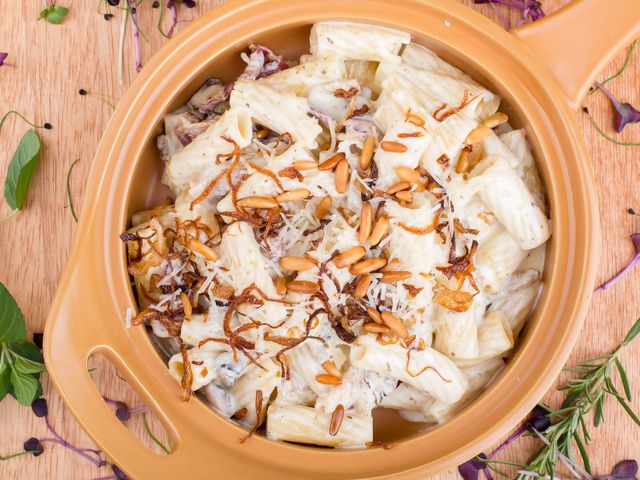
A fusion baked pasta dish combining Italian comfort food with Indian spices. Tender penne is tossed with a warmly spiced tomato-coconut sauce enriched with cream, wilted fresh spinach, and dotted with cubes of paneer cheese, then baked until bubbly and golden. The garam masala, cumin, and coriander create an aromatic, deeply spiced base while the paneer stays creamy and mild against the spiced sauce.
- Prep
- 20 min
- Cook
- 36 min
- Wait
- 10 min
- Total
- 1 hr 6 min
- Makes
- 6 servings (serves 4–6)
Steps
Before you start
- Preheat your oven to 375°F (190°C) about 15 minutes before you plan to bake.
- Read through all the steps so you understand the timing and can prep components without rushing the sauce.
- Measure and mince all aromatics (onion, garlic, ginger) before you start cooking.
- Have your 9×13 inch (23×33 cm) baking dish ready and lightly greased.
Cook penne until al dente
- Bring a large pot of salted water (about 6 quarts / 6 liters) to a rolling boil.
- Add the penne pasta and cook according to package directions but reduce the time by 1-2 minutes (you want it just shy of fully tender since it will cook more in the oven).
- This usually takes 8-10 minutes.
- Drain in a colander and set aside.
+ Show details− Hide details
Ready when: pasta bends easily but still has slight firmness when bitten
Tip: Don't overcook; the pasta will soften more in the oven. Test a piece 1-2 minutes before the package time suggests.
Build the spice base
- Heat 2 tablespoons of ghee in a large skillet over medium-high heat.
- Once shimmering, add the diced onion and cook, stirring frequently, for 4-5 minutes until softened and lightly golden.
- Add the minced garlic and ginger, stir constantly for 1-2 minutes until very fragrant.
- Then add the garam masala, ground cumin, ground coriander, turmeric, and chili powder.
- Stir this mixture constantly for about 30 seconds—this blooming step releases the essential oils in the spices and prevents them from tasting raw or harsh in the final dish.
+ Show details− Hide details
Ready when: onion is softened and light golden; spices smell deeply fragrant but not burnt
Tip: Watch carefully during blooming—spices can burn in seconds. If you smell burnt notes, discard and start fresh.
Simmer tomato and coconut
- Pour the canned tomato sauce into the skillet and add the coconut milk, stirring well to combine.
- Season with salt to taste (about 1/2 to 1 teaspoon to start; adjust later).
- Bring to a gentle simmer over medium heat and let bubble softly for 3-4 minutes.
- The sauce will deepen in color slightly and become more cohesive.
+ Show details− Hide details
Ready when: sauce simmers with gentle bubbles; color deepens slightly
Tip: Taste now and adjust salt and heat; easier to add spice or seasoning than remove it.
Add spinach and cream to sauce
- Add the chopped fresh spinach to the skillet in two batches, stirring each batch down before adding the next.
- This usually takes 2-3 minutes as the leaves wilt completely.
- If using the optional heavy cream (recommended for richness), pour it in now and stir to combine.
- Cook for another 1-2 minutes on medium heat, stirring gently.
- The sauce should be creamy, fragrant, and have no raw spinach pieces remaining.
+ Show details− Hide details
Ready when: all spinach is completely wilted and dark green; no bright raw pieces remain
Tip: Add spinach in batches to prevent clumping; stir each batch down before adding more.
Toss pasta with sauce
- Remove the skillet from heat.
- Gently add the drained cooked pasta to the sauce and, using a wooden spoon or silicone spatula, fold everything together until every strand of pasta is evenly coated.
- There should be no dry pasta visible.
- Taste again and adjust salt or chili powder if needed.
- The mixture should smell aromatic and taste well-seasoned.
+ Show details− Hide details
Ready when: pasta is evenly coated; no dry pieces visible; sauce clings to strands
Tip: Fold gently to avoid breaking the pasta. If the mixture looks dry, add a splash of pasta water or cream.
Layer pasta and paneer in dish
- Pour half of the pasta mixture into a greased 9×13 inch (23×33 cm) baking dish and spread into an even layer.
- Scatter about half of the paneer cubes evenly over the top.
- Add the remaining pasta mixture and smooth gently.
- Arrange the rest of the paneer cubes across the top in a single scattered layer—keep these cubes visible and exposed so they toast lightly during baking.
+ Show details− Hide details
Ready when: dish is filled evenly; paneer cubes are distributed visibly on top
Tip: Don't stir the paneer into the pasta; keep the top layer cubes visible for better browning and texture.
Bake in preheated ovenOven 375°F / 190°C
- Place the assembled baking dish into the preheated 375°F (190°C) oven.
- Bake for 20-25 minutes until the top is light golden brown and the edges are bubbling vigorously.
- The paneer on top should be lightly toasted but not darkened.
- If you see the top browning too fast, cover loosely with parchment paper or foil.
+ Show details− Hide details
Ready when: top is golden; edges bubble vigorously; paneer is light tan and warm
Tip: Check at 18 minutes; every oven varies. The dish is done when edges bubble, not when the center looks fully set.
Rest and garnish
- Remove the baking dish from the oven and let rest, uncovered, for 10 minutes.
- This allows the sauce to set and firm up, making the dish easier to serve and letting flavors meld.
- While resting, crush about 1 teaspoon of dried fenugreek leaves (kasuri methi) if using and sprinkle over the top.
- You can also dust with a pinch of additional garam masala for a final aromatic boost, or garnish with fresh cilantro or chopped green onions if desired.
+ Show details− Hide details
Ready when: sauce has set slightly and no longer runs freely; paneer is firm but creamy inside
Tip: Don't skip resting—it ensures the sauce sets and makes serving much neater.
Good to know
Tips
- Garam masala is essential here—it's not just heat but a warm blend of cinnamon, cloves, cardamom, and cumin that makes this distinctly Indian. Use a fresh container (opened within 6 months) for best flavor.
- Paneer is mild and doesn't melt, so choose a firm variety for baking; softer brands will fall apart. Look for it in the Indian or specialty cheese section.
- Don't skip the 10-minute rest. It lets the sauce firm up, makes plating easier, and allows flavors to harmonize.
- This is forgiving—if the sauce looks thick, thin with a splash of pasta water or cream. If too thin, simmer longer before combining pasta.
Make ahead
The pasta-sauce mixture (through Step 5) can be made up to 2 days ahead and refrigerated in an airtight container. Assemble the baking dish while cold and add 3-5 minutes to baking time. You can also fully assemble the dish, cover, and refrigerate overnight, then bake directly from the fridge (add 5-10 minutes to baking time). The baked dish freezes well for up to 3 months; reheat gently in a 350°F (175°C) oven for 15-20 minutes, covered, until warmed through.
Storage & reheating
Refrigerate leftovers in an airtight container for up to 4 days. Reheat on the stovetop over medium-low heat or in a 325°F (163°C) oven, loosely covered, for 10-15 minutes until warmed through. Do not microwave, as the paneer may toughen. Freeze in an airtight freezer-safe container for up to 3 months; thaw overnight in the fridge before reheating.
Substitutions
- paneer cheese → firm tofu, pressed and cubed. Tofu absorbs flavors similarly to paneer. Press well to remove excess moisture before cubing, then treat identically.
- heavy cream or whipping cream → Greek yogurt or sour cream. Stir in after removing from heat to prevent curdling. Adds pleasant tanginess. Works best if used from the start instead of cream.
- unsweetened coconut milk → cashew cream or heavy cream. You'll lose the coconut flavor but gain richness. Use the same volume (1/2 cup / 120 ml).
- penne pasta → rigatoni, fusilli, or other short pasta. Any short pasta shape works well. Avoid long pasta like spaghetti, which distributes unevenly in a baked dish.