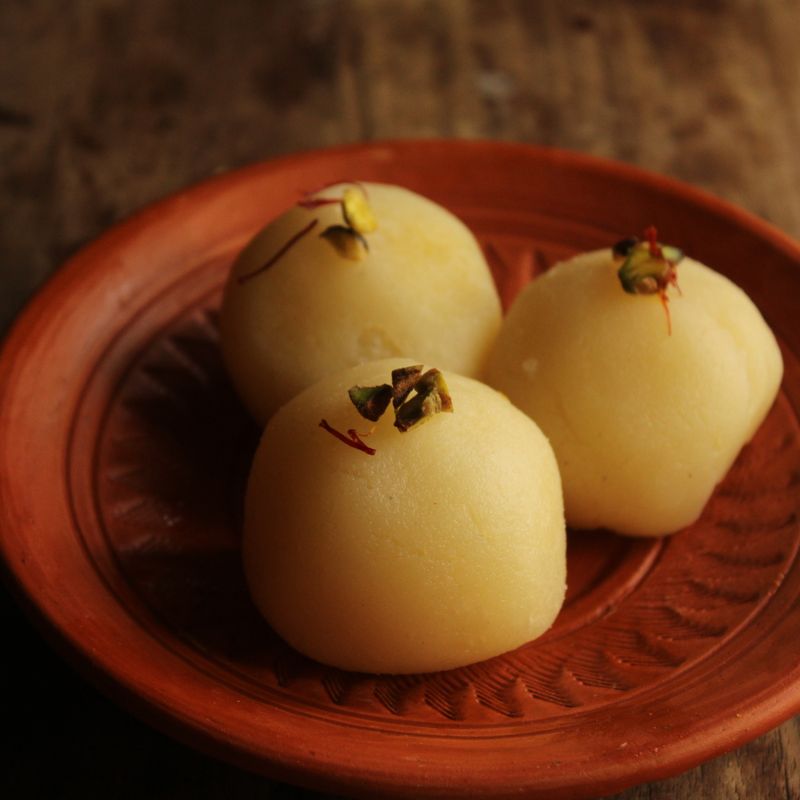
Indian Rasgulla: Cottage Cheese Balls in Cardamom Syrup
Rasgulla are soft, spongy cottage cheese balls poached in a light cardamom-scented sugar syrup, creating an iconic Indian dessert that is both delicate and deeply aromatic. Made from fresh paneer kneaded with semolina and a touch of cream, each ball absorbs the sweetened liquid as it cooks, becoming pillowy and intensely flavorful. Traditionally served chilled, they're perfect for special occasions and taste even better the next day once fully soaked.
- Prep
- 35 min
- Cook
- 35 min
- Wait
- 4 hr
- Total
- 5 hr 10 min
- Makes
- 12 rasgulla balls (serves 4–6)
Steps
Before you start
- Make the paneer 1–2 hours ahead (or buy fresh paneer and drain it well)
- Have all ingredients measured and within arm's reach
- Use a 6–8 quart pot so the syrup doesn't boil over
- The paneer must be fresh and moist, not aged or crumbly
Make paneer if neededOven 180°F / 80°C
- If making fresh paneer: heat 1 quart (950 ml) whole milk to 180°F (82°C).
- Add 2 tablespoons (30 ml) fresh lemon juice or white vinegar, stirring gently.
- The milk will curdle within 30 seconds.
- Let rest off heat for 1 minute, then pour through a fine-mesh sieve lined with cheesecloth.
- Gather the cloth corners and hang over a bowl for 30–60 minutes until excess whey drains.
- Transfer the paneer to a clean kitchen towel and press under a weight (a heavy plate or cast-iron skillet) for another 15 minutes until firm but moist.
- The paneer is ready when it holds together but still feels slightly damp.
+ Show details− Hide details
Ready when: Paneer is firm but moist, not crumbly or dry
Tip: Fresh paneer is essential; aged or store-bought paneer that's too dry will result in grainy, dense rasgulla. Use it the same day it's made.
Knead the paneer mixture
- Crumble the cooled paneer onto a clean work surface.
- Using the heel of your palm, knead it for 2–3 minutes, working in the semolina, all-purpose flour, heavy cream, and baking soda.
- Knead until the mixture becomes smooth, homogeneous, and slightly sticky—like soft cookie dough.
- The baking soda will give the rasgulla their signature spongy texture.
- If the mixture feels dry, add 1 teaspoon of cream.
- If too sticky, dust with 1 teaspoon more flour.
+ Show details− Hide details
Ready when: Mixture is smooth, homogeneous, and slightly sticky like soft dough
Tip: Over-kneading makes rasgulla dense; stop as soon as the mixture comes together. A few visible crumbs are fine.
Shape the balls
- Wet your hands lightly with cool water.
- Take 1 heaping teaspoon (about 10 g) of the paneer mixture and roll it between your palms into a smooth, compact ball.
- Place each ball on a plate or baking sheet.
- You should get 12 balls.
- Cover with a damp cloth to prevent them from drying out until they go into the syrup.
+ Show details− Hide details
Ready when: All 12 balls are smooth, round, and compact
Tip: Keep your hands slightly damp and work quickly so the mixture doesn't crack. If a ball breaks, press the pieces back together and re-roll.
Make the cardamom syrup
- In a 6–8 quart heavy-bottomed pot, combine 6 cups (1440 ml) water and 3 cups (600 g) sugar.
- Bring to a boil over medium-high heat, stirring to dissolve the sugar.
- Once the mixture reaches a rolling boil and sugar is fully dissolved (about 3 minutes), add the lightly crushed cardamom pods.
- Reduce heat to medium and maintain a gentle, steady boil.
- The syrup should bubble steadily but not violently.
- Let it boil for 5 minutes to infuse the cardamom flavor, then taste—it should be fragrant and sweet with a hint of cardamom spice.
- (The syrup will thicken slightly as rasgulla cook and absorb liquid.)
+ Show details− Hide details
Ready when: Syrup boils, sugar is dissolved, and cardamom aroma is strong
Tip: Do not skip the cardamom infusion step; this is where the rasgulla get their signature flavor. If you prefer a lighter flavor, use only 4 cardamom pods.
Gently add rasgulla to syrup
- Once the syrup is at a rolling boil, carefully drop the paneer balls into the hot liquid one at a time, spacing them out so they have room to expand.
- Use a slotted spoon to gently slide each ball in, working slowly so the syrup doesn't stop boiling.
- All 12 balls should be submerged.
- Once all are in, they will initially sink.
- Within 30–45 seconds, they will begin to float to the surface as they expand from the heat and the baking soda reacts with the hot liquid.
+ Show details− Hide details
Ready when: All rasgulla float to the surface and have expanded
Tip: Do not drop all the balls at once or stir vigorously—they are delicate and will break. Gentle handling is crucial.
Poach the rasgulla
- Once all the rasgulla are floating, reduce the heat to medium so the syrup maintains a gentle, steady simmer—not a rolling boil, which will break them apart.
- Let them simmer undisturbed for 20–22 minutes.
- The rasgulla will continue to expand and become increasingly spongy as they absorb the syrup.
- They should feel soft and pillowy when done, with a slightly translucent appearance.
+ Show details− Hide details
Ready when: Rasgulla are soft, slightly translucent, and clearly expanded; they jiggle when moved
Tip: Maintain a gentle simmer throughout. A hard boil will make them break apart. If the syrup boils too vigorously, lower the heat a notch.
Cool in the syrup
- Carefully remove the pot from heat.
- Let the rasgulla cool in the hot syrup for 15 minutes (they will continue to absorb liquid and set).
- Using a slotted spoon, gently transfer the rasgulla along with the syrup into a large shallow bowl or container.
- Pour all the syrup over them, ensuring they are fully submerged.
- Let them continue to cool at room temperature for at least 2 hours (or until completely cool), then stir in the rose water.
- Cover and refrigerate for at least 3 hours (preferably overnight) before serving.
- The rasgulla will firm up slightly and taste even better the next day as they fully absorb the syrup.
+ Show details− Hide details
Ready when: Rasgulla are completely cool and have absorbed most of the syrup
Tip: Do not skip the cooling period. Cold rasgulla have the best texture and flavor. They can sit in the syrup in the fridge for up to 5 days.
Serve
- To serve, transfer 2–3 rasgulla per person to small bowls using a slotted spoon, and pour 2–3 tablespoons (30–45 ml) of the chilled syrup over each serving.
- If desired, drizzle a few drops of ghee on top for richness and traditional presentation.
- Serve chilled or at cool room temperature.
+ Show details− Hide details
Tip: Always serve rasgulla chilled with plenty of syrup. The syrup is essential to their texture and flavor.
Good to know
Tips
- The texture of the paneer determines the quality of your rasgulla. Fresh, moist paneer made that day or the previous day yields the most spongy, delicate balls. Aged, dry paneer from a vacuum-sealed package will result in dense, grainy rasgulla that don't improve even with long cooking.
- Do not over-knead the paneer mixture. The moment it becomes smooth and slightly sticky, stop. Over-kneading develops gluten in the flour and makes the balls tough rather than tender.
- Maintain a gentle, steady simmer when poaching. A hard boil will break the rasgulla apart. If you see them bouncing violently, lower the heat immediately.
- Rasgulla taste significantly better after they have been chilled for at least 3 hours (preferably overnight). The balls firm up slightly and fully absorb the syrup, making them more flavorful. Do not serve them warm or immediately after cooking.
Make ahead
Rasgulla can be made 1–2 days ahead. Prepare them through step 7 (cooling and chilling). They actually taste better the next day once fully soaked in syrup. Store covered in the refrigerator.
Storage & reheating
Room temperature: up to 6 hours in the syrup (not recommended). Refrigerator: up to 5 days covered in an airtight container with all the syrup. Freezer: up to 2 months in a freezer bag with syrup. To thaw: place in the refrigerator overnight, then let come to room temperature for 15 minutes before serving. Do not thaw at room temperature, as they will become soggy.
Substitutions
- rose water → omit and add an extra 3 cardamom pods during syrup infusion. If rose water is unavailable or you prefer a more cardamom-forward flavor, skip it entirely and use an additional 3 crushed cardamom pods in the syrup. The result will be more herbaceous and spiced rather than floral.
- fine semolina → use fine rice flour or additional all-purpose flour (1.5 tablespoons / 12 g). Both alternatives work, though semolina gives the most traditional texture. Rice flour will make the rasgulla slightly more delicate; extra all-purpose flour will make them slightly denser.
- heavy cream → whole milk or evaporated milk, same amount. Whole milk will produce slightly less creamy rasgulla but they will still be soft and good. Evaporated milk adds a subtle richness.
- green cardamom pods, lightly crushed → ½ teaspoon ground cardamom (use only 2–3 pods if you prefer), or ¼ teaspoon saffron threads steeped in 2 tablespoons (30 ml) warm milk. Ground cardamom loses flavor faster; add it after the syrup cools slightly or at the very end. Saffron creates a luxurious, golden version popular in some regions.
More puddings & custards
See all →



Find more like this
- Meal
- Dessert
- Cuisine
- Indian
- Main ingredient
- Cream Cheese
- Diet
- VegetarianHalal
- Method
- Stovetop
- Occasion
- PartiesFamily Gatherings