
Honey Soy Glaze
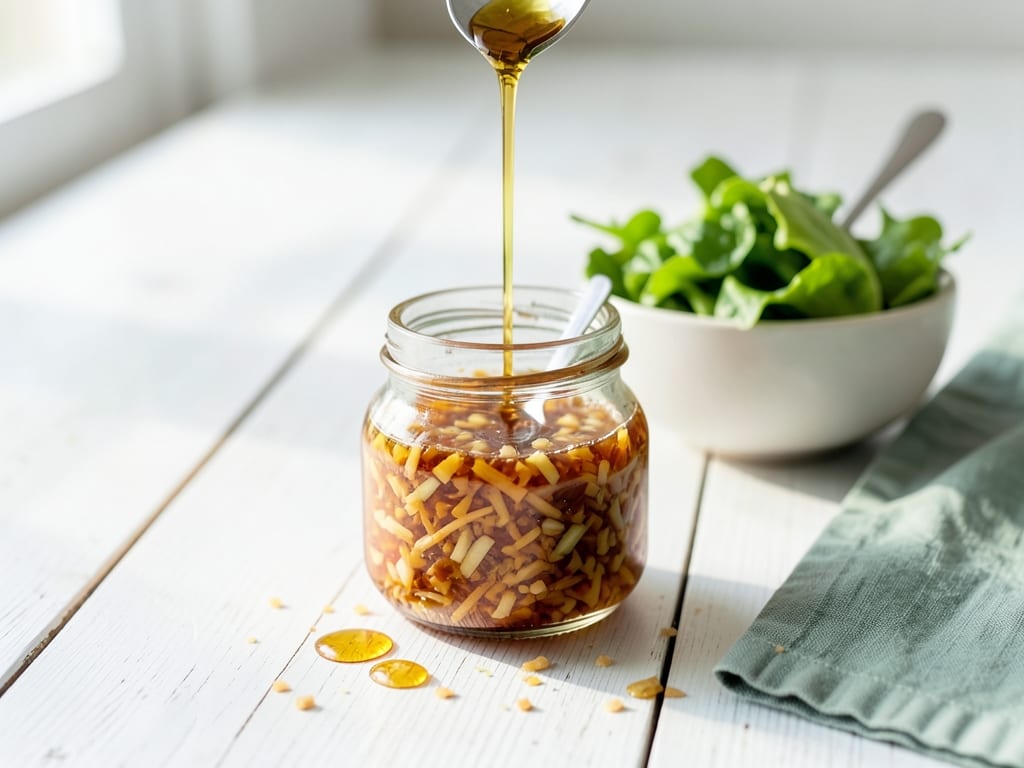
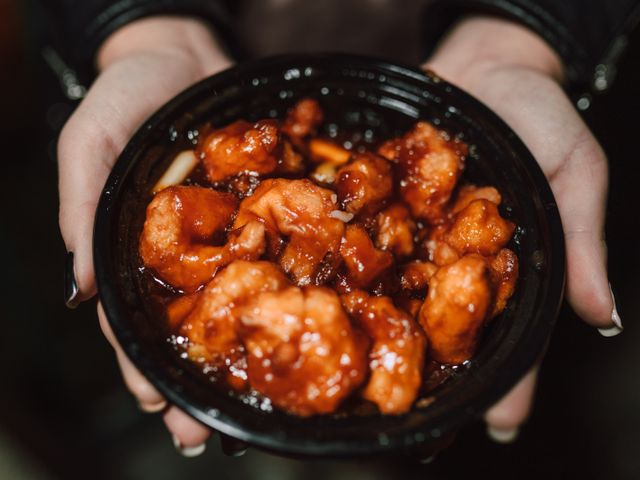
A glossy, balanced Asian glaze made by simmering soy sauce, honey, ginger, and garlic until it thickens into a shiny coating. Perfect for brushing over grilled chicken, roasted salmon, pork, or vegetables. The honey caramelizes slightly while the ginger and garlic infuse warmth and depth. Ready in under 15 minutes with no special skills required.
- Prep
- 5 min
- Cook
- 8 min
- Wait
- 2 min
- Total
- 15 min
- Makes
- About ¾ cup (180 ml)
Steps
Before you start
- Mince the garlic and ginger while the pan heats to save time
- Have all ingredients measured and ready before you start cooking—the glaze comes together quickly
- Use a small saucepan (about 1½ to 2 quarts) so the glaze thickens efficiently
Combine base ingredients
- Pour the soy sauce, honey, and rice vinegar into a small saucepan (1½ to 2 quarts).
- Stir once to combine.
- The mixture will look thin and loose—this is correct.
+ Show details− Hide details
Tip: Don't skip stirring—it ensures the honey is evenly distributed.
Add aromatics
- Add the minced ginger and minced garlic to the saucepan.
- Stir well until no clumps remain and the ingredients are evenly distributed throughout the liquid.
+ Show details− Hide details
Tip: Mince the garlic and ginger finely so they cook evenly and infuse flavor quickly.
Heat to a simmer
- Set the heat to medium-high.
- Bring the mixture to a simmer, stirring occasionally.
- You'll see small bubbles breaking the surface all over.
- This should take 2 to 3 minutes.
+ Show details− Hide details
Ready when: Small bubbles break the surface continuously; you may see wisps of steam
Tip: Don't let it boil violently—a steady simmer is all you need.
Make the slurry
- While the glaze simmers, mix the cornstarch with 1 tablespoon of cold water in a small bowl or cup, stirring until smooth and no lumps remain.
- This is your thickening slurry.
+ Show details− Hide details
Tip: Use cold water—warm water can make the slurry lumpy and harder to incorporate.
Thicken the glaze
- Reduce heat to medium.
- Pour the slurry into the simmering glaze while stirring constantly.
- Keep stirring for 1 to 2 minutes until the mixture thickens noticeably.
- The glaze should coat the back of a spoon and drip off slowly rather than running freely.
+ Show details− Hide details
Ready when: Glaze coats the back of a spoon and drips off slowly; the consistency is like thin pancake syrup
Tip: Don't stop stirring while adding the slurry, or you'll get lumps. If lumps do form, pour the glaze through a fine-mesh strainer.
Finish with sesame oil (optional)
- Remove from heat.
- Stir in the sesame oil if using, and add red pepper flakes to taste if you'd like a little heat.
- Taste and adjust seasoning—the glaze should be balanced between sweet, salty, and tangy.
+ Show details− Hide details
Tip: Sesame oil burns easily, so always add it off heat. A little goes a long way—start with ½ teaspoon.
Cool slightly
- Let the glaze sit in the pan for 2 minutes to cool slightly.
- It will continue to thicken a bit as it cools.
- Transfer to a bowl or jar if not using immediately.
+ Show details− Hide details
Ready when: Glaze is noticeably thicker and glossy when cooled to room temperature
Tip: Don't skip this resting time—it lets the starch fully hydrate so the glaze has the ideal silky texture.
Good to know
Tips
- This glaze is designed to be applied at the very end of cooking or used as a finishing sauce. If you brush it on before the last 2 minutes of grilling or roasting, the sugars can burn. For grilled chicken, brush it on in the final minute or two, or serve it on the side.
- If the glaze thickens too much as it cools, whisk in a teaspoon or two of warm water to bring it back to a pourable consistency. You want it thick enough to coat but thin enough to flow off a spoon.
- Scale this recipe up easily—the ratio holds. For a full cup of glaze, use 1 cup soy sauce, ½ cup honey, 6 tablespoons rice vinegar, 2 tablespoons ginger, 4 cloves garlic, and 2 tablespoons cornstarch mixed with 2 tablespoons water.
- Taste as you go. If your batch tastes too salty, add a touch more honey. Too sweet? Add a splash more vinegar. Asian cooking is about balance, and your palate is the best guide.
Make ahead
You can make this glaze up to 3 days ahead. Prepare through the cooling step, then transfer to an airtight container and refrigerate. Reheat gently in a small saucepan over medium-low heat, stirring occasionally, until it reaches the desired consistency again (about 2 to 3 minutes). If it seems too thick after refrigeration, whisk in 1 to 2 teaspoons of water to loosen it.
Storage & reheating
Room temperature: Glaze will keep in a covered bowl for up to 4 hours (though it's best used fresh). Refrigerator: Transfer to an airtight container and store for up to 3 days. The glaze may thicken slightly when cold; reheat gently to restore fluidity. Freezer: Not recommended—the cornstarch breaks down and the glaze separates when thawed. Best used fresh or within 3 days in the fridge.
Substitutions
- rice vinegar → apple cider vinegar or white vinegar. Use the same amount. Rice vinegar is milder, so apple cider vinegar may taste slightly sharper; reduce by ½ tablespoon if you prefer less tang.
- cornstarch → arrowroot powder. Use the same amount. Arrowroot creates a slightly glossier glaze and works well if you're avoiding corn. Mix with cold water the same way.
- honey → brown sugar or maple syrup. Use ¼ cup (50 g brown sugar or 60 ml maple syrup). Brown sugar won't dissolve as smoothly, so stir longer in step 1. Maple syrup adds a distinct flavor but works beautifully.
- soy sauce → tamari or coconut aminos. Use the same amount. Tamari is gluten-free; coconut aminos is slightly less salty and a touch sweeter. Both work—adjust salt or vinegar if needed to taste.



.jpg)