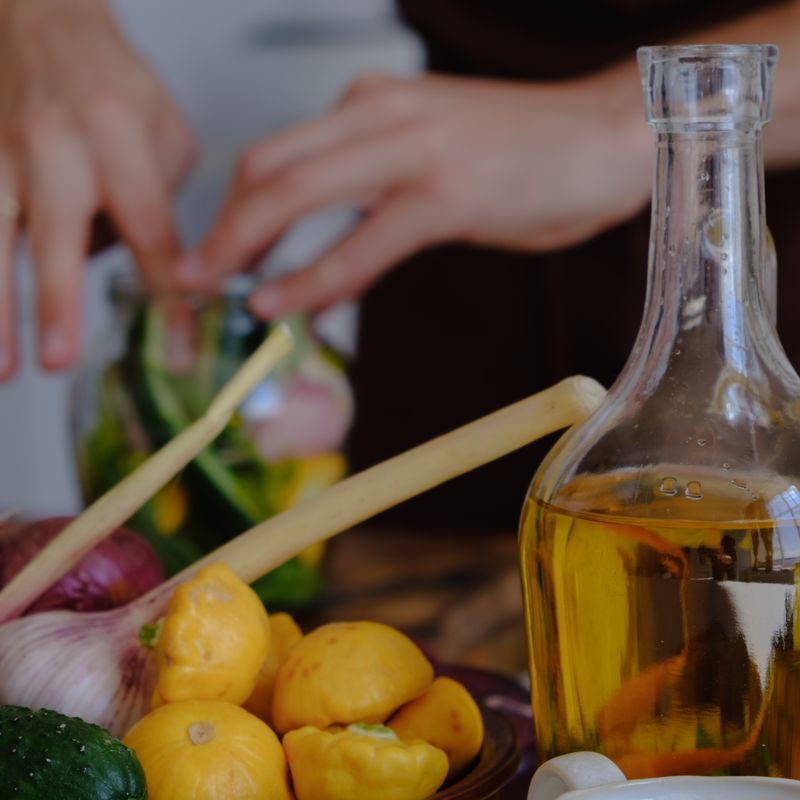
Caramelized Garlic Confit Oil
Silky, golden cloves of garlic mellowed by slow cooking in olive oil, infused with thyme and anchored with salt. This luxurious condiment transforms ordinary dishes—spread it on toast, drizzle over soups, toss with warm bread, or finish roasted vegetables. The garlic becomes sweet and jammy, the oil fragrant and herbaceous. Makes enough to keep in the pantry for weeks.
- Prep
- 10 min
- Cook
- 1 hr 30 min
- Wait
- 30 min
- Total
- 2 hr 10 min
- Makes
- About 1½ cups (360 ml) oil with garlic cloves
Steps
Before you start
- Have a clean glass jar ready for storage
- Use fresh, firm garlic cloves with no soft spots or sprouts
- Read through the timing—most is passive, but you'll check progress twice
Combine garlic and oil
- Pour the olive oil into a small heavy-bottomed saucepan (1½ to 2 quart / 1.5 to 2 L).
- Add the peeled garlic cloves, thyme sprigs, sea salt, and black pepper if using.
- Stir gently to coat the garlic and distribute the herbs and salt evenly throughout the oil.
+ Show details− Hide details
Tip: Do not skip the salt—it seasons the garlic and helps draw out moisture to accelerate caramelization.
Start slow cooking on low heat
- Set the saucepan over low heat.
- Bring the oil to a bare simmer—you should see tiny, slow bubbles rising from the garlic, but the oil should never roll at a boil.
- This should take 3 to 5 minutes.
- Once simmering gently, maintain this low, steady temperature throughout cooking.
+ Show details− Hide details
Ready when: Small, slow bubbles rising steadily from the garlic
Tip: Use low heat only—high heat will burn the garlic and turn the oil bitter instead of creating sweet caramel flavor.
Cook garlic until pale golden
- Let the garlic simmer gently, undisturbed, for 45 to 50 minutes.
- The cloves will begin to soften and gradually turn pale golden.
- Stir once or twice during this window to ensure even cooking, but resist the urge to stir too often—gentle heat and patience are key.
- The oil will stay mostly clear at this stage.
+ Show details− Hide details
Ready when: Garlic cloves are pale golden and very soft when pierced with a fork
Tip: If the oil smells sharp or burnt rather than sweet and mellow, turn the heat down further immediately.
Continue cooking until deep golden
- Continue simmering on low heat for another 30 to 40 minutes.
- The garlic will deepen to a rich, burnished gold and become completely tender—almost creamy inside when you press a clove.
- The oil will take on a subtle golden hue.
- You may notice the simmering slows as the garlic releases less moisture; this is normal.
+ Show details− Hide details
Ready when: Garlic is deep golden brown, creamy, and completely soft; oil smells sweet and savory
Tip: The color should be warm caramel, not dark brown or black. If it darkens too much, the flavor will turn bitter—cooler burners take longer but are safer.
Cool and rest
- Remove the saucepan from heat and let it cool to room temperature, about 20 to 30 minutes.
- Do not stir or disturb the oil during cooling.
- The residual heat will finish the caramelization process gently.
- The oil will continue to infuse with garlic flavor as it cools.
+ Show details− Hide details
Ready when: Oil is completely cool and no longer steams when stirred
Tip: Avoid cooling the pan in ice water—slow, natural cooling ensures the most delicate, balanced flavor.
Transfer to jar and store
- Pour the garlic confit oil, including all the cloves and herbs, into a clean glass jar with a lid.
- Use a slotted spoon to guide the garlic cloves into the jar so they distribute evenly, then pour the oil over them.
- Seal tightly and store in a cool, dark place or in the refrigerator.
- The confit will keep for up to 3 weeks in the pantry, or up to 6 weeks refrigerated.
+ Show details− Hide details
Ready when: All garlic and oil are in the jar and sealed
Tip: If you see any cloudiness or mold after a few days, discard the batch—this signals contamination. Keep the jar sealed between uses to prevent oxidation.
Good to know
Tips
- Use truly low heat throughout. A simmer barely visible in the oil is correct; rolling bubbles or steam mean the heat is too high and will burn the garlic.
- Fresh garlic with papery, unblemished skin and no green shoots will give the cleanest, sweetest result. Avoid pre-peeled or jarred garlic, which lacks the structure to caramelize evenly.
- Stir sparingly during cooking to avoid breaking down the cloves into mush. Once golden, the garlic should hold its shape but yield instantly to gentle pressure.
- This confit is best spooned onto dishes rather than drizzled—the oil clings to the warm garlic cloves, creating a luxurious bite. Try it on crostini, grilled fish, or roasted root vegetables.
Make ahead
Prepare this up to 1 week ahead and refrigerate. It actually improves as the flavors meld. Bring to room temperature before using if you prefer a more fluid oil.
Storage & reheating
Room temperature (cool, dark place): up to 3 weeks. Refrigerator: up to 6 weeks. Freezer: up to 3 months (it will thicken, but returns to normal consistency when thawed at room temperature). Reheat by setting the jar in warm water to return to a pourable consistency, or simply spoon cold cloves and oil directly onto dishes.
Substitutions
- fresh thyme sprigs → fresh rosemary sprigs or dried Italian seasoning. Rosemary will add a more peppery note; use the same amount of fresh or half as much dried. Omit entirely for a pure garlic flavor.
- extra-virgin olive oil → light or pure olive oil, or grapeseed oil. Extra-virgin has the best flavor, but neutral oils work if you prefer. Avoid very heavy nut oils, which can overpower the delicate garlic.
- garlic cloves, peeled → shallots, peeled and halved, or pearl onions, peeled. Follow the same cooking times. Shallots will be slightly more savory; onions will add sweetness. Use the same weight.
- fine sea salt → kosher salt (use ½ teaspoon / 3 g) or table salt (use ½ teaspoon / 3 g). Salt amounts vary by type; adjust to taste after cooking. Start with less and add more if needed.
More sauces
See all →


Find more like this
- Meal
- Dinner
- Method
- Stovetop
- Quick & Easy
- 5 Ingredients or LessEasyBeginner