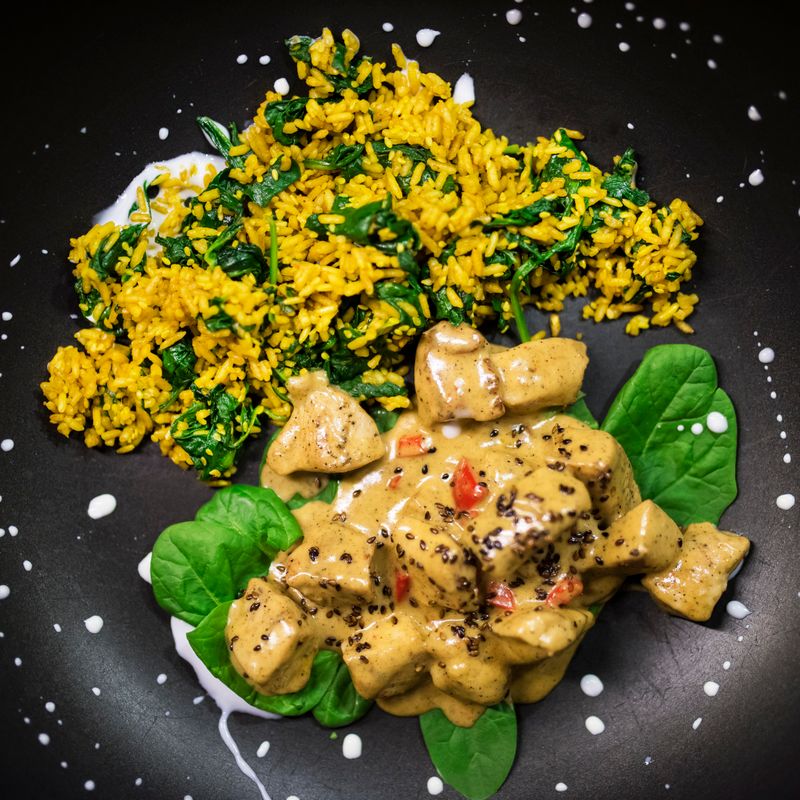
Holiday Duck Curry with Black Cherries
A luxurious French-Indian fusion braise: seared duck breast simmered in a silky red wine and curry-spiced sauce studded with tart black cherries. The sauce develops deep, complex flavors from toasted spices and red wine reduction, while the cherries add brightness and sweetness that plays beautifully against the rich duck. Perfect for a special holiday dinner.
- Prep
- 20 min
- Cook
- 50 min
- Wait
- 15 min
- Total
- 1 hr 25 min
- Makes
- 4 servings (2 duck breast halves per person, about 1½ cups sauce)
Steps
Before you start
- Pat duck breasts completely dry with paper towels—this ensures proper searing and skin crisping
- Have all ingredients prepped and within arm's reach before you start; this braise moves quickly
- If using fresh cherries, pit them ahead of time; if frozen, thaw but don't drain (reserve liquid)
- Preheat your braising pot on the stovetop before searing the duck
Toast the spices
- In a small dry skillet over medium heat, combine the coriander seeds, cumin seeds, fennel seeds, and crushed cardamom pods.
- Toast, shaking the pan frequently, for 2–3 minutes until fragrant.
- You'll smell the warm, toasted aroma and see the spices turn slightly darker.
- Pour onto a plate and let cool for 1 minute, then coarsely grind with a mortar and pestle or spice grinder.
- Set aside.
+ Show details− Hide details
Ready when: Spices are fragrant and slightly darker in color
Tip: Toast immediately before using; pre-ground curry spices lose potency. If you don't have a grinder, crush the cooled spices in a ziplock bag with the bottom of a heavy pot.
Season and sear duck
- Pat duck breasts completely dry.
- Season both sides generously with salt and freshly ground black pepper.
- Heat the Dutch oven over medium-high heat.
- Once very hot (about 1 minute), place duck breasts skin-side down.
- Sear without moving for 5–6 minutes until the skin is golden and the fat renders.
- You'll see liquid fat pooling in the pan and smell a rich, meaty aroma.
- Flip and sear the meat side for 2–3 minutes until browned.
- The internal temperature will be around 120–125°F (49–52°C) at this stage—that's correct; the braise will finish cooking the duck.
- Transfer to a clean plate.
+ Show details− Hide details
Ready when: Skin is golden brown and crispy; meat side is seared to deep brown
Tip: Do not move the duck while skin-side down—this allows the skin to crisp and renders the fat layer. If the pan is too cool, the skin will steam rather than sear.
Build the curry base
- Pour off all but 1 tablespoon of duck fat from the Dutch oven (reserve extra fat for another use or discard).
- Add minced shallots and cook over medium heat for 2–3 minutes, stirring, until softened and translucent.
- Add minced garlic and ginger, cook for 1 minute more until fragrant.
- Stir in the toasted ground spices and tomato paste, coating the shallots evenly.
- Toast the mixture for 1–2 minutes, stirring constantly, to deepen the flavors.
- The bottom of the pot will darken slightly and smell warm and spiced.
+ Show details− Hide details
Ready when: Shallots are translucent and spice mixture coats them lightly; fragrant
Tip: Toasting the spice mixture in the fat deepens and blooms their flavors, preventing a raw-spice taste in the final sauce.
Deglaze with wine
- Pour the red wine into the pot, scraping the bottom with a wooden spoon to lift all the browned bits.
- Simmer over medium-high heat for 3–4 minutes, stirring occasionally.
- The wine will reduce by about one-third, and the sharp alcohol smell will fade slightly.
- You're concentrating the flavors and cooking off some of the raw alcohol.
+ Show details− Hide details
Ready when: Wine has reduced by about one-third; alcohol smell is noticeably less sharp
Tip: Use a wine you'd drink—cheap wines often have off-flavors that concentrate during reduction. A medium-bodied dry red like Côtes du Rhône or Pinot Noir works well.
Build the braising liquid
- Add the duck or chicken stock, thyme sprigs, and bay leaf to the pot.
- Stir well to combine.
- Return the seared duck breasts to the pot, skin-side up, nestling them into the liquid so they're about half-submerged.
- The stock should come roughly halfway up the sides of the duck—this allows the skin to stay exposed and crispy while the meat braises gently in the moist heat.
+ Show details− Hide details
Ready when: Duck is positioned skin-side up and partially submerged
Tip: Position the duck with skin facing up so the skin doesn't become soggy. The combination of braising and searing keeps it crispy.
Braise the duckOven 170°F / 75°C
- Bring the liquid to a gentle simmer over medium heat.
- Once simmering, reduce heat to medium-low, cover partially (leave the lid slightly ajar), and braise for 25–30 minutes.
- The sauce should bubble gently—you'll hear a soft hiss—and the duck will be tender when pierced with a fork.
- Check the internal temperature of the thickest part of the duck; it should reach 165–170°F (74–77°C) for medium doneness with a touch of blush inside.
+ Show details− Hide details
Ready when: Duck reaches 165–170°F (74–77°C) internal temperature; meat is fork-tender
Tip: If the skin starts to look too dark, place a sheet of parchment paper directly on top to shield it without fully covering the pot. The partial lid allows some evaporation to concentrate the sauce.
Add cherries and finish
- Remove the duck breasts and set aside on a warm plate.
- Remove and discard the thyme sprigs and bay leaf.
- Increase the heat to medium and add the pitted black cherries to the sauce.
- If using thawed frozen cherries, also add the reserved cherry juice (if you have it).
- Stir and simmer for 2–3 minutes to warm the cherries through and let them release their color into the sauce.
- The sauce will deepen to a glossy burgundy-wine color with streaks of darker purple from the cherry juice.
+ Show details− Hide details
Ready when: Cherries are warmed through and have released color; sauce is glossy and deep burgundy
Tip: Add the cherries at the very end so they keep their shape and bright color rather than becoming mushy or faded.
Build the final sauce
- Stir in the honey, red wine vinegar, and cold butter pieces one at a time, stirring gently.
- The butter will emulsify into the sauce, creating a silky, luxurious texture.
- Taste the sauce and adjust seasoning with a pinch of salt and pepper if needed.
- The sauce should taste balanced: rich from the duck and wine, warm and spiced, tart from the vinegar and cherries, and a touch sweet from the honey.
- Do not boil the sauce after adding butter, or it will break and look oily.
+ Show details− Hide details
Ready when: Sauce is glossy, silky, and smooth; butter is fully incorporated
Tip: Add the butter off the heat or at very low heat to prevent it from separating. If the sauce does break, whisk in a tablespoon of cold water to bring it back together.
Slice, plate, and serve
- Slice each duck breast crosswise at a slight angle into strips about ¼ inch (6 mm) thick.
- The meat should be deep pink to medium at the center, with no gray.
- Arrange the sliced duck on warm plates.
- Spoon the cherry curry sauce and whole cherries generously over the duck.
- Serve hot, with crusty bread, rice, or creamy polenta to soak up the sauce.
+ Show details− Hide details
Ready when: Duck is sliced and shows deep pink to medium color inside
Tip: If you prefer your duck more cooked, return the sliced duck to the sauce for 1–2 minutes. Slicing against the grain makes the meat more tender.
Good to know
Tips
- Do not skip the step of scoring the duck skin: light crosshatch cuts (not deep into the meat) help the fat render during searing and create a crispier skin.
- Duck breast is best served medium to medium-rare (internal temperature 165–170°F / 74–77°C). Overcooking makes it tough and dry. A meat thermometer is essential for success.
- If you don't have duck breasts, substitute 4 chicken thighs (skin-on, bone-in, about 6 oz each), but reduce the braising time to 20–25 minutes and check the internal temperature more frequently—chicken cooks faster than duck.
- This curry is wonderful served with steamed basmati rice, creamy polenta, mashed potatoes, or crusty bread. The silky sauce is meant to be savored with every spoonful.
Make ahead
The curry base (shallots, garlic, ginger, spices, and wine reduction) can be made up to 1 day ahead. Cool, cover, and refrigerate. Bring to room temperature and reheat gently over medium heat before adding the seared duck and continuing with the braise. The entire dish (braised duck with sauce) can be made up to 2 days ahead; cool, cover, and refrigerate. To reheat, place the duck and sauce in a Dutch oven and warm gently over medium-low heat for 15–20 minutes, covered, stirring occasionally. Add the fresh or thawed cherries just before serving.
Storage & reheating
Room temperature (covered): up to 2 hours. Refrigerator (airtight container): up to 4 days. Freezer (airtight container or freezer bag): up to 3 months. To reheat from chilled, place in a Dutch oven or covered baking dish and warm over medium-low heat for 15–20 minutes, stirring gently. If reheating from frozen, thaw overnight in the refrigerator, then reheat as above.
Substitutions
- black cherries → Dried tart cherries (use ¾ cup / 100 g; add to the liquid 10 minutes before the duck finishes cooking to rehydrate) or fresh raspberry or blackberry (add at the very end to avoid overcooking). Fresh black cherries are ideal for color and flavor, but these alternatives provide similar tartness and elegance.
- duck or chicken stock → Chicken stock or beef stock. Duck stock has the deepest flavor, but chicken or beef stock will still produce a rich, luxurious sauce. If using beef, the flavor will be earthier.
- dry red wine → Dry white wine (like Pinot Grigio or white Burgundy) or ¾ cup red wine plus ¼ cup ruby port. Red wine is classic for duck, but white wine creates a lighter, more delicate sauce. Port adds richness and sweetness.
- coriander seeds → 1 tablespoon ground coriander (add directly to the shallot mixture; reduce toasting time to 30 seconds). Pre-ground spices are less potent, so use slightly more. Toast briefly to bloom the flavors.
More curries
See all →



Find more like this
- Meal
- Dinner
- Cuisine
- French
- Diet
- Gluten-Free
- Occasion
- Christmas