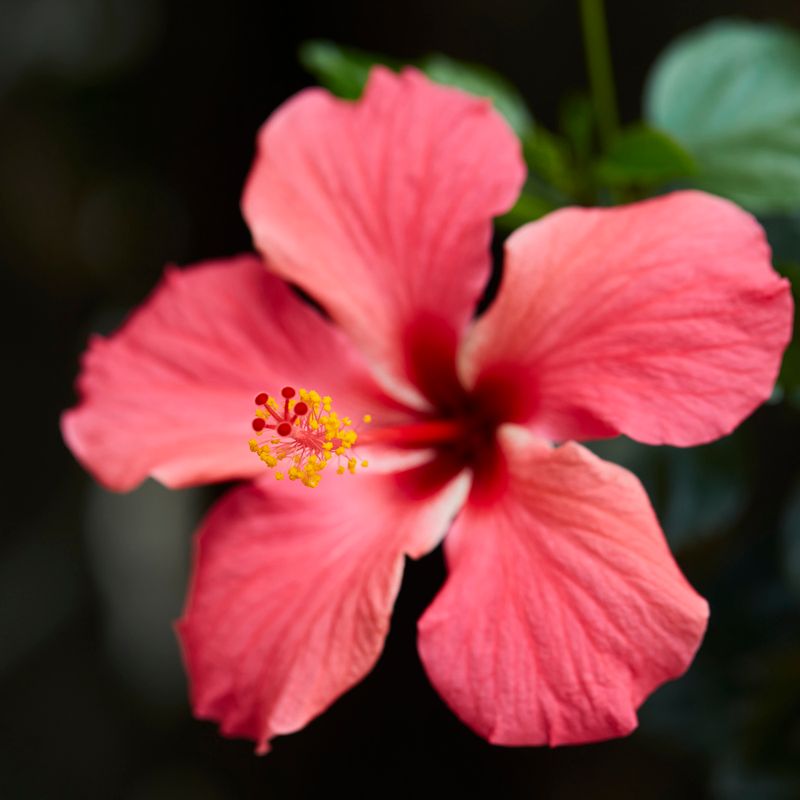
Hibiscus Flower and Lime Éclairs
Delicate choux pastry infused with tart hibiscus flowers, filled with bright lime custard, and topped with dark chocolate glaze. These elegant éclairs celebrate Caribbean flavors with a sophisticated pastry technique. The combination of floral hibiscus, tangy lime, and rich chocolate creates a memorable dessert that looks as striking as it tastes.
- Prep
- 45 min
- Cook
- 1 hr
- Wait
- 1 hr 30 min
- Total
- 3 hr 15 min
- Makes
- 12 éclairs (about 4–5 inches / 10–13 cm each)
Steps
Before you start
- Bring all ingredients to room temperature before starting (eggs, butter, milk)
- Read the entire recipe to understand the three components: choux, custard, and glaze
- Preheat oven to 400°F (200°C) before piping the éclairs
- Have a piping bag with a ½-inch (1.3 cm) round tip ready
Prepare hibiscus infusion
- In a small saucepan, combine the chopped dried hibiscus flowers and ½ cup (120 ml) water.
- Bring to a simmer over medium heat and let steep for 5 minutes, stirring occasionally.
- The water will turn deep magenta and taste tart and floral.
- Strain through a fine mesh, pressing gently on the flowers to extract liquid.
- You should have about ⅜ cup (90 ml) of infused water.
- Let cool to room temperature (about 10 minutes).
+ Show details− Hide details
Ready when: Hibiscus liquid is deep magenta and floral-scented
Tip: Don't over-steep; the hibiscus can become bitter beyond 5 minutes.
Make choux pastry base
- Pour the cooled hibiscus infusion into a medium heavy-bottomed saucepan.
- Add the cold butter cubes and salt.
- Warm over medium heat, stirring occasionally, until the butter melts completely and the mixture comes to a boil (about 3–4 minutes).
- Remove from heat.
- Add the flour all at once and stir vigorously with a wooden spoon for about 2 minutes until the mixture comes together into a shaggy ball and pulls away from the sides of the pan.
- The mixture should look thick and slightly glossy.
+ Show details− Hide details
Ready when: Flour is fully incorporated and mixture pulls away from pan sides
Tip: Stir immediately after removing from heat so the flour cooks evenly without scorching.
Incorporate eggs into choux
- Transfer the hot choux mixture to a stand mixer fitted with the paddle attachment.
- With the mixer on medium speed, add the room-temperature eggs one at a time, beating for about 1 minute after each addition.
- After all eggs are incorporated, add the optional hibiscus extract if using.
- The final dough should be smooth, shiny, and just thick enough to hold peaks when you lift the paddle—it should fall slowly from a spoon.
- If it looks too loose, beat for another 30 seconds.
+ Show details− Hide details
Ready when: Dough is smooth, glossy, and falls slowly from a spoon
Tip: Add eggs slowly to prevent the hot mixture from scrambling them. Room-temperature eggs incorporate more easily.
Pipe éclairsOven 400°F / 205°C
- Preheat the oven to 400°F (200°C).
- Line two large baking sheets with parchment paper.
- Transfer the choux dough to a piping bag fitted with a ½-inch (1.3 cm) round tip.
- Pipe 12 strips of dough, each about 4–5 inches (10–13 cm) long and 1 inch (2.5 cm) wide, onto the prepared baking sheets, spacing them 2 inches (5 cm) apart.
- Use a wet finger or small spatula to smooth any peaks on top of each éclair.
+ Show details− Hide details
Ready when: Éclairs are evenly piped and smooth on top
Tip: Wet your finger frequently to smooth peaks; dry fingers will drag and distort the dough.
Bake choux shellsOven 400°F / 205°C
- Bake the piped éclairs at 400°F (200°C) for 15 minutes without opening the oven door.
- Then lower the heat to 350°F (175°C) and bake for another 20–25 minutes, until the éclairs are light golden brown and feel firm and crispy when gently pressed.
- They should sound hollow when tapped on the bottom.
- Do not open the oven during the first 15 minutes—steam is crucial for puffing.
+ Show details− Hide details
Ready when: Éclairs are golden, crispy, and sound hollow when tapped
Tip: Resist opening the oven door during baking; sudden temperature drops collapse the pastry.
Cool éclairs
- Remove the baking sheets from the oven and transfer the éclairs to a wire rack.
- Let them cool completely to room temperature (about 20–25 minutes).
- Once cool, use a small serrated knife or offset spatula to create a small slit or hole along the bottom of each éclair—this is where you'll pipe in the custard filling.
+ Show details− Hide details
Ready when: Éclairs are completely cool and firm to the touch
Tip: Make a small slit rather than drilling a large hole; this keeps the pastry structure intact.
Make lime custard fillingOven 160°F / 70°C
- In a medium saucepan, combine the whole milk and heavy cream.
- Heat over medium heat until just beginning to simmer (do not boil).
- In a small bowl, whisk together the egg yolks, granulated sugar, cornstarch, and lime zest until pale and thick (about 2 minutes).
- Slowly pour about ½ cup (120 ml) of the hot milk mixture into the egg mixture while whisking constantly—this tempers the eggs.
- Then pour the tempered egg mixture back into the saucepan with the remaining hot milk, whisking constantly.
- Continue cooking over medium heat, stirring frequently with a wooden spoon, until the custard thickens and reaches 160°F (71°C) on a thermometer (about 5–8 minutes).
- The custard should coat the back of a spoon.
+ Show details− Hide details
Ready when: Custard reaches 160°F (71°C) and coats the back of a spoon
Tip: Whisk constantly while adding the hot milk to the eggs to prevent scrambling. Don't skip the tempering step.
Finish custard with lime juice and butter
- Remove the custard from heat.
- Stir in the fresh lime juice and the cold butter cubes one at a time, stirring until each piece is fully incorporated.
- The custard will become silky and bright.
- Taste and adjust lime juice if needed.
- Transfer the custard to a shallow bowl and press plastic wrap directly onto the surface to prevent a skin from forming.
- Let cool to room temperature (about 15 minutes), then refrigerate until chilled (about 20–30 minutes).
- The custard should be thick enough to hold its shape when piped.
+ Show details− Hide details
Ready when: Custard is chilled, thick, and bright lime green
Tip: If your custard looks lumpy, strain it through a fine mesh sieve while still warm.
Fill éclairs
- Transfer the chilled lime custard to a piping bag fitted with a small round tip (about ¼ inch / 6 mm).
- Gently pipe the custard into each éclair through the slit on the bottom, filling until you feel gentle resistance and the éclair is plump but not bursting.
- Use about 1½ to 2 tablespoons (22–30 ml) of custard per éclair.
- If any custard leaks out, wipe it away with a damp cloth.
+ Show details− Hide details
Ready when: Éclairs are filled and plump without cracking
Tip: Don't overfill; the pastry will crack if you push too hard. A gentle hand is key.
Make chocolate glaze
- In a small heavy-bottomed saucepan, combine the heavy cream and light corn syrup.
- Heat over medium heat until steaming (about 100°F / 38°C).
- Do not boil.
- Place the chopped dark chocolate and butter in a small bowl.
- Pour the hot cream mixture over the chocolate and let it sit undisturbed for 1 minute.
- Then whisk until smooth and glossy.
- The glaze should be warm and pourable but not too thin.
+ Show details− Hide details
Ready when: Glaze is smooth, glossy, and pourable
Tip: If the glaze becomes too thick as it cools, warm it gently over low heat or add 1 teaspoon of cream.
Glaze éclairs
- While the glaze is still warm, dip the top of each filled éclair into the chocolate glaze, turning gently to coat the top and sides.
- Allow excess glaze to drip back into the bowl.
- Place the glazed éclairs on a parchment-lined baking sheet or serving platter and let the glaze set at room temperature for about 20–30 minutes until firm to the touch.
+ Show details− Hide details
Ready when: Glaze is set and no longer sticky to the touch
Tip: If you dip too slowly, the choux absorbs the glaze and becomes soggy. A quick, confident dip is best.
Good to know
Tips
- Room-temperature ingredients are essential for proper emulsification of the choux dough. Cold eggs won't incorporate smoothly and can cause the dough to break.
- The humidity in your kitchen affects the choux dough slightly. If your batter seems too loose after adding eggs, beat for another 30 seconds; if too stiff, add one more egg white (not a whole egg) in small amounts while beating.
- For the most striking presentation, serve the éclairs on a dark plate so the hibiscus-colored pastry and glossy chocolate contrast beautifully.
- These éclairs are best enjoyed within a few hours of assembly for maximum crispness. If making ahead, bake shells and prepare custard separately, then assemble just before serving.
Make ahead
The choux shells can be baked up to 1 day ahead, cooled completely, and stored in an airtight container at room temperature. The lime custard can be made up to 2 days ahead and refrigerated. Fill and glaze the éclairs no more than 4 hours before serving for the best texture and crispness.
Storage & reheating
Store filled and glazed éclairs in an airtight container in the refrigerator for up to 2 days. The pastry will soften over time but remains delicious. Do not freeze filled éclairs; the custard separates when thawed. To refresh, place in a 300°F (150°C) oven for 3–4 minutes before serving.
Substitutions
- dried hibiscus flowers → 2 tablespoons (30 ml) hibiscus or raspberry syrup mixed with ⅜ cup (90 ml) water. Use if fresh or dried hibiscus is unavailable. The flavor will be slightly more muted but still beautiful and tart.
- dark chocolate (60–70% cacao) → milk chocolate (45–50% cacao) or white chocolate. Milk chocolate will be sweeter and less bitter; white chocolate is creamy and subtle. Both pair well with the lime.
- fresh lime juice → 2–3 tablespoons (30–45 ml) bottled fresh lime juice, or ¼ cup (60 ml) lemon juice for a brighter acidity. Fresh citrus is best for flavor, but bottled works in a pinch. Lemon will shift the flavor profile.
- heavy cream → whole milk (use the same quantity for both the custard and glaze). The result will be slightly less rich and creamy, but still delicious. The glaze may be thinner.
More pies & tarts
See all →


Find more like this
- Meal
- Dessert
- Diet
- VegetarianHalal
- Method
- Oven